Value-Based COPD Care: Using Imaging Insights and Home Nebulization
COPD is a classic value-based care challenge: a high-risk, high-cost population where a small proportion of patients drive a large share of emergency visits and hospital days. Many of these episodes are predictable in hindsight – the warning signs are already visible in imaging, physiology, and symptom burden long before the next exacerbation.
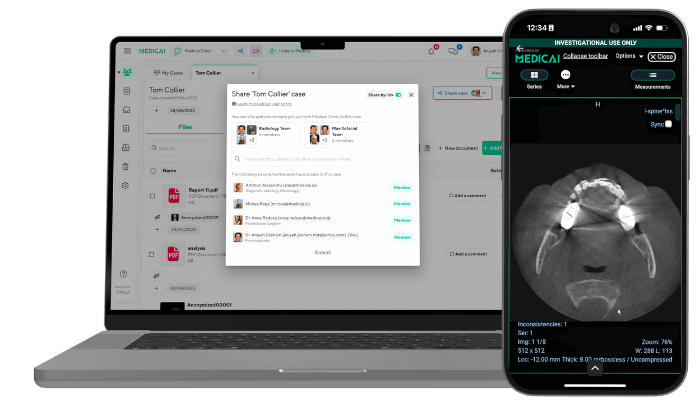
The opportunity is to treat imaging not just as a diagnostic snapshot, but as a continuous risk signal that feeds into proactive follow-up, home treatment plans, and device support. Cloud PACS platforms such as Medicaid make this possible by turning chest CT and X-ray into live, shareable data for clinicians across settings.
Add a structured home management bundle – including portable nebulizers for patients who struggle with inhalers – and you have the building blocks of a COPD program that reduces readmissions instead of simply reacting to them.
Why COPD readmissions are a value-based pain point
COPD is one of the leading causes of morbidity and mortality worldwide and is strongly associated with repeated ER visits and hospitalizations. Quantitative CT studies and machine-learning models show that imaging features of structural lung disease correlate with future emergency service use and hospitalizations in COPD.
From a value-based perspective, three issues stand out:
- High-cost, high-need cohort: Frequent exacerbators consume disproportionate inpatient and ED resources, often with overlapping cardiovascular, metabolic, and mental-health comorbidities.
- Fragmented information: Imaging, spirometry, and clinical notes often live in different systems. Without a unified view, it’s hard to identify who is truly high risk.
- Reactive rather than proactive care: Even when CT shows advanced emphysema or significant air trapping, that information rarely flows into a structured action plan or “home kit” for the patient.
Modern cloud PACS infrastructure is changing this equation by making imaging available anywhere, to any member of the care team, with the security and interoperability needed for enterprise-scale programs.
Imaging as a predictor of COPD risk
Radiologists have long described emphysema, bronchial wall thickening, and air trapping qualitatively. Quantitative CT (qCT) now allows those patterns to be measured and tracked over time. Studies show that:
- Low-attenuation areas and air trapping on CT correlate with airflow limitation and worsening spirometry (FEV₁ decline).
- Automated measurements, including parametric response mapping and air-trapping indices, can differentiate emphysema from small airway disease and better characterize disease phenotype.
- Machine-learning models that incorporate CT features improve prediction of ER visits and hospitalizations in COPD compared with clinical data alone.
In other words, imaging can help answer a critical value-based question: Which patients are most likely to destabilize in the next 6–12 months?
For health systems using cloud PACS, these imaging features don’t need to stay trapped inside narrative reports. They can be surfaced in dashboards, registries, and decision-support workflows shared between pulmonology, primary care, case management, and telemedicine teams.
Building an imaging-driven COPD risk registry in cloud PACS
An imaging-driven COPD risk registry in a cloud PACS turns scans into actionable stratification.
You start by defining risk tiers using a mix of quantitative or structured CT findings (emphysema extent, air trapping, airway wall thickening), clinical variables (GOLD stage, prior exacerbations, comorbidities), and functional measures (FEV₁, 6-minute walk, BODE index).
Each COPD study is then tagged in the cloud PACS so new CTs or X-rays automatically attach to the right patient record and update their risk level over time.
Through PACS–EHR integration and APIs, this risk information becomes visible across workflows: tele-respiratory clinics, care managers, and discharge planners can instantly see which patients are high priority.
When imaging suggests progression, the registry doesn’t just store that fact – it can trigger proactive outreach, such as rapid telehealth review, treatment optimization, and enrollment in a COPD home-management program that includes home devices like pulse oximeters, spirometers, and portable nebulizers.
From images to interventions
Once you know who is high risk, value-based care is about ensuring they have the right tools at home to act early when symptoms change.
A typical COPD home kit for high-risk patients might include:
- Clear written action plan: Simple, color-coded zones that reflect both symptoms and, where possible, imaging-informed risk (e.g., patients with severe emphysema have a lower threshold for escalating treatment or seeking care).
- Pulse oximeter: Enables patients to monitor oxygen saturation during routine activities and early exacerbations.
- Home spirometry (where feasible): Especially in digitally engaged patients, home spirometry can contextualize symptom changes alongside imaging findings.
- Portable nebulizer
For patients who:- Struggle with inhaler technique or coordination
- Need larger doses or mixed medications
- Experience frequent, severe breathlessness where a continuous mist is easier to tolerate than repeated puffs
- Struggle with inhaler technique or coordination
Nebulizers deliver bronchodilators, corticosteroids, and mucolytics as a continuous fine mist over 10–15 minutes, which can be easier for some patients than coordinating multiple inhaler steps.
Guidelines and reviews increasingly highlight a role for home nebulization in moderate-to-severe COPD, especially when maintenance therapy with inhalers alone is not enough or technique is suboptimal.
A closer look at mesh nebulizers in value-based COPD care
Not all nebulizers are the same. For home, travel, and telemedicine-linked programs, vibrating mesh nebulizers offer practical advantages:
- They’re small and quiet, making them less disruptive and more acceptable for daily use.
- They’re often battery or USB-rechargeable, so patients can use them away from wall outlets.
- Studies suggest mesh devices can generate efficient aerosols and may outperform jet nebulizers in certain COPD settings, such as during non-invasive ventilation, while providing similar lung function outcomes.
Imaging, telemedicine, and home nebulization in one workflow
| Step | What Happens | Key Details / Examples |
| 1. Index & stratify | Identify high-risk COPD patients | Use cloud PACS + qCT features (emphysema, air trapping, etc.) to score risk and place patients into a COPD registry. |
| 2. Design discharge & follow-up bundles | Standardize what every high-risk discharge includes | Updated imaging + risk tier, a prescribed COPD home kit (nebulizer, oximeter, written action plan), and a tele-respiratory visit booked within 7–14 days. |
| 3. Enable remote monitoring & rapid adjustment | Use telehealth to catch deterioration early | Patients use their home kit and report symptoms, sats and (if available) home spirometry. Clinicians review imaging + clinical data in the cloud PACS platform and adjust therapy quickly. |
| 4. Measure what matters in value-based contracts | Track outcomes tied to reimbursement | 30- and 90-day readmissions, ER visits per high-risk patient per year, days at home vs in hospital, and patient-reported outcomes (dyspnea, quality of life, confidence using nebulizer/action plan). |
Final Thoughts
This article explains how COPD care can shift from reactive to proactive by using imaging as a continuous risk signal.
Quantitative CT and cloud PACS help stratify patients, build an imaging-driven risk registry, and surface high-risk cases to tele-respiratory teams.
High-risk patients are discharged with a standardized home kit (action plan, pulse oximeter, optional home spirometry, portable nebulizer) and early telehealth follow-up.
Vibrating mesh nebulizers support those who struggle with inhalers. Together, imaging, telemedicine, and home nebulization form a workflow that aims to cut readmissions, reduce ER visits, and improve quality of life under value-based care models.

Related Articles



Lets get in touch!
Learn more about how Medicai can help you strengthen your practice and improve your patients’ experience. Ready to start your Journey?
Book A Free Demo