The Cloud Data Life Cycle & Patient Privacy

Developments in technology such as the cloud have opened the doors of opportunity for businesses in every industry. In the healthcare industry, the cloud has enabled patients and providers remote data storage and management – specifically in the use of electronic health records (EHR). EHRs allow users to upload, access, and share electronic health data and images more efficiently than ever before. Still, many fear that storing sensitive health data in this manner could compromise patient privacy. For this reason, we will dive into what the cloud data life cycle entails and how it could impact patient privacy.
What is the Cloud Data Life Cycle?
At this point, nearly every individual and business are familiar with cloud computing – the concept that allows users to store and access data via a remote computer database. What many individuals may be unclear about is the lifecycle of data within the cloud. As data in the cloud is not tangible, it can be hard to determine where data is at a given time. Users have many questions regarding cloud storage: How do you know when data is really deleted? How can one be sure that data is safe in the cloud? How long does data last in the cloud? All of these questions are perfectly understandable – more so when you consider that the data in question includes private patient medical records and images. As a patient, you have the sole right to such data, so it is essential that it stays between only you and the healthcare providers you deem appropriate. To address these concerns, patients need to understand how the cloud data lifecycle works, which can be broken down into six stages.1. Data Creation
The first stage of the cloud data lifecycle is the creation stage. During this stage, data is created and becomes a part of your healthcare practice’s data. In the healthcare industry, this would be when medical records are converted from tangible, paper records to digital data. As a patient, you will work with your provider to convert pre-existing medical records and images into a digital format.2. Data Storage
Once medical records are converted into active data, it is ready for stage two, where data will be stored in the cloud. The EHRs that have been created will then be stored in your practice’s telehealth platform. Once data is stored in the cloud, it will remain there until removed and will be securely stored and protected – only to be accessed by the patient and authorized users.3. Data Usage
The third stage of the life cycle is when data is used and moved throughout the cloud environment. Data can be used in various ways, but within a telehealth platform, it will likely be viewed by patients and their providers. During this stage is when governance and compliance become critical, as user access must be limited. The only individuals able to access a patient’s EHRs are the patient at hand and their specific healthcare provider.4. Data Sharing
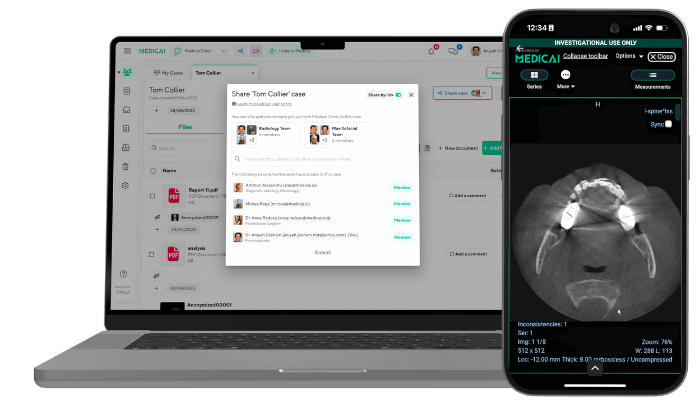
While data usage remains within one cloud enterprise’s environment, data sharing is where data can exit the enterprise – in this case, your telehealth platform. The only reason that data will be shared is if you, as a patient, or your provider, share it. The sharing of EHRs should only occur if you and your provider are seeking a second opinion or the consultation of another specialist. In this case, this is the stage in which you will safely share your data.5. Data Archiving
At some point if data is not in active use, it may be archived. During this stage, data is removed from the active cloud environment and temporarily placed in storage. This makes room for new data, while still preserving data to be used in the future.6. Data Destruction
The final stage of the cloud data life cycle is data destruction. Typically with EHRs and medical records, data is not destroyed. This is so that future providers can see a patient’s complete medical history for relevant information. Still, should data need to be destroyed, it is crucial to ensure that it is destroyed completely and properly. Fortunately, there are strict guidelines in place to ensure that destruction is conducted correctly.How the Cloud Protects Patient Data
Understanding the cloud data life cycle can help patients understand where their data is as it enters and moves throughout the cloud environment. For those concerned with the privacy of their medical data within the cloud, it can serve as a comfort to see that aside from authorized sharing, once your data enters the cloud, it will remain there until intentionally and permanently destroyed. Beyond simply collecting, moving, and destroying data, the cloud is an excellent solution for storing sensitive data such as patient EHRs. Before healthcare practices adopted the cloud, patient data was typically stored in an on-premise or a third-party data center. At the time, a common misconception was that on-premise data centers were more secure than the cloud when that is not necessarily the. If data is stored in multiple locations, there are more targets for potential hackers to target. Alternatively, organizations can focus all security efforts towards one centralized location by storing data in the cloud, making it significantly easier to defend. In terms of compliance, it is also much easier to manage data stored in a singular jurisdiction than several. Another issue with on-premise data centers is that unless there are strict security measures and backup policies if data is compromised, little can be done to recover it. Conversely, data in the cloud is continuously backed up, ensuring that it can be recovered no matter the situation. This means that should a breach occur, data can quickly be recovered, ensuring that sensitive patient information remains intact.Prioritize Patient Privacy
Ensuring privacy for their patients should be the utmost priority for healthcare practices, second only to providing quality care. While it can be understandable for patients to be hesitant to move their medical data to the cloud, doing so can keep their data more protected than traditional means. In converting medical records into EHRs, not only do records become easier to manage and access – but storage is easier and more secure as well. In uploading patient EHRs into the cloud, healthcare providers are enabled quick and convenient access, allowing them to care for patients more efficiently. Once data has entered the cloud data lifecycle, patients and providers can easily upload, store, access, and share data – ensuring that the information needed to care for patients is readily available. As a result, patients can seamlessly view their own records, ensuring that they have the information and resources necessary to educate themselves on their health. Furthermore, providers can quickly view patient records, allowing them to operate more efficiently and get patients fast and accurate care. Finally, should patients seek the help of a specialist or want a second opinion, they can easily send their EHRs to any qualified provider in their telehealth platform. Using the cloud and digital patient information, patients and providers can seamlessly access and share medical data while ensuring its privacy.If you’re interested in learning more about our telehealth platform, book a demo today!

Related Articles



Lets get in touch!
Learn more about how Medicai can help you strengthen your practice and improve your patients’ experience. Ready to start your Journey?
Book A Free Demo