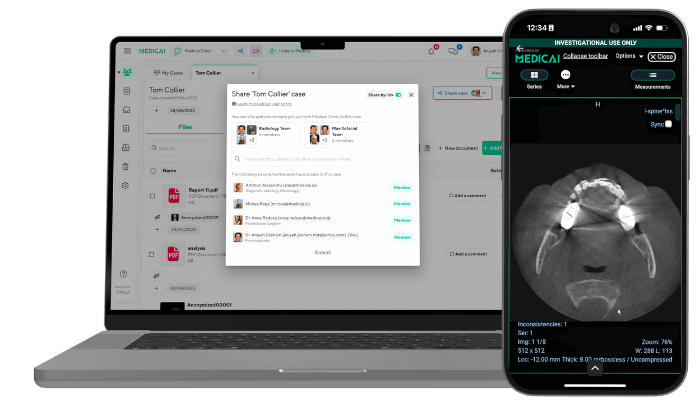
Cloud PACS vs On-premise PACS: Revolucionando la Imagen Médica en el Cuidado de la Salud

En el cambiante panorama de la tecnología de la salud, los Sistemas de Archivado y Comunicación de Imágenes (PACS) se han vuelto indispensables para gestionar imágenes médicas. Estos sistemas almacenan, recuperan, distribuyen y presentan imágenes médicas, transformando fundamentalmente los departamentos de radiología.
Tradicionalmente, los PACS eran soluciones localizadas alojadas en servidores internos dentro de las instalaciones de salud. Sin embargo, la tecnología en la nube ha introducido los PACS basados en la nube, ofreciendo un enfoque diferente para la gestión de imágenes médicas. Este artículo profundiza en la comparación entre los PACS en la nube y los PACS instalados localmente, explorando sus ventajas, desventajas y su impacto en la prestación de servicios de salud.
¿Qué es PACS en la atención médica?
PACS, o Sistema de Archivado y Comunicación de Imágenes, es una tecnología de imagen médica que proporciona almacenamiento económico y acceso conveniente a imágenes de múltiples modalidades (tipos de máquinas de origen). Las imágenes electrónicas y los informes se transmiten digitalmente a través de PACS, eliminando la necesidad de archivar, recuperar o transportar manualmente CDs. PACS permite el acceso instantáneo a imágenes y datos asociados, mejorando la eficiencia de los departamentos de radiología y mejorando la atención al paciente.
El sistema PACS basado en la nube
A los PACS basados en la nube aprovecha la tecnología de computación en la nube para almacenar y gestionar imágenes médicas. En lugar de mantener servidores internos, los proveedores de salud pueden acceder a su PACS a través de internet. Este modelo ofrece varios beneficios clave:
-
Escalabilidad: El sistema PACS basado en la nube los sistemas pueden escalar fácilmente la capacidad de almacenamiento para satisfacer las crecientes demandas de una instalación de salud. A medida que crecen los datos de imagen, se puede provisionar almacenamiento adicional sin una inversión significativa de capital.
-
Eficiencia de Costos: Al reducir la necesidad de infraestructura física y mantenimiento, cloud PACS puede reducir costos asociados con hardware, personal de TI y consumo de energía.
-
Accesibilidad: Con cloud PACS, las imágenes médicas pueden accederse desde cualquier lugar con una conexión a internet, facilitando consultas a distancia y telemedicina.
-
Recuperación ante Desastres: Los proveedores de cloud PACS a menudo ofrecen soluciones robustas de recuperación ante desastres, asegurando que los datos se respalden y puedan restaurarse rápidamente en caso de pérdida de datos.
PACS en premisas
Los PACS en premisas, por otro lado, se alojan en servidores locales dentro de la instalación de salud. Este enfoque tradicional también tiene su propio conjunto de ventajas:
-
Control y Seguridad: Los proveedores de salud tienen control completo sobre sus datos, lo cual puede ser crucial para instituciones con requisitos de seguridad estrictos.
-
Rendimiento: Las soluciones en premisas pueden ofrecer un rendimiento superior ya que los datos se almacenan localmente, reduciendo la latencia y la dependencia de la conectividad a internet.
-
Personalización: Los PACS en premisas pueden personalizarse para adaptarse a las necesidades específicas y flujos de trabajo de un proveedor de salud, ofreciendo más flexibilidad en la integración con otros sistemas.
Desventajas de un servicio PACS en premisas:
1. Altos Costos Iniciales
-
Inversión en Infraestructura: Los PACS en premisas requieren una inversión inicial significativa en hardware, software e infraestructura de red.
-
Costos de Instalación: Los servicios profesionales de instalación y configuración se suman al gasto inicial.
2. Mantenimiento y Actualizaciones
-
Mantenimiento Continuo: El mantenimiento regular de servidores, dispositivos de almacenamiento y equipos de red es necesario, a menudo requiriendo personal de TI dedicado.
-
Actualizaciones de Software: Mantener el sistema actualizado con las últimas versiones de software y parches de seguridad puede ser un proceso que consume tiempo y es costoso.
3. Problemas de Escalabilidad
-
Flexibilidad Limitada: Escalar un PACS en premisas implica comprar e instalar hardware y software adicionales, lo que puede ser costoso y disruptivo.
-
Restricciones de Capacidad: Las limitaciones físicas en la capacidad de almacenamiento pueden restringir la capacidad de manejar volúmenes crecientes de datos de imágenes médicas.
4. Recuperación y Respaldo de Desastres
-
Procedimientos de Respaldo Complejos: Implementar y gestionar sistemas de respaldo confiables puede ser complicado y costoso.
-
Recuperación ante Desastres: Desarrollar un plan robusto de recuperación ante desastres para sistemas en premisas requiere recursos significativos y planificación.
5. Accesibilidad y Colaboración
-
Acceso Remoto Limitado: Acceder a un PACS en premisas de forma remota puede ser un desafío y a menudo requiere VPN u otras soluciones de acceso remoto seguro.
-
Barreras de Colaboración: Compartir información de imágenes y datos con médicos o especialistas externos puede ser engorroso, a menudo involucrando procesos manuales.
6. Preocupaciones de Seguridad
-
Riesgos de Seguridad Física: Los sistemas en premisas son vulnerables a amenazas físicas como robos, incendios y desastres naturales.
-
Gestión de Seguridad de Datos: Asegurar que la información del paciente sea segura implica implementar y mantener medidas de seguridad rigurosas, lo cual puede ser intensivo en recursos.
7. Asignación de Recursos
-
Personal de TI Dedicado: Los PACS en premisas requieren un equipo de TI dedicado para la gestión diaria, resolución de problemas y soporte.
-
Interrupciones Operacionales: Cualquier problema con la infraestructura en premisas puede llevar a interrupciones operacionales, impactando la disponibilidad de datos de imágenes médicas.
8. Desafíos de Cumplimiento
-
Cumplimiento Regulatorio: Asegurar el cumplimiento continuo con regulaciones de salud como HIPAA y otros estándares locales requiere una supervisión continua y actualización del sistema.
9. Consumo de Energía
-
Uso de Energía: Los servidores y dispositivos de almacenamiento en premisas consumen cantidades significativas de electricidad, contribuyendo a mayores costos operativos.
En contraste, cloud PACS las soluciones abordan muchos de estos problemas ofreciendo costos iniciales más bajos, facilidad de mantenimiento y escalabilidad, recuperación de desastres robusta, mejor accesibilidad y medidas de seguridad mejoradas. Los PACS basados en la nube los proveedores típicamente manejan actualizaciones de software, respaldos y cumplimiento normativo, liberando a las instalaciones médicas para centrarse en la atención al paciente en lugar de la gestión de TI. Radiología en la nube los servicios también permiten una carga of información de imágenesfácil, asegurando rápido acceso y colaboración a través de diversas ubicaciones mediante un seguro servidor en la nube. La integración de los servicios en la nube proporciona avanzadas capacidades de almacenamiento y funciones, junto con soporte técnico confiable , haciendo delos sistemas PACS en la nube una opción superior para los entornos de salud modernos. a superior choice for modern healthcare environments.
DICOM vs PACS
Para comprender la diferencia entre DICOM y PACS, es esencial reconocer sus roles en la imagen médica. DICOM (Comunicación e Imagen Digital en Medicina) es un estándar para manejar, almacenar, imprimir y transmitir información en la imagen médica. DICOM asegura que diferentes dispositivos y sistemas de imagen puedan comunicarse entre sí de manera efectiva.
PACS, por otro lado, es un sistema que utiliza DICOM estándares para almacenar, recuperar y gestionar imágenes médicas. Esencialmente, mientras que DICOM ofrece el marco para el intercambio de datos de imagen, PACS es el sistema que implementa estos estándares para facilitar el almacenamiento y acceso a las imágenes.
RIS Radiología e Integración con PACS
A Radiología El Sistema de Información de Radiología (RIS) es un software utilizado para gestionar imágenes médicas y los datos asociados. Un RIS desempeña un papel crucial en la gestión del flujo de trabajo de los departamentos de radiología, desde la programación de pacientes hasta el seguimiento de imágenes y la elaboración de informes de resultados. La integración de RIS con PACS mejora la eficiencia y la efectividad de los departamentos de radiología. Esta integración permite compartir información sin problemas entre los sistemas, mejorando el flujo de trabajo y reduciendo el riesgo de errores.
PACS radiología en la nube y almacenamiento VNA
El Archivo Neutral de Vendedor (VNA) es una tecnología de imagen médica que permite almacenar imágenes en un formato y una interfaz estándar, haciéndolas accesibles desde diferentes sistemas PACS. Un VNA desacopla el almacenamiento de imágenes del PACS, proporcionando más flexibilidad y garantizando que los datos puedan ser accesados incluso si el sistema PACS es reemplazado.
El VNA en la nube lleva esto un paso más allá al almacenar imágenes en la nube, combinando los beneficios de la computación en la nube con la tecnología VNA. El VNA en la nube ofrece escalabilidad, eficiencia de costos y mejor capacidad de recuperación ante desastres. Además, proporciona una mejora en la interoperabilidad, haciendo más fácil compartir y acceder a imágenes médicas a través de diferentes sistemas e instalaciones.
PACS vs VNA
Aunque tanto PACS como VNA son cruciales para la gestión de imágenes médicas, tienen propósitos diferentes. PACS está diseñado principalmente para el almacenamiento, recuperación y visualización de imágenes, integrándose estrechamente en los flujos de trabajo de radiología. VNA, sin embargo, se centra en almacenar imágenes en un formato estándar, asegurando la accesibilidad a largo plazo y la interoperabilidad entre diferentes sistemas PACS.
En un entorno de atención médica típico, PACS y VNA se pueden usar juntos para optimizar la gestión de imágenes médicas. PACS puede manejar las necesidades inmediatas de almacenamiento y recuperación de imágenes, mientras que VNA puede garantizar que las imágenes se almacenen en un formato estandarizado, accesible para uso futuro.
Visor DICOM para Mac
Para los profesionales de la salud que usan computadoras Mac, acceder y ver DICOM las imágenes pueden ser un desafío debido a problemas de compatibilidad. Sin embargo, hay varias aplicaciones de visor DICOM disponibles para Mac, permitiendo a los radiólogos y otros profesionales médicos ver, analizar e interpretar imágenes médicas sin problemas en sus dispositivos Mac. Estos visores a menudo incluyen funciones avanzadas como mejora de imagen, mediciones y anotaciones, ayudando en el diagnóstico y la planificación del tratamiento precisos.
Conclusión
La elección entre cloud PACS y PACS en premisas depende de varios factores, incluidos el costo, la escalabilidad, la accesibilidad y los requisitos de seguridad. El sistema PACS basado en la nube los sistemas ofrecen ventajas significativas en términos de escalabilidad, eficiencia de costos y accesibilidad, convirtiéndolos en una opción atractiva para muchos proveedores de salud. Sin embargo, los sistemas PACS en premisas brindan mayor control y personalización, que pueden ser esenciales para instituciones con necesidades específicas y requisitos de seguridad estrictos.
Integrar PACS con otros sistemas como RIS y VNA puede mejorar aún más la eficiencia y efectividad de la gestión de imágenes médicas. A medida que la tecnología continúa evolucionando, es probable que la industria de la salud vea un aumento en la adopción de soluciones basadas en la nube, impulsadas por la necesidad de sistemas más flexibles, escalables y rentables.
En conclusión, el futuro de la imagen médica en la atención médica reside en la integración sin problemas de tecnologías avanzadas, permitiendo a los proveedores de salud ofrecer mejor atención y mejorar los resultados para los pacientes. Ya sea optando por cloud PACS o PACS en premisas, el objetivo final sigue siendo el mismo: mejorar la eficiencia, precisión y accesibilidad de la imagen médica, allanando el camino para un sistema de salud más conectado y efectivo.
Prueba Gratuita de Medicai Cloud PACS
¡Descubre el Futuro de la Imagen Médica con Medicai Cloud PACS!
Libera el poder de la imagen médica avanzada con Medicai Cloud PACS, la solución PACSnativa en la nube. Accede, comparte y gestiona tus datos de imágenes médicas and documentos clínicos en cualquier lugar, en cualquier momento. Nuestro sistema de Archivado y Comunicación de Imágenes (PACS) está diseñado para mejorar la precisión diagnóstica, agilizar los flujos de trabajo y mejorar la atención al paciente.
Por qué Elegir Medicai Cloud PACS?
-
Seguro & Cumple con HIPAA: Totalmente conforme con HIPAA y otros estándares de la industria, asegurando que tus datos de pacientes sean seguros.
-
Escalable & Flexible: Diseñado para satisfacer las necesidades de proveedores de salud de todos los tamaños, desde médicos individuales hasta grandes hospitales.
-
Interfaz Fácil de Usar: Diseño intuitivo para una navegación sin esfuerzo y fácil acceso.
-
Soporte 24/7: Soporte al cliente dedicado para asistirte en cada paso.
Experimenta los Beneficios por Ti Mismo:
-
Mejorar la Eficiencia Diagnóstica: Accede y comparte imágenes y información de imágenes al instante, facilitando una toma de decisiones más rápida.
-
Reducir Costos: Elimina la necesidad de almacenamiento en premisas con nuestro seguro almacenamiento en la nube soluciones.
-
Mejorar la Colaboración: Comparte fácilmente imágenes e informes con colegas y especialistas, mejorando la coordinación entre médicos.
¡Comienza Tu Prueba Gratuita Hoy!
Únete a los principales profesionales de la salud que confían en Medicai Cloud PACS para actualizar sus sistemas de imágenes. Haz clic en el enlace a continuación para registrarte en tu prueba gratuita:
Comienza Tu Prueba Gratuita Ahora
No te pierdas esta oportunidad de mejorar tu práctica con nuestro software médico and sistema de información hospitalaria integración. Regístrate hoy y ve cómo Medicai Cloud PACS puede transformar tu flujo de trabajo y la atención al paciente con un archivado de imágenes ¡y gestión sin problemas!

Artículos relacionados

¡Pongámonos en contacto!
Descubra cómo Medicai puede ayudarle a fortalecer su consulta y mejorar la experiencia de sus pacientes. ¿Listo para comenzar su viaje?
Reserve una demostración gratuita