Clinical Imaging and Telemedicine Insights
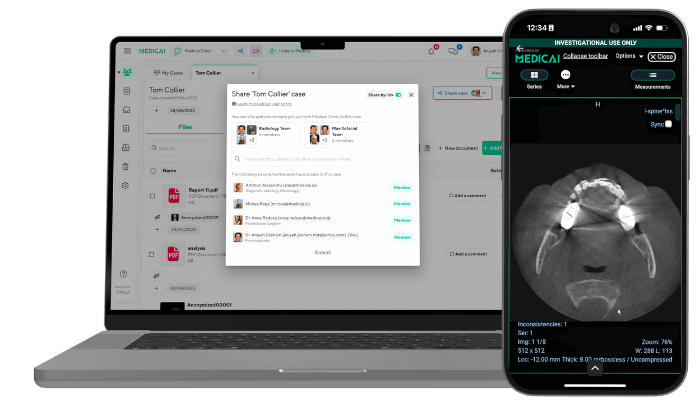
Medicai offers medical imaging infrastructure (cloud-based PACS, imaging sharing), enabling secure and compliant data access and fast collaboration around DICOM files.

DICOM Modality Worklist (MWL): How It Works, Why It Fails, and What Happens When It Does DICOM Modality Worklist is a DICOM service that allows an imaging device — a CT scanner, MRI machine, X-ray unit, or any DICOM-compliant modality — to query a server (typically the RIS) for the list of scheduled examinations it is...
Radiology Information System (RIS): Modules, Chain Position, KPIs, and How It Connects HIS and PACS RIS is the administrative and operational nervous system of a radiology department. It manages every event in the patient’s radiology journey, excluding the image itself — the referral, scheduling, patient check-in, exam tracking, report distribution, billing, and department statistics. While...
Hospital Information System (HIS): Why It Is the Centre of Every PACS Workflow Every radiology order that reaches your PACS starts in your Hospital Information System. Every patient identity mismatch that breaks your PACS workflow traces back to a data problem in your HIS. Understanding HIS is not optional knowledge for imaging informatics...
Blog Categories
Start the conversation
See how Medicai empowers your practice with smarter imaging and telemedicine workflows. Ready to start your Journey?
Book A Free Demo
Recent Articles

PACS Workflow: RIS PACS Workflow Diagram, PACS Workflow Manager, Failures, KPIs, and Trends PACS workflow is the digital backbone that moves imaging context from RIS and EHR systems into modality worklists, routes DICOM studies to the appropriate archive, and finally exposes them through the appropriate clinical access point. PACS workflow keeps patient identities,...
PACS Interoperability, Standards, Benefits, Challenges, and Emerging Trends A clinician opens a patient chart, clicks Imaging, and expects three things fast: the right study, the right priors, and a report that matches the images. PACS interoperability determines whether that click results in a phone call, a screenshot, or...
Cardiology PACS Systems, Features, CVIS Integration, and Workflow Benefits Cardiology PACS systems keep cardiovascular imaging usable, implied, not just stored. Cardiology PACS systems handle cine loops from echocardiography, angiography runs from catheterization, vascular ultrasound clips, and cardiac MRI series, and make priors easy to compare when the next follow-up...
Mammography Workflow for Women Under 50: What 11-Year Clinical Data Means for PACS and Diagnostic Imaging The landscape of breast cancer detection is shifting. While much of the public health focus remains on women over 50, recent data suggests that younger women represent a substantial and consistently high-risk portion of the patient population. For MedTech providers...
Why Imaging Infrastructure Matters for AI Generalization in Radiology Artificial intelligence has shown impressive results in radiology research settings. From mammography to CT and MRI, AI models often achieve high accuracy when evaluated on curated datasets. Yet once deployed in real clinical environments, many of these same models struggle...
The Economics of Speed: How Server-Side Rendering Reduces TAT and Boosts Revenue In the business of radiology, Time is Inventory. Every minute a radiologist spends waiting for a scan to load, toggling between windows, or struggling with a slow VPN connection is a minute of lost inventory. It is billable time that...
AI Orchestration in PACS: Moving Beyond "Buzzwords" to Real Workflow AI orchestration in PACS is the workflow control layer that triggers inference, applies routing rules, selects models, and delivers AI results back into PACS worklists and reporting in a way clinicians actually use. This guide explains AI orchestration in PACS,...
The Unified Worklist: How to Connect Disparate PACS Without Replacing Them If you walk into the reading room of a typical private radiology practice or a large hospital network today, you will see a chaotic scene. You will see a radiologist sitting at four monitors, using three keyboards, logging into five...
Cloud-Native vs. Cloud-Enabled PACS: Why the Difference Matters for 2026 In the 2026 healthcare market, you will struggle to find a PACS vendor that doesn’t use the word “Cloud” in their pitch deck. For a CIO or Radiology IT Director, this ubiquity creates a dangerous illusion. It suggests that all...

“ Over the last 26 years I have been working as a physician in United States and I had the opportunity of using several different medical software platforms. I certify first hand that Medicai’s platform is robust and user friendly. Over the last year I have been using it succesfully both for the counseling of patients and their treating physicians during telemedicine consults, and for organizing multidisciplinary tumor boards. ”
Doru Paul, MD, PhD
New York Presbyterian, Weill Cornell Medical Center New York, US

Does AI Really Deliver Economic Value in Radiology? What the Evidence Says Economic value from radiology AI is not guaranteed. A January 2026 systematic review found that only 21 studies out of 1,879 screened records (about 1%) actually quantified economic outcomes, and the results depended on task complexity, examination volume, and the...
The Teleradiology Tech Stack: Building a High-Performance Remote Reading Workflow For decades, the word “Teleradiology” meant one specific thing: outsourcing your night shifts to a third-party “Nighthawk” group to cover the 2:00 AM trauma cases. It was a service you bought, not a technology you owned. In 2026, the definition...
PMS Imaging vs. Dedicated PACS: Why Your Practice Management Software Isn't Enough In the dental industry, there is a concept called the “All-in-One Illusion.” When you buy a Practice Management System (PMS) like Dentrix, Eaglesoft, or Open Dental, it usually comes with a built-in imaging module. It’s convenient. It’s included in the...
Taming the CBCT Beast: Cloud Strategies for Implantology and Orthodontics For the modern Oral Surgeon or Orthodontist, the CBCT (Cone Beam Computed Tomography) scan is the gold standard of diagnosis. It offers a window into anatomy that 2D X-rays simply cannot provide. But it also comes with a heavy price tag—and I...
How VNA Technology Unifies Dexis, Schick, and Carestream For many dental practice owners and IT managers, buying a new digital sensor is not just a hardware purchase—it’s a software sentence. If you buy a dental digital imaging system like Schick sensor, you are often forced to use Schick’s imaging...
Why Cloud Dental PACS is Critical for Multi-Site Centralization: The DSO Tech Stack Dental Service Organizations (DSOs) often hit a technological wall in the race to scale. It happens somewhere between the 5th and the 50th location. You acquire a new practice, and along with the patient list, you inherit a server closet...
How Integrated RIS PACS Synchronization Drives Revenue Radiology Information Systems (RIS) and Picture Archiving and Communication Systems (PACS) are treated as line items on expense reports in most boardrooms. The integrated RIS PACS are viewed as necessary overhead—”the cost of doing business.” This is a fundamental misunderstanding...
RIS PACS Integration Guide: HL7, Modality Worklists, and Preventing Data Mismatches For a Radiology IT Director, there is no headache quite like “Interface Fatigue.” You have a Radiology Information System (RIS) handling the scheduling and billing. You have a PACS handling the images. And sitting between RIS PACS integration is a...
RIS vs PACS: A Visual Guide to the Radiology Workflow (From Order to Report) The acronyms RIS and PACS often sound like the same thing for a medical student or a new hospital administrator. They both store patient data and deal with radiology. So, why do we need two separate systems and be concerned...
Lets get in touch!
Learn more about how Medicai can help you strengthen your practice and improve your patients’ experience. Ready to start your Journey?
Book A Free Demo