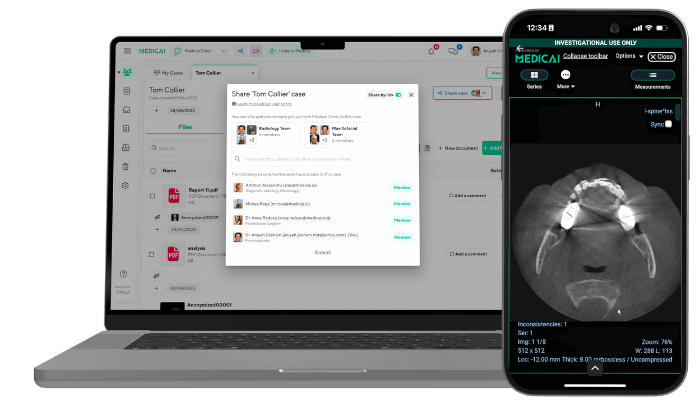
PACS: ¿El Futuro del Sistema de Imagen Médica Moderna?

La imagen médica es la columna vertebral de la atención médica moderna. Garantiza diagnósticos precisos y tratamientos efectivos.
Sin embargo, a medida que la tecnología de imágenes se desarrolla, los profesionales de la salud encuentran desafiante gestionar y compartir grandes cantidades de datos.
PACS, o Sistemas de Archivo y Comunicación de Imágenes, es un cambio radical para manejar imágenes diagnósticas. Facilita guardar, encontrar y compartir imágenes de manera rápida y segura.
Entonces, ¿qué hace que el PACS sea indispensable?
Exploremos qué hace el sistema PACS, sus componentes, tipos, beneficios y desafíos.
¿Qué es PACS en Imagen Médica?
PACS es una tecnología digital que significa Sistema de Archivado y Comunicación de Imágenes. Almacena, recupera y comparte imágenes médicas electrónicamente.
Estas imágenes médicas pueden ser radiografías, tomografías computarizadas, resonancias magnéticas y ecografías generadas por varias modalidades de imágenes.
Piense en PACS como un archivador digital para imágenes médicas. Ayuda a los proveedores de salud a ver, analizar y colaborar en casos de pacientes sin los problemas asociados con el manejo de registros físicos.

PACS elimina la necesidad de almacenamiento basado en película tradicional, optimizando el flujo de trabajo y mejorando la accesibilidad. Se ha convertido en una parte indispensable de la medicina moderna, especialmente en radiología, cardiología, patología y oncología.
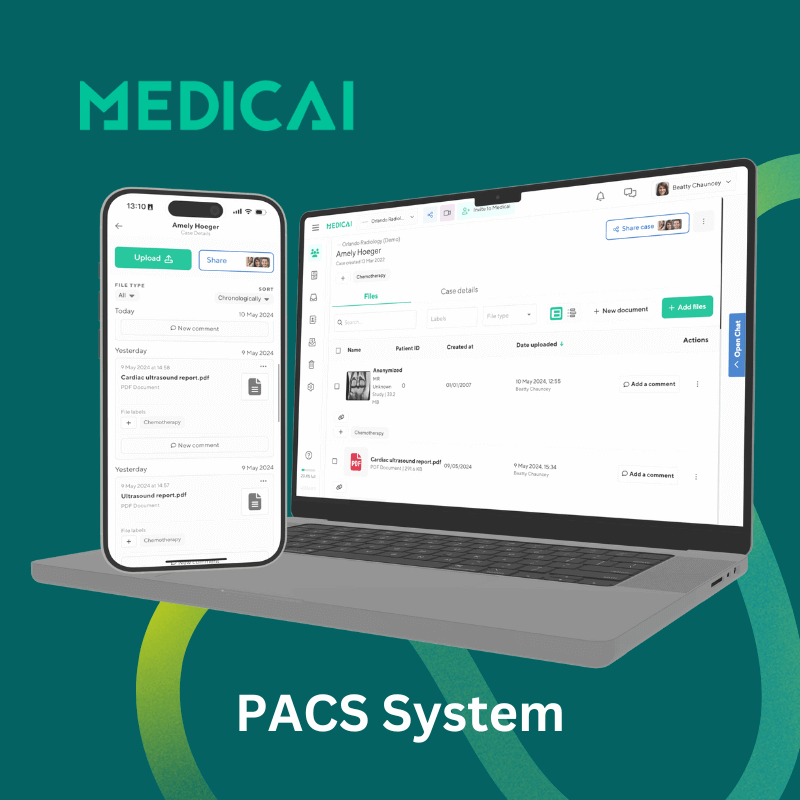
Plataformas como Medicai realmente potencian el significado de PACS en el enfoque de imagen médica. Hacemos que sea muy fácil acceder a las imágenes y toda la información relacionada de forma segura y en tiempo real, sin importar dónde se encuentre.
Componentes de un Sistema PACS
Un sistema PACS cuenta con varios componentes interconectados que gestionan y entregan sin problemas los datos de imágenes. Estos incluyen-
Modalidades de Imagen
PACS almacena y gestiona imágenes diagnósticas de máquinas de rayos X, resonancias magnéticas, tomógrafos y ecografías. Estas imágenes suelen estar en formato DICOM (Digital Imaging and Communications in Medicine) para garantizar la compatibilidad entre diferentes sistemas y dispositivos. Puede verlas usando un, ensuring compatibility across different systems and devices. You can view them using a visor DICOM.
Ayuda a los proveedores de salud a almacenar, recuperar y compartir sin problemas los datos de imágenes en un ecosistema unificado.
Infraestructura de Redes
Las redes de alta velocidad y seguras son cruciales para transmitir imágenes entre dispositivos de imágenes, sistemas de almacenamiento y estaciones de trabajo de visualización. Aseguran la transferencia segura y rápida de datos de imágenes.
Además, una infraestructura de red sólida también reduce el retraso y permite el acceso inmediato a imágenes de diagnóstico críticas.
Estación de Trabajo de Visualización
Una estación de trabajo de visualización es una computadora especial configurada con software que permite a los profesionales de la salud ver y analizar imágenes. Actúa como la interfaz entre el sistema PACS y el personal médico.
Funciones como el zoom, la reconstrucción en 3D y herramientas de anotación ayudan en evaluaciones detalladas de estas imágenes.
Almacenamiento de Archivo
Los sistemas PACS proporcionan soluciones de almacenamiento a largo plazo para los clínicos, permitiéndoles almacenar grandes cantidades de datos de imágenes. El almacenamiento puede ser local, utilizando servidores locales, en la nube, ofreciendo escalabilidad y accesibilidad remota, o híbrido, combinando ambos.
Medicai se integra perfectamente con los sistemas PACS existentes, agregando almacenamiento seguro en la nube, intercambio de imágenes mejorado y características avanzadas de colaboración. Como resultado, los proveedores de salud pueden acceder a los datos de imágenes de manera rápida y confiable.
Función de los Sistemas PACS
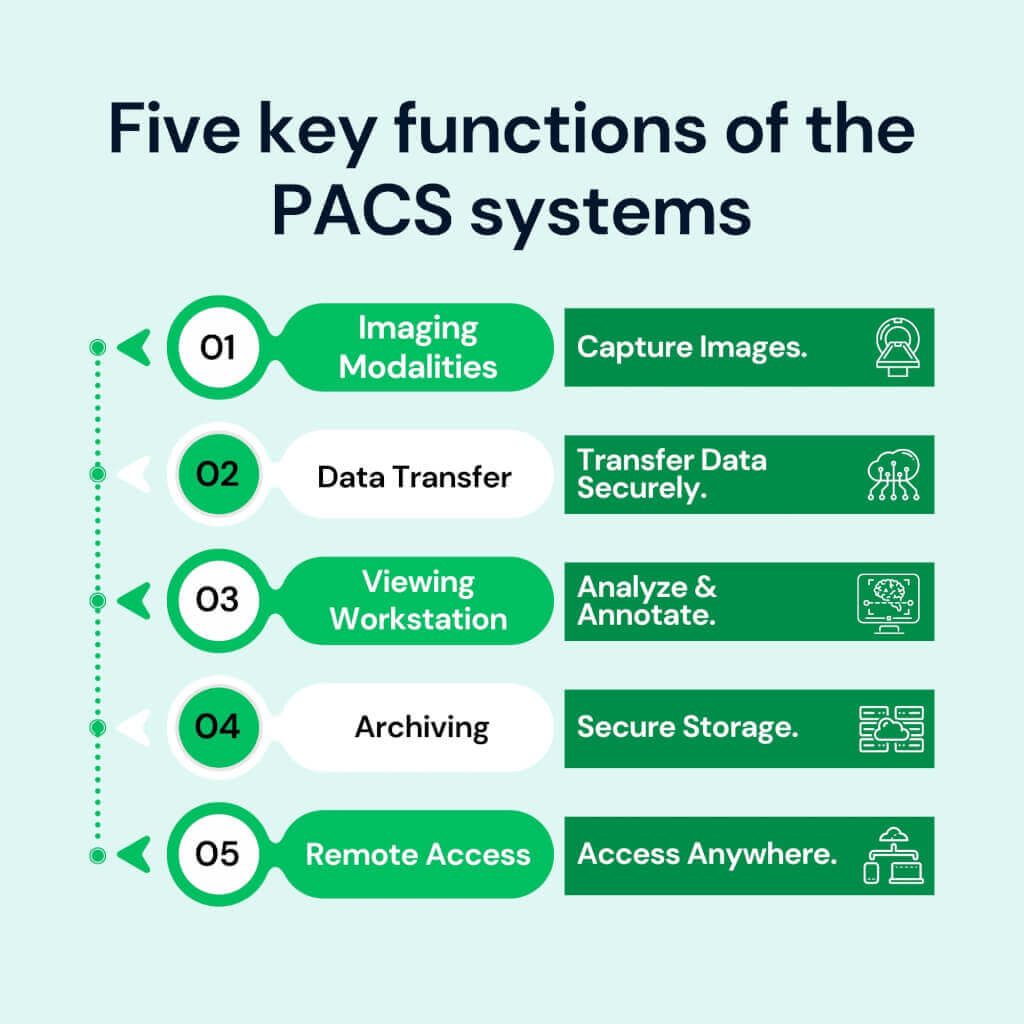
Veamos qué hace el sistema PACS para facilitar los flujos de trabajo de atención médica.
Almacenamiento de Imágenes
El sistema almacena de manera segura un gran volumen de imágenes médicas en formato digital. Los datos de imágenes médicas PACS incluyen radiografías, tomografías computarizadas, resonancias magnéticas y ecografías. Preserva las imágenes durante mucho tiempo sin el riesgo de degradación.
Recuperación de Imágenes
El sistema PACS permite a los profesionales médicos recuperar imágenes fácil y rápidamente para su revisión, análisis y diagnóstico. Con una conexión a Internet y unos pocos clics, los médicos pueden acceder a los datos de imágenes directamente desde estaciones de trabajo o dispositivos móviles.
Distribución de Imágenes
PACS soporta la distribución fluida y segura de imágenes médicas en diferentes ubicaciones dentro de una red de atención médica. Es especialmente valioso para sistemas de salud de múltiples instalaciones y consultas remotas.
Gestión de Imágenes
PACS organiza y gestiona imágenes médicas categorizando y manteniendo la calidad de los datos de imágenes. Utiliza herramientas avanzadas para la anotación, medición y edición de imágenes.
Acceso Remoto
Una característica valiosa del sistema PACS es su accesibilidad remota. Los profesionales de la salud pueden ver imágenes médicas prácticamente desde cualquier lugar con una conexión segura a Internet.
Tipos de Sistemas PACS
Los sistemas PACS vienen en tres tipos principales: tradicionales, basados en la nube e híbridos, cada uno ofreciendo ventajas y limitaciones distintas.
PACS Tradicional
El PACS tradicional o en las instalaciones suele depender de servidores locales dentro de una instalación de salud para almacenar y gestionar imágenes. Opera a través de una red interna asegurada, lo cual es excelente para instalaciones que desean control total sobre sus datos.
Ventajas
- Proporciona control y privacidad completos sobre los datos de imágenes.
- La instalación puede adaptar los sistemas para satisfacer sus requisitos y flujos de trabajo.
Desventajas
- Tiene demandas de infraestructura: espacio físico, servidores dedicados, sistemas de enfriamiento, mantenimiento continuo, etc.
- Puede tener accesibilidad limitada, proporcionando solo estaciones de trabajo en el sitio que pueden obstaculizar las consultas remotas o la colaboración entre ubicaciones.
PACS Basado en la Nube
PACS Basado en la Nube utiliza tecnología de computación en la nube para almacenar y gestionar imágenes. Ofrece una flexibilidad sin igual, ya que puede acceder a los datos de imágenes desde cualquier dispositivo con conexión a Internet.
Ventajas
- Ofrece accesibilidad remota: en cualquier momento y lugar.
- Es rentable ya que no necesita infraestructura en el sitio, reduciendo los costos de mantenimiento.
- PACS basado en la nube fácilmente cumple con sus crecientes demandas de almacenamiento ya que no requiere expansión física.
Desventajas
- Los proveedores de nube de terceros pueden plantear preocupaciones sobre la privacidad de los datos y violaciones de seguridad.
- Necesita una conexión a Internet estable y confiable para un rendimiento óptimo.
Hay más que saber cuando se diferencia entre PACS en la nube vs PACS en las instalaciones.
PACS Híbrido
Este PACS combina las mejores características de los sistemas tradicionales y basados en la nube. Almacena los datos de imágenes principales en servidores locales para acceso rápido mientras utiliza el almacenamiento en la nube para copias de seguridad y mayor capacidad.
Ventajas
- Proporciona el control y la seguridad de los sistemas tradicionales con flexibilidad y escalabilidad del almacenamiento en la nube.
- Tiene redundancia mejorada.
Desventajas
- Requiere gestionar tanto los recursos locales como los de la nube, complicando las operaciones de TI.
- El coste puede fluctuar dependiendo del uso.
Beneficios del PACS
Las bendiciones del sistema PACS son inmensas.
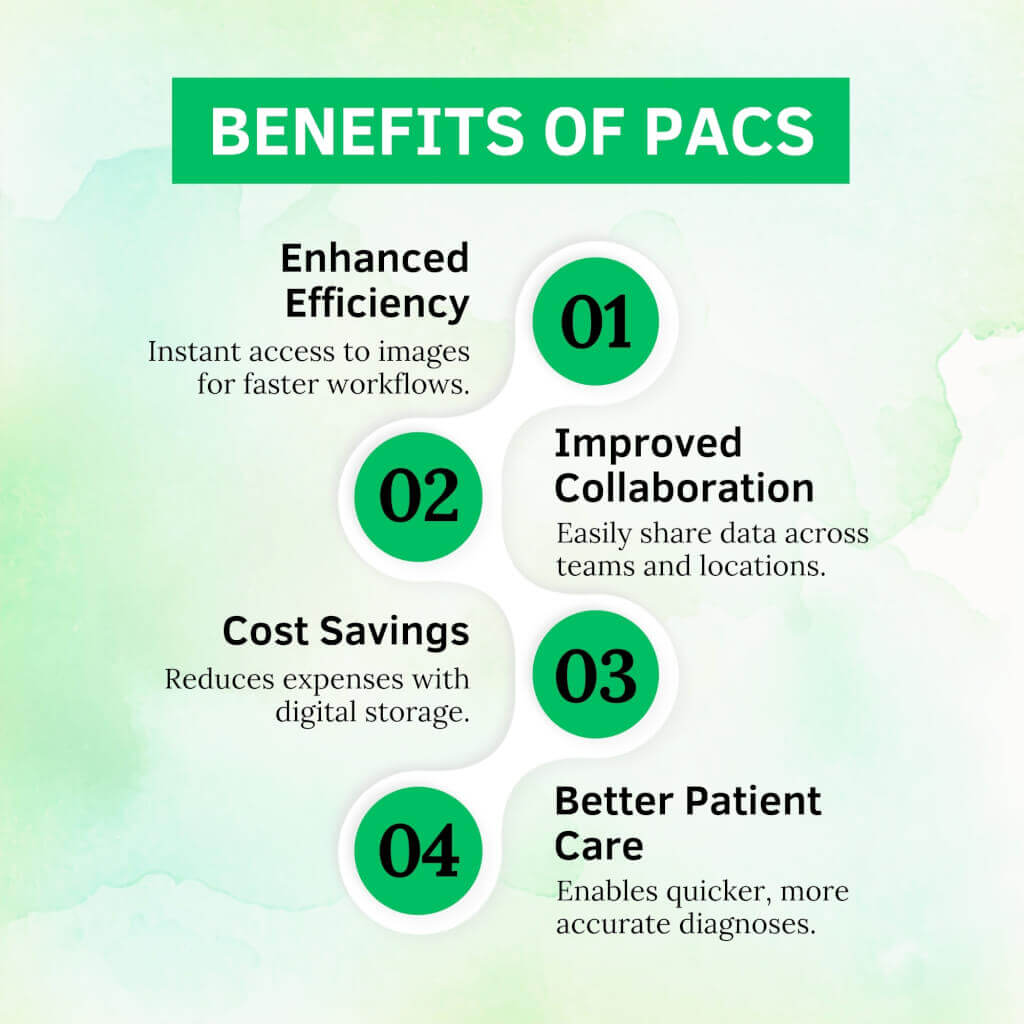
- Eficiencia Mejorada: El almacenamiento digital elimina la necesidad de películas físicas, permitiendo acceso casi instantáneo a las imágenes. Los flujos de trabajo automatizados también reducen la duración de las tareas administrativas.
- Colaboración Enriquecida: Los médicos pueden compartir datos de imágenes con especialistas en todo el mundo. Medicai mejoró aún más la colaboración con una opción de compartir rápidamente.
- Ahorro de Costos: PACS basado en la nube, como la solución de Medicai, reduce los costos porque no necesita películas, almacenamiento, o manejo manual. Sin embargo, no desalentamos la exploración de otras alternativas de PACS rentables.
- Mejor Atención al Paciente: Los médicos tienen acceso rápido a las imágenes que aseguran la atención al paciente rápida y precisa.
Integración con Otros Sistemas
PACS no funciona solo; se integra con otros sistemas para crear un entorno de TI cohesivo. Otros sistemas incluyen-
- Sistemas de Información Radiológica (RIS): maneja la programación, los informes y los registros de radiología con PACS.
- Sistemas de Información Hospitalaria (HIS): Asegura que los datos de imágenes se alineen con los flujos de trabajo administrativos y clínicos.
- Registros Médicos Electrónicos (EMR): Fusiona los datos de imágenes con los registros de los pacientes, proporcionando una vista holística del historial del paciente.
Desafíos de la Implementación de PACS
PACS es mágico, es cierto; sin embargo, también tiene desafíos.
- Seguridad de los Datos: Con las amenazas cibernéticas crecientes, proteger los datos sensibles de los pacientes puede ser un desafío.
- Interoperabilidad: Integrar PACS con sistemas heredados puede ser complejo y llevar tiempo.
- Costo de Implementación: La configuración inicial, el hardware y las inversiones en software pueden ser costosos para los proveedores de atención médica más pequeños.
Sin embargo, al abordar estos desafíos con Medicai, los proveedores de atención médica pueden maximizar los beneficios con seguridad, integración perfecta y soluciones rentables.
Conclusión
PACS ha redefinido la imagen médica. Ofrece a los proveedores de salud la herramienta perfecta para almacenar, recuperar y compartir imágenes diagnósticas de manera rápida, segura y sin problemas.
La plataforma de vanguardia de Medicai amplifica aún más los beneficios del PACS. Optimiza los flujos de trabajo, mejora la colaboración y asegura la gestión y transmisión de datos segura. Así, Medicai empodera a los centros de atención médica para brindar los mejores resultados para sus pacientes.
Explore Medicai y experimente la próxima generación de soluciones de imágenes diagnósticas PACS.


Artículos relacionados

¡Pongámonos en contacto!
Descubra cómo Medicai puede ayudarle a fortalecer su consulta y mejorar la experiencia de sus pacientes. ¿Listo para comenzar su viaje?
Reserve una demostración gratuita