Cybersecurity - an urgent concern for healthcare organizations

Introduction
Healthcare organizations are under increasing pressure to protect their patients’ privacy and security. In addition to federal regulations, there are also industry-specific regulations that govern how healthcare data is handled and maintained. Unfortunately, the use of electronic health records (EHRs) has made it easier for hackers to gain access to personal data with just a few keystrokes on an electronic device or web browser.
This is why it’s important to ensure your organization has a solid cybersecurity strategy in place.
Patient records are a prime target for hackers, as they contain a wealth of personal and financial data. Patient records also include medical devices, clinical information systems, and other electronic health records (EHRs). A hacker can use any of this data to commit fraud or identity theft.
Cybersecurity is increasingly a priority
Cybersecurity is increasingly a priority for technology leaders in healthcare organizations. It’s not just about protecting the data, but also protecting patient privacy. Healthcare organizations are taking steps to protect their enterprise PACS systems from cyberattacks by instituting security protocols such as multi-factor authentication and encryption at every level of their operations, including clinical devices, EHRs and more.
It is vital that cybersecurity be incorporated into the design and implementation of all new healthcare IT systems. The development, selection, and implementation of these systems should include consideration of all aspects of cybersecurity including:
- network security
- data protection, especially with respect to personally identifiable information (PII)
- legal implications for the use or misuse of sensitive data
Securing your enterprise PACS.
Pacs can be more vulnerable to attacks than other IT systems because they must simultaneously support clinical workflows, sophisticated image management, and distribution requirements, and enterprise integration needs.
A PACS is a target for hackers. It must be able to support clinical workflows, sophisticated image management, and distribution requirements, and enterprise integration needs while simultaneously protecting the integrity of your data.
Cloud computing can reduce cybersecurity risk
Cloud-based enterprise imaging solutions are not only scalable, but they also provide a highly secure platform that doesn’t require you to dedicate staff and infrastructure to manage it.
Cloud-based enterprise imaging solutions are not only scalable but also provide a highly secure platform that doesn’t require you to dedicate staff and infrastructure to manage it. Moreover, cloud computing solutions can be implemented quickly and at a relatively low cost. They can also be tailored to meet your specific needs.
As healthcare organizations continue to grow in both size and complexity, the risks associated with cybercrime will only increase. Organizations need an effective strategy for protecting sensitive data from hackers—and cloud solutions offer many benefits that make them an ideal choice for healthcare companies looking for ways to reduce their risk exposure in this area.
Healthcare organizations should be aware of the security risks inherent in their IT systems and, more importantly, should incorporate cybersecurity measures when designing or upgrading those systems. Cybersecurity is a priority for healthcare organizations today and is being incorporated into the design and implementation of healthcare IT systems at all levels. Prioritizing these security frameworks ultimately serves as a vital component of brand protection for modern medical institutions.
Conclusion
The bottom line is that cybersecurity is not only a concern for IT departments but also a priority for healthcare organizations. However, it’s not just about implementing “new features” or updating the software running on your systems—it’s also about ensuring that those systems are designed with security in mind. This means taking into account the fact that any new system should be built with cybersecurity in mind from the very beginning—and not just an afterthought thrown in at the end of development or implementation.
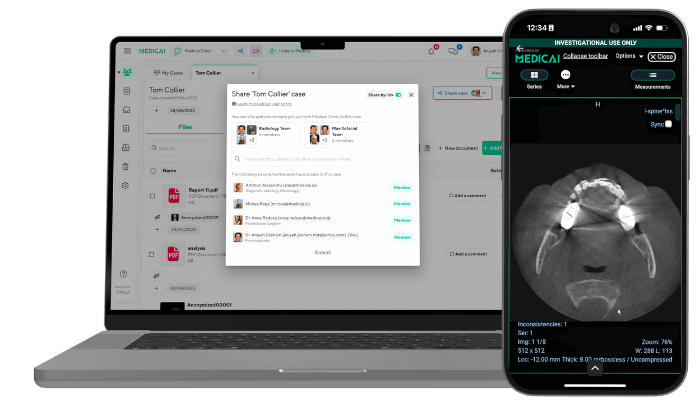
Safe and secure cloud-based infrastructure for medical imaging is provided by Medicai. AWS-powered cloud-native technologies guarantee network and infrastructure security, data protection and encryption, vulnerability analysis, governance, risk management, and compliance, as well as host and endpoint security.

Related Articles


Lets get in touch!
Learn more about how Medicai can help you strengthen your practice and improve your patients’ experience. Ready to start your Journey?
Book A Free Demo