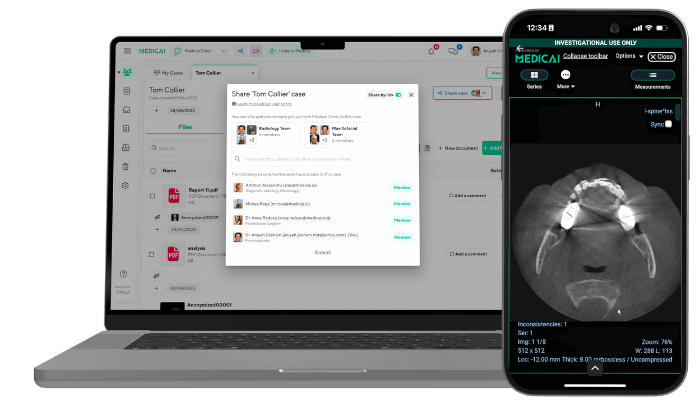
The Future of Multimodal Diagnostics in Personalized Medicine

Personalized medicine is reshaping modern healthcare by shifting treatment strategies away from generalized protocols and toward patient-specific care. Physicians and researchers now have access to larger volumes of clinical data than ever before. This includes medical imaging, pathology reports, genomic sequencing, laboratory testing, and wearable health metrics.
The challenge is no longer the availability of information. It is about connecting these data sources into a unified diagnostic framework that improves decision-making. This growing emphasis on integrated healthcare data has accelerated interest in multimodal diagnostics.
Instead of analyzing imaging studies and molecular profiles separately, healthcare organizations are increasingly combining them to create a more comprehensive understanding. Advances in artificial intelligence and cloud-based infrastructure are enabling this integration at a scale far greater than ever before.
Understanding the Rise of Multimodal Diagnostics
Medical imaging, pathology slides, genomic information, laboratory results, and electronic health records each provide a different perspective on patient health. When these datasets are integrated, clinicians gain deeper insights that would be difficult to identify through isolated analysis.
Research from the Journal of Medical Internet Research highlights how multimodal AI systems are increasingly capable of improving clinical reasoning. They are processing imaging data alongside structured patient information for a holistic view. The study demonstrates how combining multiple diagnostic inputs can strengthen healthcare decision-making and support earlier, more accurate disease detection.
It lists several applications of multimodal diagnosis, including:
- Enhanced tumor characterization
- Personalized treatment planning
- Early detection and diagnosis
- Predicting disease prognosis
Multimodal diagnostics can also benefit drug research and discovery. For instance, research organizations leverage an antibody discovery platform to accelerate precision medicine programs. According to Alloy Therapeutics, advanced discovery platforms can offer artificial intelligence (AI) capabilities and human transgenic mouse models.
Pharmaceutical and biotech companies can benefit by leveraging an antibody discovery platform with multimodal diagnostics. They can get a complete understanding of disease biology, patient variability, and treatment response for more precise biomarkers.
Artificial Intelligence and Diagnostic Collaboration
Artificial intelligence has become one of the main drivers of multimodal diagnostics. This is because healthcare systems generate massive amounts of both structured and unstructured clinical information every day.
AI models can analyze imaging studies, laboratory reports, pathology findings, and patient histories simultaneously. They can identify relationships that may not be immediately apparent to clinicians.
Google Research also introduced advances in multimodal diagnostic dialogue systems that combine conversational reasoning with visual medical interpretation. Their work demonstrates how AI agents may eventually assist clinicians by interpreting both patient interactions and diagnostic imaging.
This capability could significantly improve collaboration across healthcare departments. Radiologists, pathologists, oncologists, and primary care physicians often work with separate systems and reporting structures. Integrated AI environments can help synchronize these workflows by presenting unified patient insights across multiple specialties.
AI-assisted diagnostics may also reduce the time required for complex case evaluations. Instead of manually reviewing disconnected records, clinicians can access centralized diagnostic environments. Here, imaging findings, pathology results, and genomic indicators are linked together in real time.
Precision Oncology and Personalized Treatment Planning
Precision oncology continues to illustrate the value of multimodal diagnostics in modern medicine. Traditional cancer treatment approaches focused on broad disease categories. However, advancements in molecular medicine now allow clinicians to tailor therapies according to tumor-specific biological characteristics.
A Nature journal study examined how multimodal AI frameworks are improving the interpretation of clinical imaging and molecular datasets. The findings suggest that combining diagnostic modalities may improve predictive accuracy while supporting more individualized treatment recommendations.
The use of AI can further improve this accuracy compared to humans. However, combining the accuracy of AI models with human decision-making gave the best outcomes.
Personalized medication planning for chronic diseases can also be improved by integrating multimodal clinical phenotype data and molecular-level medication information. This can be embedded into a sequential decision-making model inspired by Chain-of-Thought reasoning.
Unlike traditional machine learning approaches, this framework reflects the step-by-step logic used by healthcare professionals when determining patient-medication relationships. Researchers evaluated the model using datasets from 3,675 patients with multiple chronic diseases.
Results showed that the framework outperformed existing baseline models in predictive accuracy while also improving interpretability and cross-disease generalization.
Interoperability and Data Accessibility
One of the largest barriers to multimodal diagnostics remains interoperability. Many hospitals still rely on disconnected healthcare systems that store imaging studies, pathology reports, laboratory records, and patient histories separately. This fragmentation slows collaboration and limits the ability to build comprehensive patient profiles.
An NCBI study emphasized the growing importance of interoperable healthcare ecosystems capable of supporting multimodal AI integration. The publication discussed how scalable infrastructure and standardized data frameworks are becoming essential for future diagnostic systems.
Cloud-based healthcare platforms are helping solve some of these challenges by enabling institutions to centralize diagnostic information in secure environments. Interoperability standards continue to support better communication between imaging systems, electronic health records, and clinical applications.
Healthcare organizations are also recognizing the importance of secure data governance. As multimodal diagnostics become more dependent on centralized information sharing, maintaining patient privacy and regulatory compliance remains a high priority.
Frequently Asked Questions
How can multimodal diagnostics improve rare disease detection?
Multimodal diagnostics can improve detection by integrating imaging studies, genomic sequencing, pathology findings, and clinical histories into a unified analysis. This broader diagnostic perspective helps physicians identify patterns that may not be visible through isolated testing methods. This supports earlier and more precise diagnoses of complex, rare conditions.
What role do wearable devices play in multimodal healthcare systems?
Wearable devices are becoming increasingly valuable in multimodal healthcare because they provide continuous streams of patient-generated health data. Heart rate monitors, glucose sensors, sleep trackers, and activity trackers can provide real-time physiological data that complements other information. This continuous monitoring allows clinicians to observe long-term health trends, detect early warning signs, and personalize treatment strategies.
Why is cloud infrastructure important for multimodal diagnostics?
Cloud infrastructure supports multimodal diagnostics by enabling secure storage, sharing, and analysis of large healthcare datasets. Medical imaging files, pathology slides, and AI models require substantial resources that on-premise systems may struggle to handle efficiently. Cloud-based platforms improve accessibility for healthcare teams while also supporting remote collaboration and faster data processing.
Multimodal diagnostics is becoming one of the defining technologies behind the future of personalized medicine. The integration of imaging, pathology, genomics, laboratory testing, and artificial intelligence is helping healthcare providers develop more accurate treatment strategies.
Research institutions, healthcare organizations, and technology companies are investing heavily in connected diagnostic ecosystems that support large-scale clinical collaboration. Although challenges related to interoperability and regulation remain, the direction of modern healthcare continues to move toward integrated, data-driven diagnostic environments.

Related Articles

Lets get in touch!
Learn more about how Medicai can help you strengthen your practice and improve your patients’ experience. Ready to start your Journey?
Book A Free Demo