Data Security and Interoperability
The category focuses on the critical aspects of safeguarding medical data and ensuring seamless data exchange across healthcare systems. Articles in this category explore best practices for protecting patient information, complying with regulations like HIPAA and GDPR, and addressing cybersecurity threats in the medical field. Additionally, it covers the importance of interoperability in enabling efficient data sharing between healthcare providers, improving care coordination, and fostering innovation through the integration of advanced technologies and healthcare platforms.
51 posts
Read MoreEHR vs EMR? Understanding the Key Differences and Impact

EHR vs EMR? Understanding the Key Differences and Impact EHR (Electronic Health Records) and EMR (Electronic Medical Records) may sound interchangeable—but they serve distinct purposes. While both store patient information electronically, EMRs are limited to a single practice, whereas EHRs allow data sharing across multiple providers. This key difference...

Read MorePACS vs MIMPS: What changed, and what should you call the system
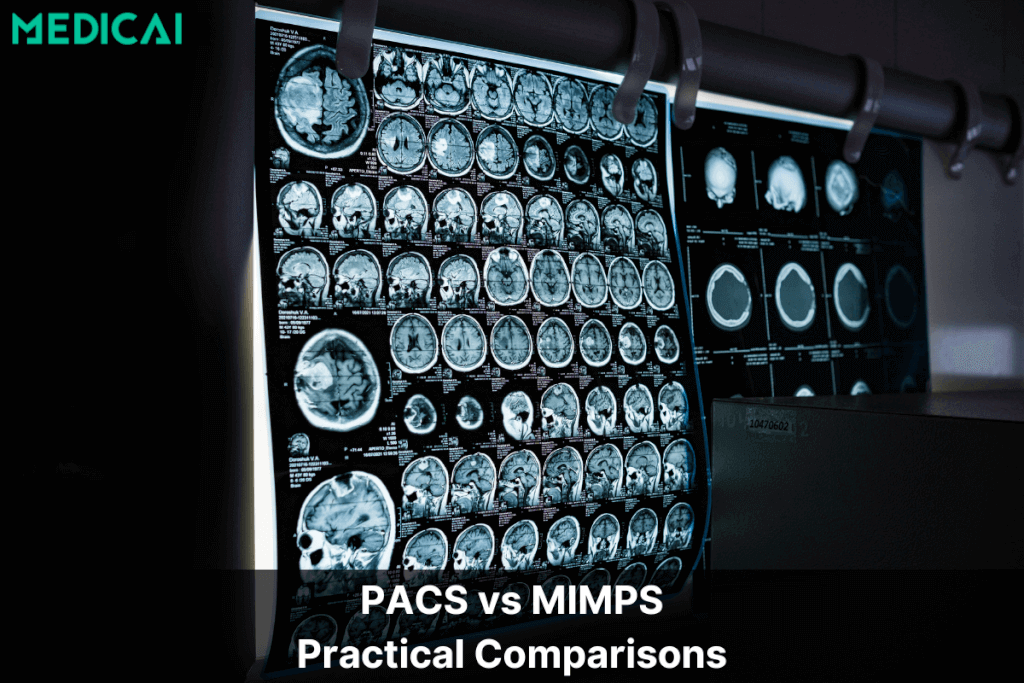
PACS vs MIMPS: What changed, and what should you call the system PACS vs MIMPS is mostly a naming and scope update; the FDA now uses MIMPS as the regulatory name for software systems that manage and process medical images for clinical interpretation. PACS is the legacy term most hospitals still use....

Read MoreWhat Is HL7? Standards, Versions, Use Cases, and Healthcare Interoperability (2026 Guide)
What Is HL7? Standards, Versions, Use Cases, and Healthcare Interoperability (2026 Guide) HL7 (Health Level Seven) is a family of healthcare data standards that defines how clinical systems exchange patient information, orders, results, and clinical documents. The Health Level Seven International standards organization, ANSI-accredited and founded in 1987, maintains four distinct standard...

Read MoreVendor Neutral Archive (VNA): Full Guide
Vendor Neutral Archive (VNA): Full Guide A Vendor Neutral Archive (VNA) is a medical imaging technology that stores clinical images and documents in a standard format (typically DICOM) and exposes them through standard interfaces, so any authorized system can access them regardless of which vendor or...

Read MoreDICOM Modality Worklist (MWL): How It Works, Why It Fails, and What Happens When It Does
DICOM Modality Worklist (MWL): How It Works, Why It Fails, and What Happens When It Does DICOM Modality Worklist is a DICOM service that allows an imaging device — a CT scanner, MRI machine, X-ray unit, or any DICOM-compliant modality — to query a server (typically the RIS) for the list of scheduled examinations it is...

Read MoreRadiology Information System (RIS): Modules, Chain Position, KPIs, and How It Connects HIS and PACS
Radiology Information System (RIS): Modules, Chain Position, KPIs, and How It Connects HIS and PACS RIS is the administrative and operational nervous system of a radiology department. It manages every event in the patient’s radiology journey, excluding the image itself — the referral, scheduling, patient check-in, exam tracking, report distribution, billing, and department statistics. While...

Read MoreHospital Information System (HIS): Why It Is the Centre of Every PACS Workflow
Hospital Information System (HIS): Why It Is the Centre of Every PACS Workflow Every radiology order that reaches your PACS starts in your Hospital Information System. Every patient identity mismatch that breaks your PACS workflow traces back to a data problem in your HIS. Understanding HIS is not optional knowledge for imaging informatics...

Read MorePACS Interoperability, Standards, Benefits, Challenges, and Emerging Trends
PACS Interoperability, Standards, Benefits, Challenges, and Emerging Trends A clinician opens a patient chart, clicks Imaging, and expects three things fast: the right study, the right priors, and a report that matches the images. PACS interoperability determines whether that click results in a phone call, a screenshot, or...

Read MoreAI Orchestration in PACS: Moving Beyond "Buzzwords" to Real Workflow

AI Orchestration in PACS: Moving Beyond "Buzzwords" to Real Workflow AI orchestration in PACS is the workflow control layer that triggers inference, applies routing rules, selects models, and delivers AI results back into PACS worklists and reporting in a way clinicians actually use. This guide explains AI orchestration in PACS,...

Read MoreHow VNA Technology Unifies Dexis, Schick, and Carestream
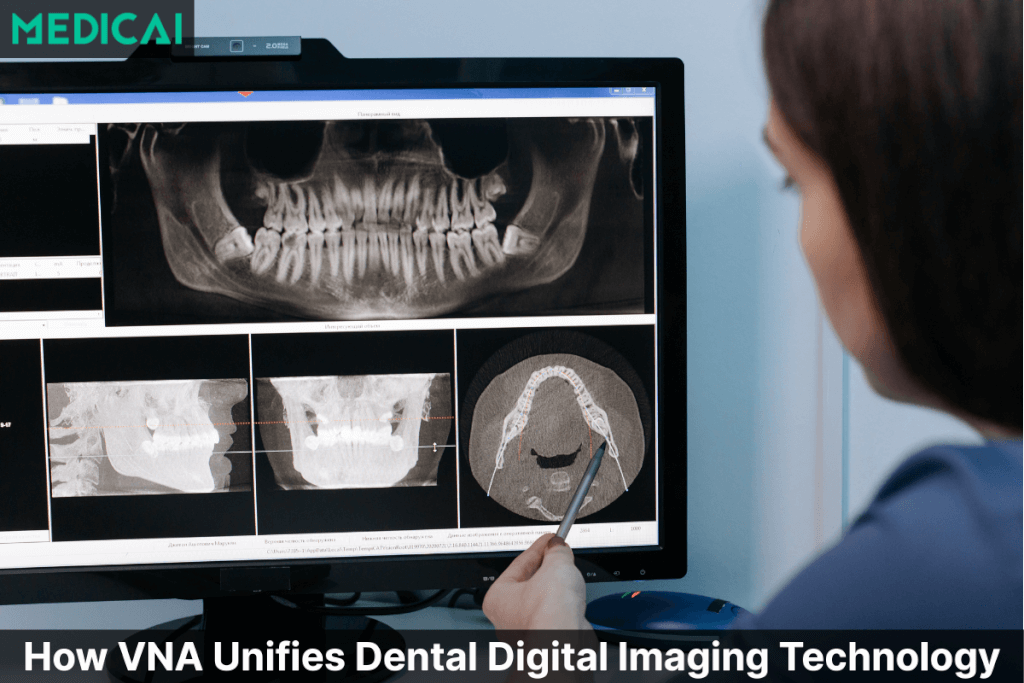
How VNA Technology Unifies Dexis, Schick, and Carestream For many dental practice owners and IT managers, buying a new digital sensor is not just a hardware purchase—it’s a software sentence. If you buy a dental digital imaging system like Schick sensor, you are often forced to use Schick’s imaging...

Read MoreWhy Cloud Dental PACS is Critical for Multi-Site Centralization: The DSO Tech Stack
Why Cloud Dental PACS is Critical for Multi-Site Centralization: The DSO Tech Stack Dental imaging software is the technology stack that captures, stores, retrieves, and shares diagnostic dental images — intraoral X-rays, panoramic radiographs, CBCT volumes, intraoral camera images, and intraoral scanner data — across one or more dental practices. The category includes...

Read MoreRIS-PACS Integration: HL7 Messaging, DICOM Modality Worklist, and Failure Prevention
RIS-PACS Integration: HL7 Messaging, DICOM Modality Worklist, and Failure Prevention For a Radiology IT Director, there is no headache quite like “Interface Fatigue.” You have a Radiology Information System (RIS) handling the scheduling and billing. You have a PACS handling the images. And sitting between RIS PACS integration is a...