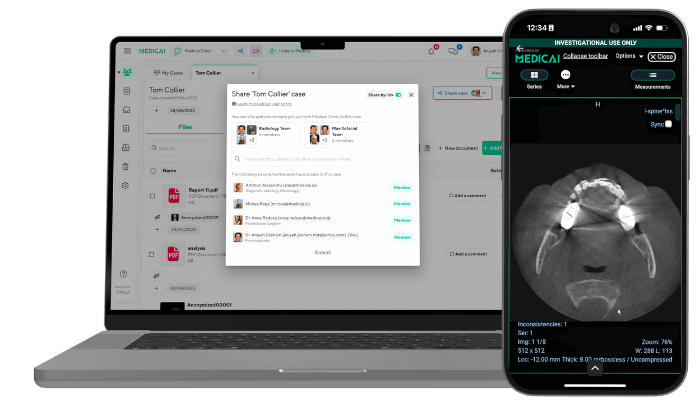
How Nurses Can Use Tech to Build Community in an Impersonal World

Technological innovation in healthcare has been growing rapidly, much to the excitement of practitioners and stakeholders. With AI-driven applications taking center stage in diagnostic and predictive settings, the possibilities for patient care have improved significantly.
However, on the downside, the rising influence of technology has also increased skepticism and distrust. A recent report by the Coalition for Health AI found that many patients have concerns about the use of AI in health management. Around 51% of the respondents stated that AI causes them to have lower trust in healthcare.
Moreover, many communities also have a general perception that technology makes interactions more impersonal and mechanical. Not what you would want from a healthcare practitioner.
Nursing is one of the few professions still perceived as warm and empathetic. It consistently fares well in trust surveys, helping people maintain faith in the healthcare sector amid distressing media reports involving corporate interference. When nurses show an interest in adopting tech-based solutions for patient care, the chances of community building are much greater.
Here are three powerful ideas to achieve this.
Apply Tech as Complementary to Human Interactions
The foremost consideration for modern nursing practitioners is to remain true to the essence of their roles: good old human empathy and service. When applying technological solutions during their shifts, nurses must reassure patients that human input will not be compromised.
These could be for tasks like maintaining electronic health records or sharing notes with physicians. The American Nurses Association highlights the many ways in which nursing technology is improving patient care, from portable diagnostic devices to robotic assistance.
According to the Washington State Nurses Association, we must see technology as an assistant, not as a replacement for judgment and expertise. It underlines the growing need to stay true to the defining values of this field, including advocacy and compassion.
In turn, patients who witness this interplay of technology and core human expertise will feel more confident about their care. They may be less likely to feel reduced to a data point in a software tool.
This approach can also prove effective in minimizing digital compassion fatigue among nurses. Medscape notes that nurses spend 35% of their shifts performing digital documentation. Over time, this can bring on emotional numbing and compassion withdrawal.
Balance is key.
Learn Academic Foundations of Community-Focused Care
Irrespective of the stage you are in your career, returning to academia can always be helpful in strengthening your competencies. For nursing professionals, community-building skills can be crucial for making progress with vulnerable populations, such as older adults. These are skills you may not have picked up while on the job.
For example, cultural awareness is an integral part of community building. This is particularly important for nurses who support diverse populations in various settings.
A 2024 study in NursingOpen found that students who participated in online IaH (Internationalization at Home) sessions showed favorable outcomes in cultural awareness. Studies have also shown that including technological elements can improve student learning.
Pursuing a Master of Science in Nursing can also help passionate nurses learn to develop a strong sense of community through personal experience. Such programs let you benefit from connections with experts and peers as well as real-world experiences.
Felician University notes that many nursing practitioners wish to pursue psychiatric or family-focused streams, both of which are in demand. Both also need you to connect with patients across the lifespan.
A strong academic foundation in these fields, assisted by tech-driven modes of delivery, can prepare nurses for effective community building.
Addressing Social and Geographical Isolation
Another heartening application of technology in nursing lies in telehealth and virtual care models. Both of these can help people feel supported, regardless of their social and geographical distance.
A paper published in Humanities and Social Sciences Communications finds that one in four older adults feels lonely. This loneliness is associated with clinical factors, including depression and poorer health outcomes.
Nurses skilled at implementing care models through digital channels can address these concerns. They can perform essential tasks, such as following up on medication adherence, and also offer emotional support. They can check for indicators of mental distress and intervene in time to help patients feel stronger through community connections.
Presently, these are evolving areas. Scoping studies observe that the nursing workforce can benefit from new practice models focused on telehealth delivery. One can expect more healthcare organizations to integrate such professional development activities to build a more compassionate workforce for remote care.
FAQs
How can nurses use technology while retaining a personal connection with patients?
Nurses should aim to utilize technology as a supportive tool, not a replacement for meaningful human interaction. The goal is to combine digital solutions with empathy and patient-focused communication. Staying committed to empathy while using technology can improve care while also maintaining trust.
Why is community-focused care essential to modern nursing?
For nurses to support diverse and vulnerable populations, community-focused care is imperative. For example, older adults and individuals facing isolation can benefit from this approach. Nurses must prioritize cultural awareness and emotional support to build stronger healthcare relationships.
How can telehealth reduce social and geographical isolation?
Telehealth allows nurses to stay connected with patients remotely, including those in underserved or isolated areas. Virtual care models can help nurses maintain regular follow-ups and monitor mental and physical health. These delivery approaches help nurses to make patients feel supported and connected to the larger community.
Nurses and Community Building Through Tech Interventions
| Patients with lower trust due to AI in healthcare | 51% of respondents said AI lowers their trust in healthcare |
| Time nurses spend on digital documentation | Nurses spend 35% of their shifts completing digital documentation |
| Older adults experiencing loneliness | 1 in 4 older adults report feeling lonely |
| Benefits of online cultural awareness sessions | Nursing students showed improved cultural awareness outcomes after online IaH sessions |
The Power of Personal Connections
In a tech-dominated world, personal connections have taken on even deeper importance. In people-focused professions like nursing, the role of community building is even more profound for inspiring confidence and resilience in patients.
For nursing practitioners, it will be important to adopt a balanced approach toward technology and strengthen academic foundations. Infusing the practice with core promises of nursing, including medical and emotional support across barriers, can restore faith in the power of community.

Related Articles
Lets get in touch!
Learn more about how Medicai can help you strengthen your practice and improve your patients’ experience. Ready to start your Journey?
Book A Free Demo