Page 4 of 19 – Recent Articles
383 posts
How Deep Learning Revolutionizes Cardiac MRI Segmentation
How Deep Learning Revolutionizes Cardiac MRI Segmentation What if your next cardiac MRI report arrives before you finish your coffee? Fully automatic deep-learning segmentation combines a CNN-powered ROI detector, U-Net–based backbone, and deformable-model refinement to deliver pixel-perfect chamber masks in seconds. The result is clinician-grade contours, Dice...

From Scan to Diagnosis: How Does PACS Works
From Scan to Diagnosis: How Does PACS Works No film, no delays, just a click and your images appear! That’s the power behind modern imaging workflows, such as PACS, where speed and precision transform patient care. PACS (Picture Archiving and Communication System) digitizes film archives, capturing, storing, and...

Brain Tumor MRI Image Segmentation Using Deep Learning Techniques
Brain Tumor MRI Image Segmentation Using Deep Learning Techniques Imagine reducing hours of manual brain MRI segmentation to seconds. Brain tumor boundaries emerge automatically, and deep learning is making this possible. It brings precision, speed, and consistency to neuro-oncology workflows. Deep learning leverages CNNs, attention U-Nets, and transformer hybrids...

Liver Segmentation MRI: From Prep to 3D Masks
Liver Segmentation MRI: From Prep to 3D Masks Imagine turning a series of blurry MRI slices into a crystal-clear 3D map of the liver in seconds. No more guesswork or manual tracing. Liver segmentation MRI uses advanced algorithms to isolate liver tissue from surrounding organs, creating precise 3D...

How Brain MRI Segmentation is Revolutionizing Neuroimaging
How Brain MRI Segmentation is Revolutionizing Neuroimaging The human brain is one of the most complex structures in nature, and understanding it starts with seeing it clearly. Enter brain MRI segmentation: a powerful technique that transforms raw medical scans into labeled maps of brain tissue and pathology....

Pediatric PACS: The Future of Radiology in Children’s Hospitals
Pediatric PACS: The Future of Radiology in Children’s Hospitals In pediatric care, delays can be dangerous. When a child needs a scan, there’s no time to wait for film prints or misplaced records. Fast, reliable access to imaging can mean the difference between uncertainty and immediate action. That’s where...

How To Choose The Best PACS Vendors for Cardiology Imaging
How To Choose The Best PACS Vendors for Cardiology Imaging Cardiology imaging is complex, and generic PACS just don’t cut it. If you’re looking for a solution tailored to cardiovascular workflows, cardiology PACS vendors offer specialized platforms beyond basic image storage. And when these solutions are built for enterprise use,...

How Rapid CPR Response in Hospitals Saves Lives
How Rapid CPR Response in Hospitals Saves Lives Every hospital practitioner is aware of the weight of a code blue. There is only a thin margin of error when a patient happens to have a cardiac arrest. Research has demonstrated that each minute without CPR reduces the possibilities...

AI and PACS: Revolutionizing Radiology Practice
AI and PACS: Revolutionizing Radiology Practice What if your PACS could do more than just store images? What if it could help interpret them, prioritize cases, and reduce reporting time? That’s exactly what AI is now bringing to radiology departments around the world. AI integration in...

MRI vs MRA: Know the Purpose, Uses, and Risks
MRI vs MRA: Know the Purpose, Uses, and Risks What are the differences between an MRI and an MRA? These imaging tests sound similar and use the same machine, but they aren’t interchangeable. An MRI captures detailed images of organs and tissues, while an MRA focuses specifically on blood...

Why Does Every Urgent Care Center Need a Modern PACS System?
Why Does Every Urgent Care Center Need a Modern PACS System? Need faster diagnoses and smoother patient flow in your urgent care clinic? The answer might be simpler than you think. PACS is a digital solution that allows urgent care providers to store, access, and share medical images in real time....

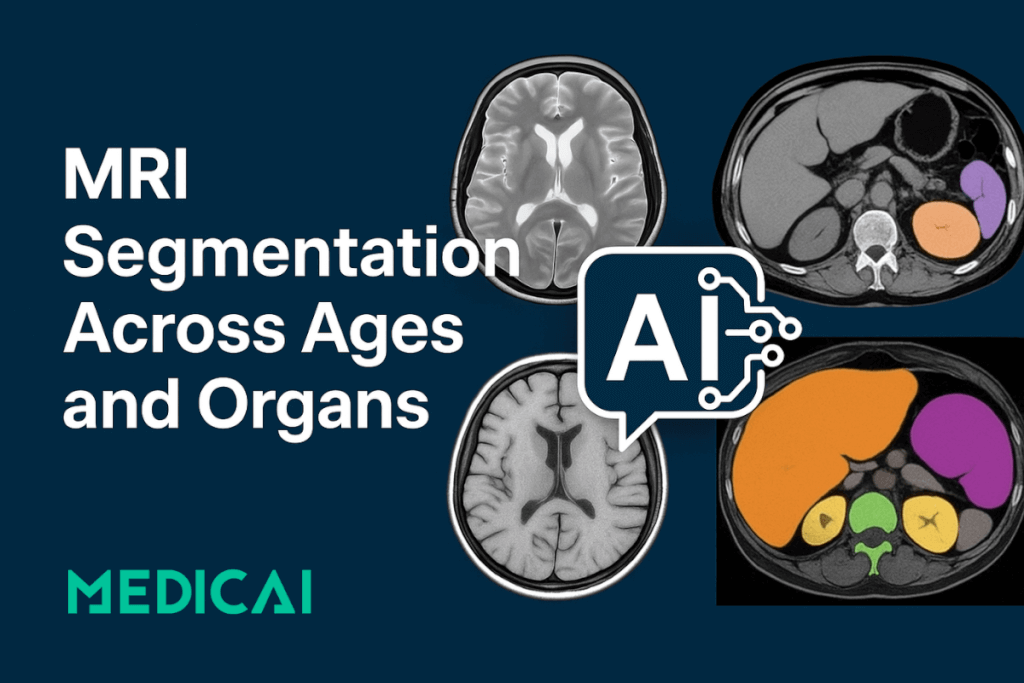
MRI Segmentation Across Ages and Organs
MRI Segmentation Across Ages and Organs What if your MRI scan could do more than just show images? What if it could deliver precise measurements, highlight disease progression, and even guide treatment in minutes? That’s the promise of modern MRI segmentation, a technology quietly transforming how...

How Proper PACS Server Configuration Improves Imaging Speed, Access, and Collaboration
How Proper PACS Server Configuration Improves Imaging Speed, Access, and Collaboration Ever wonder how hospitals instantly access X-rays, MRIs, or CT scans from anywhere in the building or even remotely? It’s all thanks to a PACS server, the invisible workhorse behind modern medical imaging. A PACS server stores, manages, and shares...

Veterinary Radiology and Ultrasound in the PACS Era
Veterinary Radiology and Ultrasound in the PACS Era What if diagnosing your pet was as fast and seamless as ordering takeout from your phone? Welcome to the world of modern veterinary radiology. Veterinary radiology involves medical imaging technologies that help diagnose animal injuries, diseases, and abnormalities. Clinics now...

AI in Nuclear Cardiology: What’s Changing?
AI in Nuclear Cardiology: What’s Changing? What if we could see not just the heart’s structure, but how well it truly works? That’s exactly what nuclear cardiology makes possible. Nuclear cardiology uses radioactive tracers to assess heart function, blood flow, and tissue viability. It enables early,...

AI-Driven Insights in PACS and DICOM to Future-Proofing Personal Injury Case Management
AI-Driven Insights in PACS and DICOM to Future-Proofing Personal Injury Case Management A single image can shape the outcome of a personal injury case, but only if it’s clear, accurate, and accessible in time. As AI rapidly transforms healthcare, its impact is now felt in the courtroom. By integrating with PACS and...

AI and Imaging Analytics: Personalizing Clinical Decision Support with Cloud PACS
AI and Imaging Analytics: Personalizing Clinical Decision Support with Cloud PACS What if your medical images could do more than just sit in storage? Imagine if they could think—analyzing themselves, spotting red flags, and helping doctors make faster, smarter decisions tailored to each patient. Well, that’s no longer science fiction. It’s...

HIPAA-Compliant Medical Imaging Sharing: Essential Knowledge for Personal Injury Attorneys
HIPAA-Compliant Medical Imaging Sharing: Essential Knowledge for Personal Injury Attorneys Medical images can make or break a personal injury case. However, handling them the wrong way can land your firm in serious legal trouble. Attorneys must manage HIPAA regulations while crafting evidence-based arguments. They must also understand Protected Health Information...

From Standard to Smart: Why One-Size-Fits-All Doesn't Work in Medical Imaging
From Standard to Smart: Why One-Size-Fits-All Doesn't Work in Medical Imaging What if the very tools designed to support radiologists are limiting their potential? A one-size-fits-all approach doesn’t work in medical imaging because it cannot accommodate real patients and radiologists’ diverse anatomical, pathological, and workflow needs. Standard protocols ignore critical variables...

Making Sense of Complex Injuries: Multi-Modality Viewing in Personal Injury Lawsuits
Making Sense of Complex Injuries: Multi-Modality Viewing in Personal Injury Lawsuits A single scan can tip the scales of justice in a courtroom battle. However, when injuries are complex, one scan isn’t enough. Multi-modality imaging enhances personal injury cases by combining X-rays, MRIs, CT scans, and ultrasounds and analyzing them together...

Explainable AI for Personalized Treatment: A New Era of Trustworthy Healthcare
Explainable AI for Personalized Treatment: A New Era of Trustworthy Healthcare What if your doctor handed you a treatment plan generated by AI, without explaining why? Would you trust it? In today’s data-driven healthcare landscape, AI is growing in diagnosing disease and guiding personalized treatment. But without transparency, even the most...