

Stress is part of everyday life in today’s world. Between juggling work, family, finances, and a never-ending list of tasks, it’s easy for our emotional well-being to take a hit. But while we rush to get our annual physicals and blood tests, mental health often gets left out of routine checkups. That needs to change.
Mental health isn’t separate from physical health. It’s part of the same picture. Anxiety, depression, burnout, and emotional fatigue can affect sleep, digestion, blood pressure, and even immune response. That’s why it’s time mental health earned a regular seat in the primary care exam room.

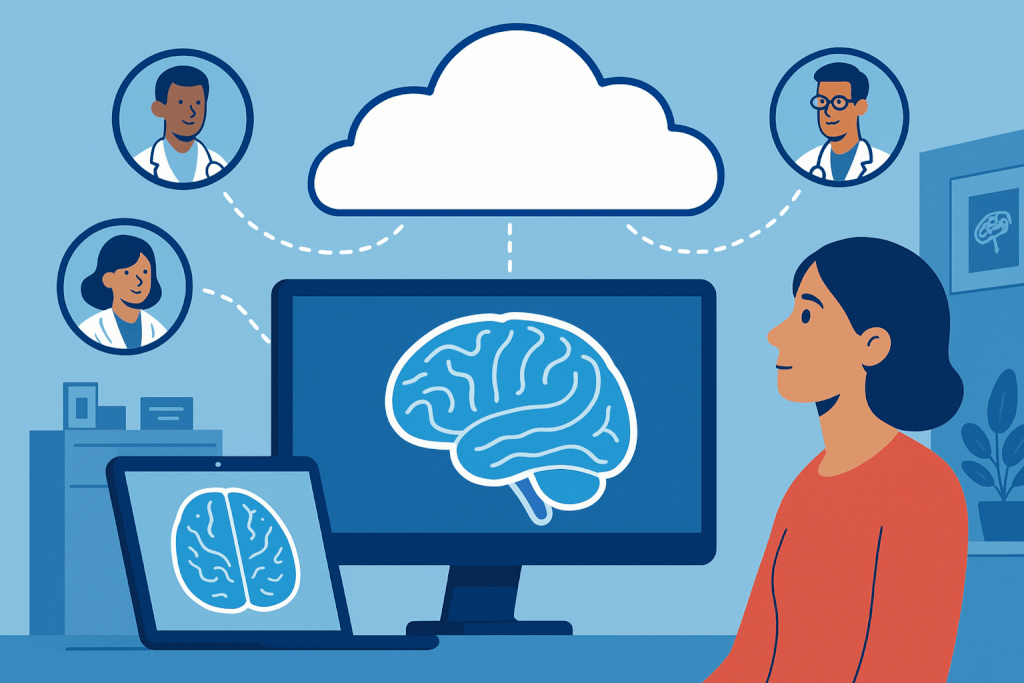
Cloud PACS In Mental Health Management and Care
When people think about mental health innovation, they picture teletherapy or mindfulness apps, not the imaging stack running behind the scenes.
Yet many psychiatric disorders have a neurobiological footprint that only advanced imaging can reveal. Migrating that imaging workflow to the cloud isn’t a back-office upgrade; it’s a frontline clinical intervention. Here’s how a cloud-native PACS platform reshapes mental-health management—and why every clinic should care.
Turning “Wait Weeks” into “See Today”
A patient with treatment-resistant depression might wait three weeks for a volumetric MRI read on hippocampal atrophy. With cloud PACS, the scan is uploaded directly from the magnet, AI pre-segments key regions, and a remote neuro-radiologist can sign the report on the same day. Faster imaging answers close the gap between evaluation and medication adjustment, directly improving outcomes and reducing patient drop-off.
True Multidisciplinary Collaboration, Minus the Silo
Mental health care often involves psychiatrists, psychologists, neurologists, and social workers. Traditionally, each discipline lives in its own software-walled garden. Cloud PACS acts as the shared visual canvas: neurologists annotate lesions, psychiatrists overlay symptom timelines, and therapists tag behavioral milestones—all inside a secure browser. Everyone sees the same “brain narrative,” enhancing coordinated care and reducing conflicting recommendations.
Lowering the Stigma Barrier
For patients, walking a CD of their brain scan across town feels archaic—and can amplify anxiety. Secure, invite-only links let them instantly share images with second-opinion specialists or family members on any device. When people can control and understand their data, they’re more engaged and less apprehensive about escalating to advanced treatments like rTMS or ketamine infusions.
Built-in Compliance That Scales
Mental-health records are doubly sensitive: they carry both medical and personal stigma risks. A cloud PACS designed for HIPAA, GDPR, and local mental-health privacy statutes encrypts every pixel at rest and in transit, logs every access, and offers region-based data residency. Clinics gain enterprise-grade security without hiring a full-time infosec team.
Fuel for Predictive Insights
Once scans live in the cloud, anonymized cohorts can feed machine-learning models that predict relapse risk or treatment response. At Medicai, we’ve already adapted our Radiology AI-Copilot to flag micro-hemorrhages correlated with late-life depression. The same pipeline can surface white-matter integrity metrics linked to bipolar disorder—insights nearly impossible to scale on on-prem hardware.
Stress Isn’t Always Obvious, But It’s Always There
Stress doesn’t always manifest the way we think it will. Some people snap under pressure, and others go silent. It can creep in as fatigue, irritability, low motivation, or trouble focusing. It might feel like a racing heart, poor sleep, or digestive discomfort.
The problem is, people often ignore these signs or chalk them up to being just tired. Primary care visits tend to focus on physical complaints, so unless a provider is trained to ask the right questions, mental health struggles can fly under the radar.
Regular checkups are a powerful opportunity to spot these early signs, but only if providers are paying attention to mental health, not just cholesterol numbers or blood pressure.
Mood Check-Ins Belong in the Exam Room
Your primary care doctor sees you regularly. They often have a big-picture view of your health, lifestyle, and life events. That makes them the perfect person to help track mental health trends over time.
For example, if you’ve been reporting poor sleep and low energy for months, a good provider should ask whether there’s more than a busy schedule. And if you’re showing signs of anxiety or chronic stress, they can guide you to the right support early, before things snowball into bigger problems.
Mental health check-ins don’t need to be long therapy sessions. Sometimes, a simple, “How have you been feeling emotionally lately?” can open the door to an honest conversation. These moments matter, and they can lead to better care overall.
Treating Mental Health Like Physical Health
We don’t think twice about checking blood pressure, getting a flu shot, or asking for help with a bad back. Mental health should be treated the same way, something we can talk about openly and manage just like any other condition.
Let’s say someone comes in with frequent headaches. A thorough provider should consider emotional triggers like stress or anxiety, not just prescribe painkillers. If someone’s blood sugar is spiking, is it just their diet? Or could emotional eating, depression, or life stress be part of the picture?
Primary care providers don’t have to be mental health experts. But they should be trained to recognize signs of emotional distress and feel confident enough to start the conversation or make a referral when needed.
Making Checkups Feel Safe for Honest Conversations
A big part of bringing mental health into primary care is building a comfortable, trusting relationship between doctor and patient. If visits feel rushed or impersonal, people are far less likely to bring up emotional struggles.
When your doctor truly knows you, conversations about mental health become natural. That’s what Craft Concierge brings to Tampa’s direct primary care.
Direct primary care models give providers more time with patients and foster deeper relationships than surface-level care. It’s easier to notice emotional shifts, ask about life changes, and connect the dots between physical symptoms and mental well-being. When your doctor truly knows you, conversations about mental health become natural. Choose Craft Concierge for personalized healthcare that fits your lifestyle.
Primary Care Is Often the First Line of Support
Not everyone has easy access to a therapist or psychiatrist. Sometimes, it’s hard to even know where to start. That’s why primary care providers are so important. They’re often the first place people go when something feels off.
People might not say, I think I’m depressed. They might say, I haven’t been sleeping, or I feel tired all the time. A provider who knows how to look deeper can catch what’s happening and help the patient take the next step.
This can include offering a screening tool, having a longer conversation, or guiding the patient toward therapy, counseling, or even medication if needed. And even when a patient isn’t ready for the next step, just knowing their provider heard them makes a huge difference.
Stigma Is Still Real, Primary Care Can Break It
Many people still feel ashamed or afraid to talk about their mental health. Some grew up in households where emotional problems were ignored or dismissed. Others worry they’ll be judged or misunderstood.
Primary care can help normalize these conversations. If we treat mental health concerns with the same attention and care we give to physical ones, patients feel seen and supported rather than labeled.
Providers can gently shift the culture by weaving mental health questions into routine exams. When it becomes normal to ask, Are you managing stress okay? During an annual checkup, it also becomes normal to answer honestly.
Mental and Physical Health Work Together
Our minds and bodies are connected in ways we’re only beginning to fully understand. Chronic stress can lead to inflammation, depression can reduce immune function, and anxiety can throw off digestion. On the flip side, taking care of mental health can boost energy, improve sleep, and reduce pain.
Primary care is the ideal setting for holistic health care. Instead of seeing mental and physical symptoms as separate problems, providers can consider the full picture and create care plans that support both.
Think of it like this: a doctor might prescribe exercise for joint pain, but if they also know a patient is feeling isolated or anxious, they might suggest a group class for both movement and social support. That’s the kind of thoughtful care that makes a difference.
It’s Time to Redefine a Complete Checkup
For too long, checkups have focused mostly on numbers, blood pressure, weight, and labs. While those are important, they don’t tell the whole story. You can have great lab results and still feel overwhelmed, lonely, or stuck.
A complete checkup should leave space to discuss life, stress, sleep, mood, and relationships because they are just as vital to one’s well-being.
Primary care is evolving. More practices are seeing the value of whole-person care. Patients are asking for more honest conversations. And slowly, the walls between physical and mental health are coming down.
Your Mental Health Deserves a Place in the Exam Room
When visiting the doctor, you shouldn’t have to separate your emotional well-being from your physical health. They’re deeply connected, and both deserve attention.
Embracing mental health as part of routine primary care creates space for more meaningful conversations, better outcomes, and more empowered patients. Whether it starts with a simple check-in or a deeper discussion, this shift can lead to lifelong benefits and maybe even save lives.
Mental health is health. Let’s start treating it that way.


