How AI-Powered Diagnostics Are Reducing Human Error in Healthcare

No matter how experienced a doctor is, they’re still human. Long shifts, constant pressure, and the sheer volume of patient data can sometimes lead to small mistakes, and in healthcare, even small mistakes can have serious consequences.
That’s exactly where AI is starting to make a real difference.
Instead of replacing doctors, AI-powered diagnostics are acting like a highly reliable assistant, one that doesn’t get tired, doesn’t overlook details, and can process massive amounts of information in seconds. The result? Fewer errors, faster decisions, and better patient care.
Why Human Error Happens in Healthcare
Let’s be honest, modern healthcare is overwhelming.
Doctors often have to:
- Review hundreds of patient records
- Analyze complex imaging scans
- Make quick decisions under time pressure
- Rely on incomplete or scattered data
On top of that, there’s something called cognitive bias. For example, if a doctor suspects a particular condition early on, they might unintentionally focus only on information that supports that assumption.
None of this means doctors aren’t skilled. It just shows how demanding the system is.
Where AI Steps In
AI doesn’t “guess” like humans sometimes do. It looks at patterns, probabilities, and lots of data.
By analyzing medical images, lab results, and patient history together, AI can highlight things that might otherwise be missed. Think of it as a second set of eyes—one that’s trained on millions of cases.
And the best part? It keeps getting better over time.
Real Ways AI Is Reducing Errors
1. Catching What the Human Eye Might Miss
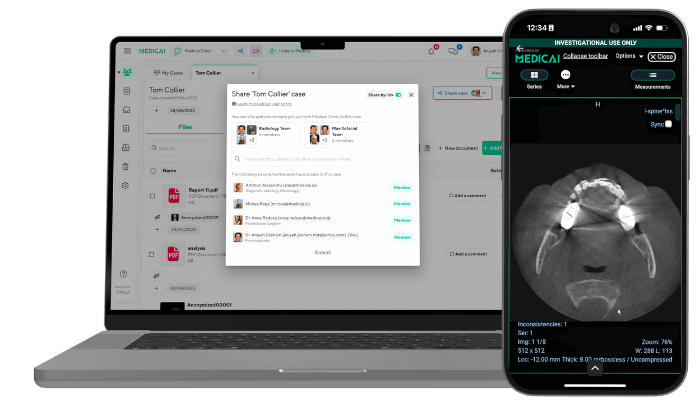
Medical imaging is one of the biggest areas where AI shines.
Whether it’s an X-ray, MRI, or CT scan, AI can detect very subtle patterns, early-stage tumors, tiny fractures, or slight abnormalities that are easy to overlook, especially during a busy day.
It doesn’t replace the radiologist; it supports them. And that extra layer of review can make a huge difference.
2. Connecting the Dots Faster
Sometimes the issue isn’t a lack of data, it’s too much of it.
AI can pull together:
- Patient history
- Lab reports
- Genetic information
- Previous diagnoses
…and turn it into a clear, actionable insight. This reduces the chances of missing something important simply because it was buried in the data.
3. Reducing Bias in Decision-Making
We all have biases; it’s part of being human.
AI, on the other hand, doesn’t have assumptions. It evaluates data objectively, which helps doctors balance their own judgment with data-backed insights.
This leads to more accurate and consistent diagnoses.
4. Faster Decisions in Critical Moments
In emergency situations, every second matters.
AI can analyze data almost instantly and flag high-risk cases. Whether it’s identifying a stroke or detecting heart abnormalities, faster diagnosis often means faster treatment and better outcomes.
5. Continuous Monitoring Without Fatigue
Unlike humans, AI systems can monitor patients 24/7 without slowing down.
They can track vital signs, detect unusual patterns, and alert doctors before a condition worsens. This kind of proactive care helps prevent complications rather than just reacting to them.
AI Is Also Improving Communication
Diagnostics isn’t the only area evolving.
Tools powered by Conversational AI in healthcare are making it easier for patients to interact with healthcare systems whether it’s booking appointments, asking basic health questions, or getting follow-up guidance.
Platforms like Murf AI are helping enable more natural, voice-based interactions, making healthcare feel more accessible and less intimidating for patients.
Smarter Training and Patient Education
Another interesting shift is happening in how medical information is shared.
With the help of AI video generator, healthcare professionals can now create engaging explainer videos that simplify complex topics, whether it’s explaining a diagnosis or training medical staff.
Tools like VEED.io are making it easier to turn complicated medical data into content that people can actually understand. That’s a big win for both doctors and patients.
But It’s Not Perfect
AI isn’t magic and it’s not meant to replace doctors.
There are still challenges:
- Data privacy concerns
- Integration with existing systems
- The need for high-quality, unbiased data
- Regulatory and ethical considerations
That’s why the goal isn’t automation it’s collaboration.
What the Future Looks Like
We’re just getting started.
In the coming years, we’ll likely see:
- More personalized treatment recommendations
- Predictive systems that catch diseases before symptoms appear
- Better global collaboration through shared healthcare data
And most importantly, a system where doctors are supported, not replaced by technology.
Final Thoughts
At the end of the day, healthcare is about people. Trust, care, and human judgment will always matter. But when you combine that human expertise with the power of AI, something really powerful happens. AI-powered diagnostics aren’t just reducing errors they’re helping doctors do what they do best, but with more confidence, more clarity, and better outcomes for everyone.

Related Articles
Lets get in touch!
Learn more about how Medicai can help you strengthen your practice and improve your patients’ experience. Ready to start your Journey?
Book A Free Demo