Mircea Popa
Articles written by Mircea Popa
Read MoreOrthopedic Imaging: Modalities, Clinical Use Cases, and Surgical Workflow
Medical Imaging Technology AI in Healthcare Cloud PACS
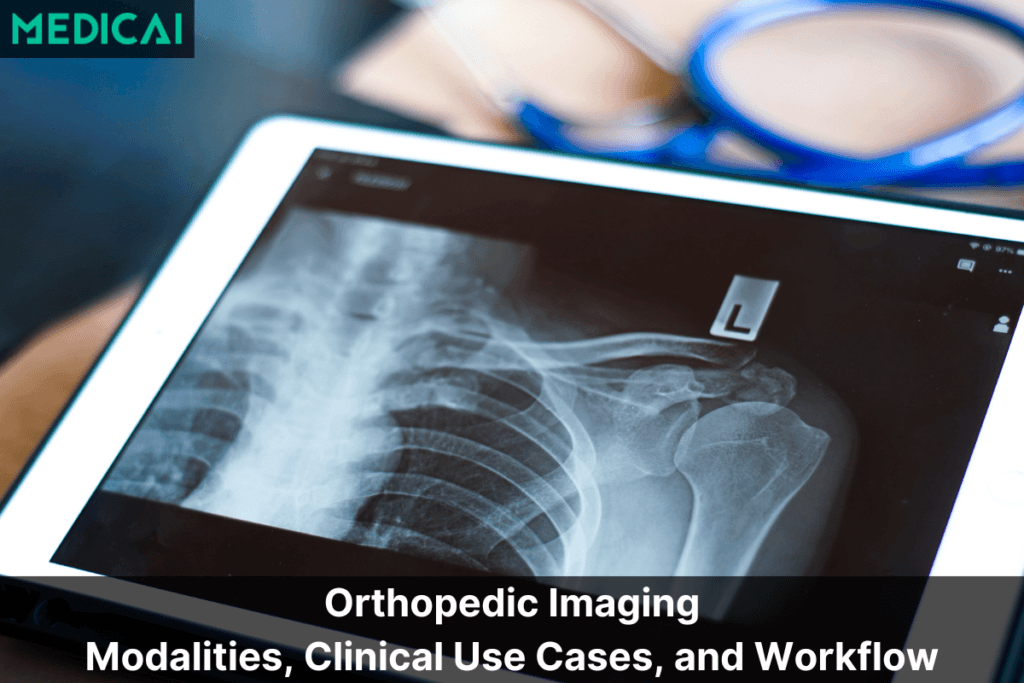
Orthopedic Imaging: Modalities, Clinical Use Cases, and Surgical Workflow Orthopedic imaging is the application of medical imaging to the diagnosis, surgical planning, and postoperative assessment of musculoskeletal conditions, including bone fractures, joint disorders, soft-tissue injuries, spinal conditions, and degenerative changes. The clinical scope spans five primary imaging modalities (plain-film...

Read MoreAI in Mammography: How It Works, FDA-Cleared Tools, and What Imaging Centers Need to Deploy It
Medical Imaging Technology AI in Healthcare
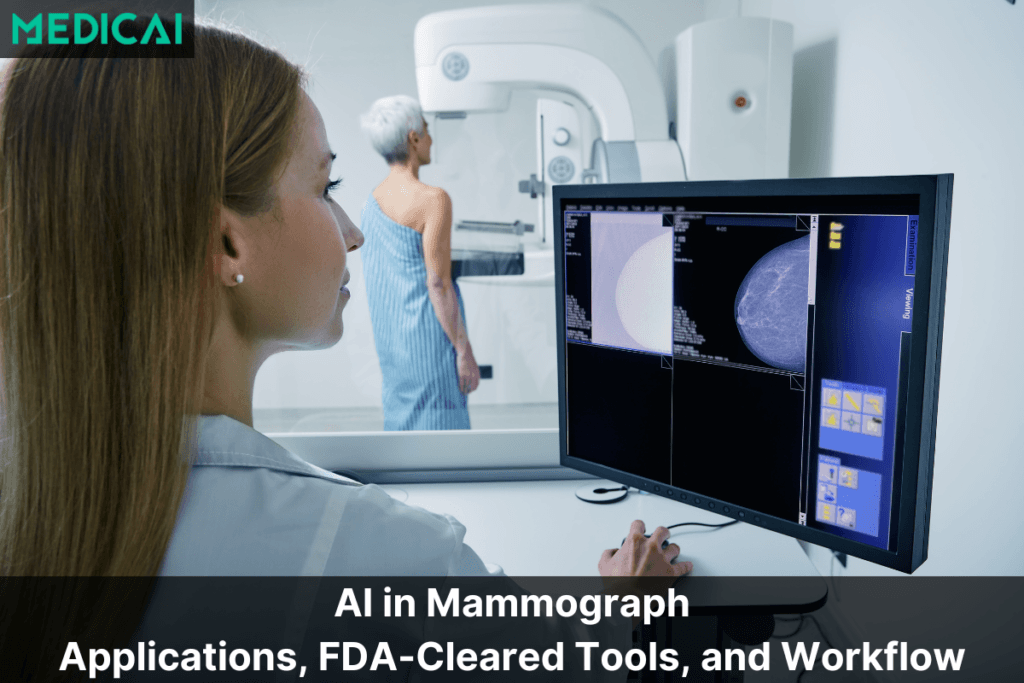
AI in Mammography: How It Works, FDA-Cleared Tools, and What Imaging Centers Need to Deploy It Artificial intelligence in mammography is the application of machine learning algorithms, primarily deep neural networks trained on large annotated mammographic image datasets, to assist with detecting breast cancer, assessing breast cancer risk, quantifying breast density, triaging screening worklists, and structuring...

Read MoreOphthalmology PACS: Cloud Imaging Software for OCT, Fundus, and Retinal Workflows
Cloud PACS
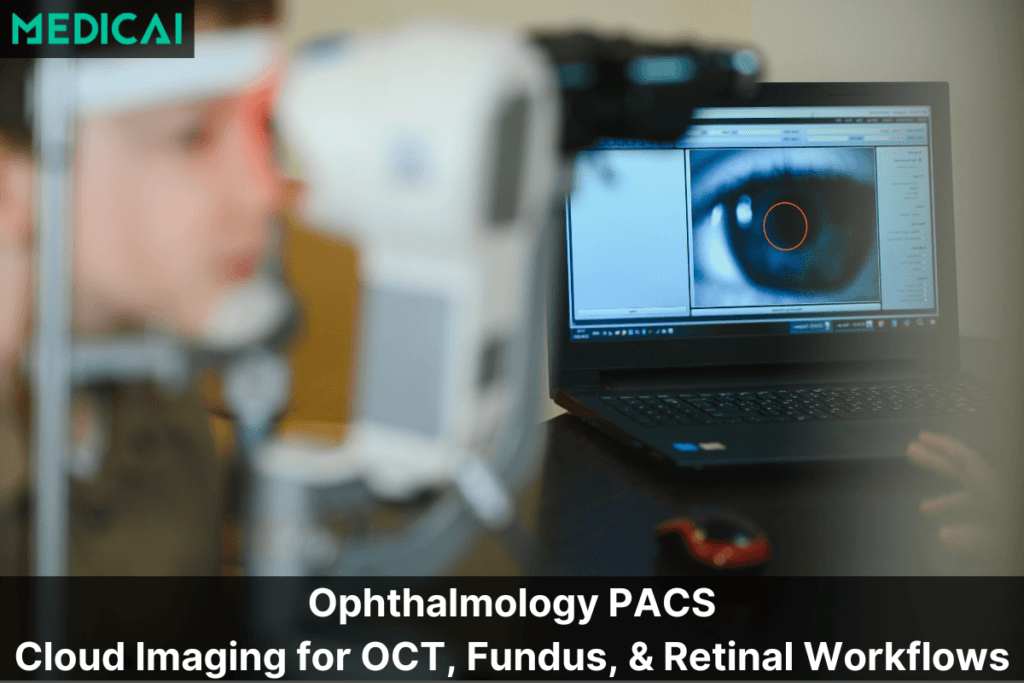
Ophthalmology PACS: Cloud Imaging Software for OCT, Fundus, and Retinal Workflows Ophthalmology PACS is the imaging IT platform that captures, stores, retrieves, and shares the diagnostic images ophthalmology practices generate — optical coherence tomography (OCT) volumes, fundus photographs, slit lamp images, anterior segment photography, and retinal angiography. The software replaces the...

Read MoreRadiologist Burnout: What Imaging Center Operators Can Actually Do About It
Healthcare Economics and Costs Value-Based Care and Healthcare Models
Radiologist Burnout: What Imaging Center Operators Can Actually Do About It When a radiologist leaves a practice, the replacement cost — recruitment, credentialing, onboarding, and productivity ramp-up — is estimated at $500,000 to $1,000,000 per physician according to the American College of Radiology. That is the number an imaging center operator...

Read MoreRadiology Hanging Protocols: What They Are, How They Work, and How to Configure Them for Your Workflow
Medical Imaging Technology Cloud PACS DICOM Viewer
Radiology Hanging Protocols: What They Are, How They Work, and How to Configure Them for Your Workflow Every second a radiologist spends on a task that is not interpretation is a second that reduces the practice’s diagnostic output without improving its diagnostic quality. In a high-volume reading environment — 80 to 120 studies per shift in a...

Read MoreStructured Radiology Reporting: Templates, Best Practices, and AI-Assisted Workflows
Structured Reporting
Structured Radiology Reporting: Templates, Best Practices, and AI-Assisted Workflows Radiology reporting is the last clinical step in every imaging workflow — and in most practices, it is the least systematized. Radiologists dictate in natural language that varies by individual, modality, case complexity, and fatigue level. Referring clinicians receive reports...

Read MoreMigrating to Cloud PACS: A Practical Playbook for Imaging Centers and Radiology Practices
Cloud PACS
Migrating to Cloud PACS: A Practical Playbook for Imaging Centers and Radiology Practices Migrating to cloud PACS is the process of moving an on-premise picture archiving and communication system — including image archive, viewer infrastructure, and integration points — into a cloud-hosted environment. Migration planning has three parts: baseline measurement of current imaging...

Read MorePACS vs MIMPS: What changed, and what should you call the system
Cloud PACS Data Security and Interoperability
PACS vs MIMPS: What changed, and what should you call the system PACS vs MIMPS is mostly a naming and scope update; the FDA now uses MIMPS as the regulatory name for software systems that manage and process medical images for clinical interpretation. PACS is the legacy term most hospitals still use....

Read MoreWhat is DICOMweb? QIDO-RS, WADO-RS, and STOW-RS explained
Healthcare Trends and Innovations DICOM Viewer
What is DICOMweb? QIDO-RS, WADO-RS, and STOW-RS explained DICOMweb is DICOM’s web-native transport layer — a family of RESTful services defined in DICOM Part 18 that makes medical imaging data accessible over standard HTTP. DICOMweb does not replace the DICOM image format or the metadata model. It replaces...

Read MoreVendor Neutral Archive (VNA): Full Guide
Healthcare Trends and Innovations Cloud PACS Data Security and Interoperability DICOM Viewer
Vendor Neutral Archive (VNA): Full Guide A Vendor Neutral Archive (VNA) is a medical imaging technology that stores clinical images and documents in a standard format (typically DICOM) and exposes them through standard interfaces, so any authorized system can access them regardless of which vendor or...

Read MoreRadiology Information System (RIS): Modules, Chain Position, KPIs, and How It Connects HIS and PACS
Healthcare Trends and Innovations Cloud PACS Data Security and Interoperability Patient Empowerment and Data Security
Radiology Information System (RIS): Modules, Chain Position, KPIs, and How It Connects HIS and PACS RIS is the administrative and operational nervous system of a radiology department. It manages every event in the patient’s radiology journey, excluding the image itself — the referral, scheduling, patient check-in, exam tracking, report distribution, billing, and department statistics. While...

Read MorePACS Workflow: RIS PACS Workflow Diagram, PACS Workflow Manager, Failures, KPIs, and Trends
Cloud PACS DICOM Viewer
PACS Workflow: RIS PACS Workflow Diagram, PACS Workflow Manager, Failures, KPIs, and Trends PACS workflow is the digital backbone that moves imaging context from RIS and EHR systems into modality worklists, routes DICOM studies to the appropriate archive, and finally exposes them through the appropriate clinical access point. PACS workflow keeps patient identities,...

Articles reviewed by Mircea Popa
Read MoreTeleradiology Services: Cost, Workflow, and What to Look for in a Provider

Teleradiology and Telemedicine
Teleradiology Services: Cost, Workflow, and What to Look for in a Provider Teleradiology services are remote radiological interpretation offerings provided by radiology groups, hospital networks, and dedicated teleradiology companies to healthcare facilities that lack on-site radiologist coverage during specific hours, in specific subspecialties, or at specific volumes. The service includes the radiologist’s...

Read MoreHow Much Does Cloud PACS Cost? A Total Cost of Ownership Framework for Radiology Practices

Cloud PACS Healthcare Economics and Costs
How Much Does Cloud PACS Cost? A Total Cost of Ownership Framework for Radiology Practices Most PACS pricing conversations start and end in the wrong place. A vendor quotes a monthly subscription fee. A competitor quotes a lower one. The practice administrator compares the two numbers and calls it a cost comparison. What that comparison...

Read MoreWhat Is HL7? Standards, Versions, Use Cases, and Healthcare Interoperability (2026 Guide)
Cloud PACS Data Security and Interoperability DICOM Viewer
What Is HL7? Standards, Versions, Use Cases, and Healthcare Interoperability (2026 Guide) HL7 (Health Level Seven) is a family of healthcare data standards that defines how clinical systems exchange patient information, orders, results, and clinical documents. The Health Level Seven International standards organization, ANSI-accredited and founded in 1987, maintains four distinct standard...

Read MoreDICOM Modality Worklist (MWL): How It Works, Why It Fails, and What Happens When It Does
Cloud PACS Data Security and Interoperability DICOM Viewer
DICOM Modality Worklist (MWL): How It Works, Why It Fails, and What Happens When It Does DICOM Modality Worklist is a DICOM service that allows an imaging device — a CT scanner, MRI machine, X-ray unit, or any DICOM-compliant modality — to query a server (typically the RIS) for the list of scheduled examinations it is...

Read MoreHospital Information System (HIS): Why It Is the Centre of Every PACS Workflow
Medical Imaging Technology Cloud PACS Data Security and Interoperability
Hospital Information System (HIS): Why It Is the Centre of Every PACS Workflow Every radiology order that reaches your PACS starts in your Hospital Information System. Every patient identity mismatch that breaks your PACS workflow traces back to a data problem in your HIS. Understanding HIS is not optional knowledge for imaging informatics...

Read MoreThe Economics of Speed: How Server-Side Rendering Reduces TAT and Boosts Revenue
Cloud PACS Healthcare Trends and Innovations
The Economics of Speed: How Server-Side Rendering Reduces TAT and Boosts Revenue In the business of radiology, Time is Inventory. Every minute a radiologist spends waiting for a scan to load, toggling between windows, or struggling with a slow VPN connection is a minute of lost inventory. It is billable time that...

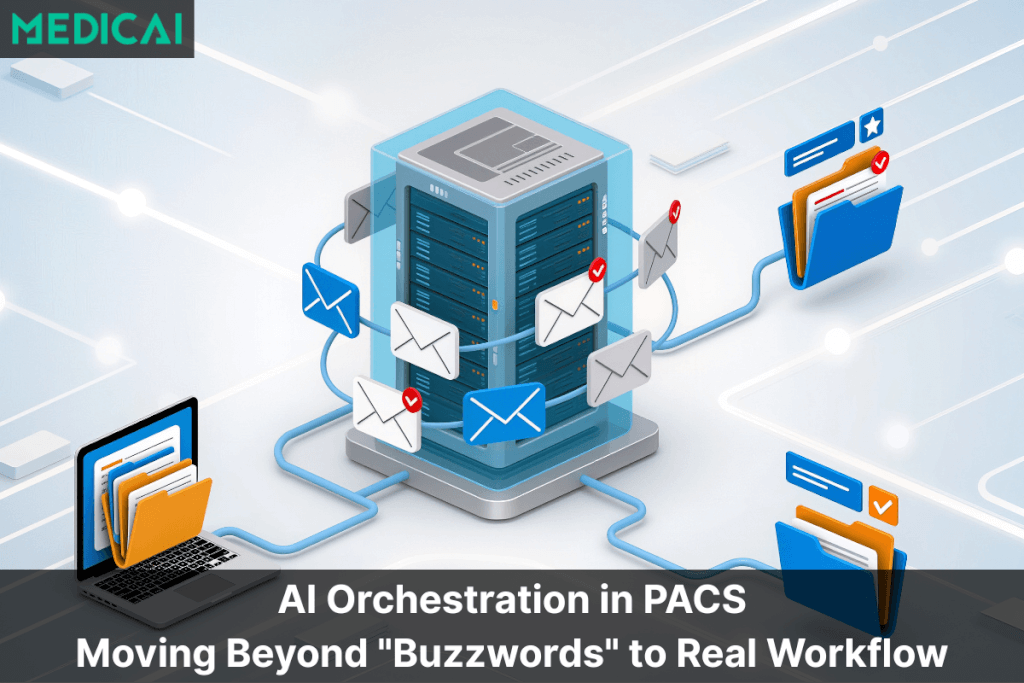
Read MoreAI Orchestration in PACS: Moving Beyond "Buzzwords" to Real Workflow
Cloud PACS AI in Healthcare Data Security and Interoperability
AI Orchestration in PACS: Moving Beyond "Buzzwords" to Real Workflow AI orchestration in PACS is the workflow control layer that triggers inference, applies routing rules, selects models, and delivers AI results back into PACS worklists and reporting in a way clinicians actually use. This guide explains AI orchestration in PACS,...

Read MoreThe Unified Worklist: How to Connect Disparate PACS Without Replacing Them
Cloud PACS Healthcare Policy and Equity Healthcare Trends and Innovations
The Unified Worklist: How to Connect Disparate PACS Without Replacing Them If you walk into the reading room of a typical private radiology practice or a large hospital network today, you will see a chaotic scene. You will see a radiologist sitting at four monitors, using three keyboards, logging into five...

Read MoreCloud-Native vs. Cloud-Enabled PACS: Why the Difference Matters for 2026
Healthcare Trends and Innovations Cloud PACS DICOM Viewer
Cloud-Native vs. Cloud-Enabled PACS: Why the Difference Matters for 2026 In the 2026 healthcare market, you will struggle to find a PACS vendor that doesn’t use the word “Cloud” in their pitch deck. For a CIO or Radiology IT Director, this ubiquity creates a dangerous illusion. It suggests that all...

Read MorePMS Imaging vs. Dedicated PACS: Why Your Practice Management Software Isn't Enough
Cloud PACS DICOM Viewer Healthcare Trends and Innovations
PMS Imaging vs. Dedicated PACS: Why Your Practice Management Software Isn't Enough In the dental industry, there is a concept called the “All-in-One Illusion.” When you buy a Practice Management System (PMS) like Dentrix, Eaglesoft, or Open Dental, it usually comes with a built-in imaging module. It’s convenient. It’s included in the...

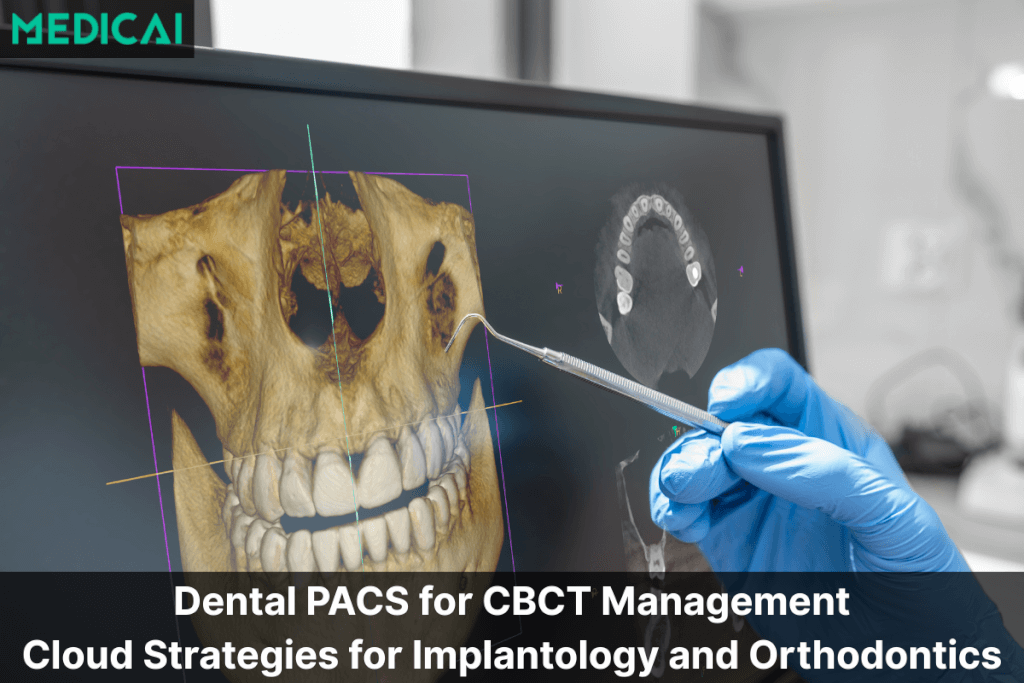
Read MoreTaming the CBCT Beast: Cloud Strategies for Implantology and Orthodontics
Cloud PACS Healthcare Trends and Innovations
Taming the CBCT Beast: Cloud Strategies for Implantology and Orthodontics For the modern Oral Surgeon or Orthodontist, the CBCT (Cone Beam Computed Tomography) scan is the gold standard of diagnosis. It offers a window into anatomy that 2D X-rays simply cannot provide. But it also comes with a heavy price tag—and I...

Read MoreHybrid PACS Architecture: The Technical Guide for Radiology IT
Cloud PACS Data Security and Interoperability Healthcare Trends and Innovations
Hybrid PACS Architecture: The Technical Guide for Radiology IT For the past decade, the debate in radiology IT has been binary: Cloud vs. On-Premise. The Cloud camp promises infinite scalability, disaster recovery, and zero hardware maintenance. The On-Premise camp argues for speed, control, and reliability that doesn’t depend on...

Read MorePACS Migration: Types, Phases, and the Complete Lifecycle
Healthcare Trends and Innovations Cloud PACS DICOM Viewer
PACS Migration: Types, Phases, and the Complete Lifecycle What It Is, Four Migration Types, DICOM Data Integrity, and How It Connects HIS, RIS, and VNA PACS migration is the process of transferring accumulated DICOM imaging data, patient identity records, study-order relationships, and associated metadata from a legacy Picture...