How RCM Automation Is Improving Healthcare Innovation in the United States

The healthcare industry in America is rapidly evolving through AI, radiology, and digital healthcare innovation. Smart Systems Have Become Essential for Hospitals and Radiology Clinics to Enhance Patient Care. And Finance Billing, insurance claims, medical imaging records, and administrative overhead can be quite expensive when not managed properly, and manual management often leads to delays and costly mistakes.
Hence, healthcare organizations are in the process of leveraging AI-powered automation tools. Modern healthcare solutions are reshaping operational efficiency- from PACS platforms to DICOM viewer technologies and intelligent billing systems. Today, many providers use RCM Automation & AI Solutions to streamline radiology workflows, improve medical billing accuracy, and support long-term healthcare innovation.
The Growing Role of AI in Radiology and Health Tech
One of the most significant technologies in modern radiology is AI. AI systems can analyze massive amounts of imaging and patient data in seconds, thereby improving the accuracy of initial diagnoses and streamlining healthcare professionals’ workflows.
The department of radiology manages thousands of medical images per day, such as X-rays, MRIs, CT scans, and ultrasounds. Handling these records on paper takes time and can disrupt the flow of healthcare delivery, leading to increased billing and documentation errors.
AI-driven healthcare systems now support:
- Faster image analysis
- Improved report generation
- Automated medical coding
- Smarter billing workflows
- Better patient data management
Understanding PACS and DICOM Viewer Technology
Modern radiology departments depend heavily on digital imaging technologies such as PACS and DICOM viewers.
What Is PACS?
PACS (Picture Archiving and Communication System) is a healthcare imaging technology used to store, manage, and share medical images digitally. It eliminates the need for physical film storage and improves accessibility across healthcare networks.
Benefits of PACS include:
- Faster image retrieval
- Improved collaboration between specialists
- Secure image storage
- Reduced operational costs
- Better workflow management
What Is a DICOM Viewer?
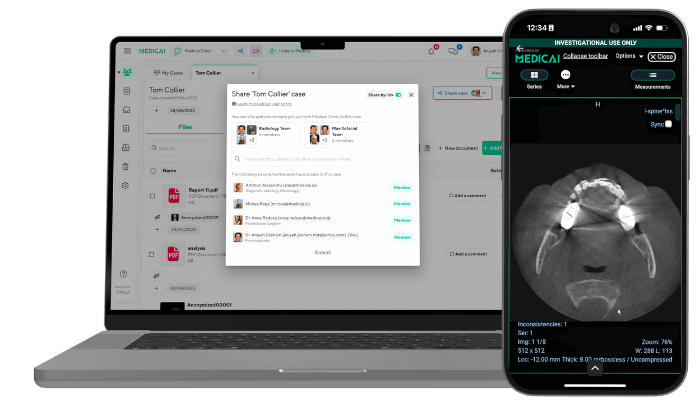
A DICOM viewer allows healthcare professionals to view, analyze, and share medical imaging files in the standard DICOM format. These viewers are essential in radiology because they help doctors access patient imaging records quickly and accurately.
DICOM viewer technology improves:
- Diagnostic efficiency
- Image accessibility
- Clinical decision-making
- Remote healthcare collaboration
When combined with AI tools, PACS and DICOM systems create smarter and more connected radiology environments.
How AI Improves Revenue Cycle Management in Healthcare
Revenue Cycle Management (RCM) refers to the process of handling patient billing, insurance verification, coding, and payment collection. Traditional billing systems rely heavily on manual work, which often leads to delays and rejected claims.
AI-powered automation is helping healthcare providers modernize these financial processes.
Key Advantages of AI-Based RCM Systems
| Feature | Benefit |
| Automated claim processing | Faster reimbursements |
| AI coding assistance | Reduced billing errors |
| Denial prediction tools | Higher claim approval rates |
| Real-time analytics | Better financial decisions |
| Automated patient reminders | Improved payment collection |
| Compliance monitoring | Reduced legal risks |
Healthcare organizations using RCM Automation & AI Solutions United States can improve billing efficiency while lowering administrative costs.
AI in Radiology Billing and Workflow Automation
Radiology billing is quite complicated from standard medical billing as imaging procedures involve proper coding, documentation, and insurance verification.
AI-backed automation helps radiology departments better address these challenges.
How Automation Supports Radiology Operations
Improved Coding Accuracy
Cuts coding errors & claim denials: AI systems read through radiology documentation and recommend accurate billing codes.
Faster Claims Processing
Automation can reduce time and streamline insurance verification and claims submission, allowing providers to receive payments faster.
Reduced Administrative Burden
Healthcare staff spend less time on repetitive tasks and more time supporting patient care.
Better Workflow Efficiency
AI tools are connected with PACS and DICOM viewer platforms to simplify imaging workflows & enhance operational performance.
Healthcare Innovation Through Intelligent Automation
Healthcare innovation is no longer limited to clinical treatment alone. Financial operations, imaging management, and patient communication are also becoming smarter through automation and artificial intelligence.
Emerging Health Tech Trends
Predictive Analytics
AI systems can predict denied claims, billing risks, and operational bottlenecks before problems occur.
Cloud-Based Healthcare Systems
Cloud technology allows hospitals and imaging centers to securely access patient and billing data from multiple locations.
Smart Patient Communication
Automated reminders, digital payment systems, and AI chat support improve patient engagement and transparency in billing.
AI-Powered Imaging Solutions
Advanced imaging tools now assist radiologists in identifying abnormalities more efficiently and improving diagnostic confidence.
These innovations are shaping the future of digital healthcare in the United States.
Challenges Solved by AI and Automation in Healthcare
Healthcare providers often face operational and financial challenges that affect productivity and patient satisfaction.
Common Challenges Include
- Delayed insurance reimbursements
- Billing and coding errors
- Complex compliance regulations
- Staff shortages
- Slow imaging workflows
- Denied insurance claims
AI-powered systems help solve these issues by automating repetitive tasks, improving accuracy, and supporting faster decision-making.
Healthcare organizations using advanced health tech solutions can reduce operational stress while improving overall patient care quality.
Future of AI in Radiology and Healthcare Technology
The future of healthcare will continue to depend heavily on artificial intelligence, radiology automation, and connected digital systems.
Healthcare providers are expected to invest more in:
- AI-powered diagnostic tools
- Smarter PACS platforms
- Advanced DICOM viewer systems
- Automated billing technologies
- Predictive healthcare analytics
As technology evolves, AI will continue improving radiology accuracy, financial management, and healthcare efficiency across the industry.
FAQs
What is AI in radiology?
Radiology AI refers to the use of artificial intelligence to analyze medical images, increase the accuracy of diagnosis, and automate imaging workflows.
What do you mean by DICOM viewer?
A DICOM viewer allows healthcare professionals to view and manage medical imaging files (CT scans, MRIs, X-rays).
How is AI improving healthcare billing?
Billing is enhanced by AI through its ability to minimize coding errors, expedite claims processing, forecast denials, and automate repetitive tasks.
Conclusion
Artificial intelligence, radiology technology, and healthcare automation are changing the face of modern US healthcare. The push for advanced digital solutions in the healthcare sector is finding answers to questions, such as PACS (Picture Archiving and Communication System) systems with built-in image viewers to smart billing for hospital management.
AI-powered workflow automation also helps radiology departments reduce billing errors, increase first-pass claim approvals, and streamline administrative tasks. With such innovations, healthcare professionals will save more time providing quality patient care than on menial manual tasks.
Ongoing improvement in healthcare innovation will continue to develop, through sophisticated technologies such as RCM Automation & AI Solutions United States must always be a key element of future viability, focused on financial performance, imaging efficiency, and long-term success of Healthcare.

Related Articles
Lets get in touch!
Learn more about how Medicai can help you strengthen your practice and improve your patients’ experience. Ready to start your Journey?
Book A Free Demo