Cloud PACS

70 posts
Read MoreTop Advantages of Migrating PACS to the Cloudcloud pacs advantages Top Advantages of Migrating PACS to the Cloud Storage Tiers, Cost Model, Zero-Footprint Access, Security, AI Integration, and a Migration Readiness Checklist Cloud PACS replaces on-premise server hardware with cloud object storage, lifecycle tiering policies, and browser-based viewers, allowing hospitals and imaging centers to scale their medical imaging... By Mircea Popa Mar 25, 2026

Read MorePACS vs MIMPS: What changed, and what should you call the systemPACS vs MIMPS: What changed, and what should you call the system PACS vs MIMPS: What changed, and what should you call the system PACS vs MIMPS is mostly a naming and scope update; the FDA now uses MIMPS as the regulatory name for software systems that manage and process medical images for clinical interpretation. PACS is the legacy term most hospitals still use.... By Mircea Popa Mar 23, 2026
Read MoreWhat is HL7? The messaging standard that connects radiology to the rest of the hospitalWhat is HL7? The messaging standard that connects radiology to the rest of the hospital What is HL7? The messaging standard that connects radiology to the rest of the hospital HL7 (Health Level Seven) is the ANSI-accredited messaging standard that defines how clinical systems exchange patient data, orders, and results. In radiology, HL7 V2 messages are the connective layer between the EHR, RIS, PACS, and modality — every imaging order,... By Andrei Blaj Mar 16, 2026

Read MoreVendor Neutral Archive (VNA): Full GuideVendor Neutral Archive (VNA): Full Guide Vendor Neutral Archive (VNA): Full Guide A Vendor Neutral Archive (VNA) is a medical imaging technology that stores clinical images and documents in a standard format (typically DICOM) and exposes them through standard interfaces, so any authorized system can access them regardless of which vendor or... By Mircea Popa Mar 11, 2026
Read MoreDICOM Modality Worklist (MWL): How It Works, Why It Fails, and What Happens When It DoesDICOM Modality Worklist (MWL): How It Works, Why It Fails, and What Happens When It Does DICOM Modality Worklist (MWL): How It Works, Why It Fails, and What Happens When It Does DICOM Modality Worklist is a DICOM service that allows an imaging device — a CT scanner, MRI machine, X-ray unit, or any DICOM-compliant modality — to query a server (typically the RIS) for the list of scheduled examinations it is... By Alexandru Artimon Mar 9, 2026
Read MoreRadiology Information System (RIS): Modules, Chain Position, KPIs, and How It Connects HIS and PACSRadiology Information System (RIS): Modules, Chain Position, KPIs, and How It Connects HIS and PACS Radiology Information System (RIS): Modules, Chain Position, KPIs, and How It Connects HIS and PACS RIS is the administrative and operational nervous system of a radiology department. It manages every event in the patient’s radiology journey, excluding the image itself — the referral, scheduling, patient check-in, exam tracking, report distribution, billing, and department statistics. While... By Mircea Popa Mar 4, 2026
Read MoreHospital Information System (HIS): Why It Is the Centre of Every PACS WorkflowHospital Information System (HIS): Why It Is the Centre of Every PACS Workflow Hospital Information System (HIS): Why It Is the Centre of Every PACS Workflow Every radiology order that reaches your PACS starts in your Hospital Information System. Every patient identity mismatch that breaks your PACS workflow traces back to a data problem in your HIS. Understanding HIS is not optional knowledge for imaging informatics... By Andrei Blaj Mar 3, 2026

Read MorePACS Workflow: RIS PACS Workflow Diagram, PACS Workflow Manager, Failures, KPIs, and TrendsPACS Workflow: RIS PACS Workflow Diagram, PACS Workflow Manager, Failures, KPIs, and Trends PACS Workflow: RIS PACS Workflow Diagram, PACS Workflow Manager, Failures, KPIs, and Trends PACS workflow is the digital backbone that moves imaging context from RIS and EHR systems into modality worklists, routes DICOM studies to the appropriate archive, and finally exposes them through the appropriate clinical access point. PACS workflow keeps patient identities,... By Mircea Popa Feb 25, 2026
Read MorePACS Interoperability, Standards, Benefits, Challenges, and Emerging TrendsPACS Interoperability, Standards, Benefits, Challenges, and Emerging Trends PACS Interoperability, Standards, Benefits, Challenges, and Emerging Trends A clinician opens a patient chart, clicks Imaging, and expects three things fast: the right study, the right priors, and a report that matches the images. PACS interoperability determines whether that click results in a phone call, a screenshot, or... By Andrei Blaj Feb 23, 2026

Read MoreCardiology PACS Systems, Features, CVIS Integration, and Workflow BenefitsCardiology PACS Systems, Features, CVIS Integration, and Workflow Benefits Cardiology PACS Systems, Features, CVIS Integration, and Workflow Benefits Cardiology PACS systems keep cardiovascular imaging usable, implied, not just stored. Cardiology PACS systems handle cine loops from echocardiography, angiography runs from catheterization, vascular ultrasound clips, and cardiac MRI series, and make priors easy to compare when the next follow-up... By Mircea Popa Feb 19, 2026

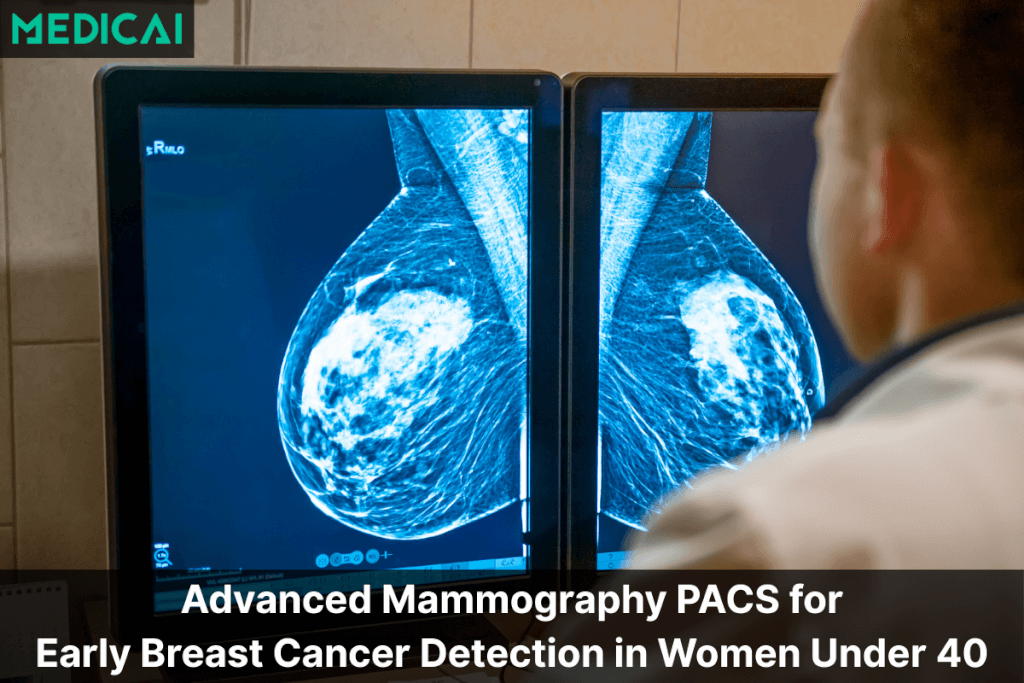
Read MoreMammography Workflow for Women Under 50: What 11-Year Clinical Data Means for PACS and Diagnostic Imagingmammography pacs for early breast cancer detection Mammography Workflow for Women Under 50: What 11-Year Clinical Data Means for PACS and Diagnostic Imaging The landscape of breast cancer detection is shifting. While much of the public health focus remains on women over 50, recent data suggests that younger women represent a substantial and consistently high-risk portion of the patient population. For MedTech providers... By Andrei Blaj Jan 23, 2026
Read MoreWhy Imaging Infrastructure Matters for AI Generalization in Radiologyai generalization for radiology Why Imaging Infrastructure Matters for AI Generalization in Radiology Artificial intelligence has shown impressive results in radiology research settings. From mammography to CT and MRI, AI models often achieve high accuracy when evaluated on curated datasets. Yet once deployed in real clinical environments, many of these same models struggle... By Mircea Popa Jan 21, 2026