Pop Physics, Medical Imaging, and DICOM

Every day sounds often capture our attention without us realizing the complex science behind them. Among these, popping noises from balloons and popcorn stand out for their suddenness and sharpness. While many hear a “pop” and move on, each sound results from intricate physical processes and interactions between materials and the environment.
Understanding these phenomena can be surprisingly insightful. Similar to how a chiropractor in Charleston, SC, explains sudden joint adjustments as controlled releases of pressure for optimal body function, a pop occurs when energy stored in a material is rapidly released. This article explores the mechanisms that produce popping sounds, the roles of different media, and how studying these phenomena informs scientific and technological advancements.
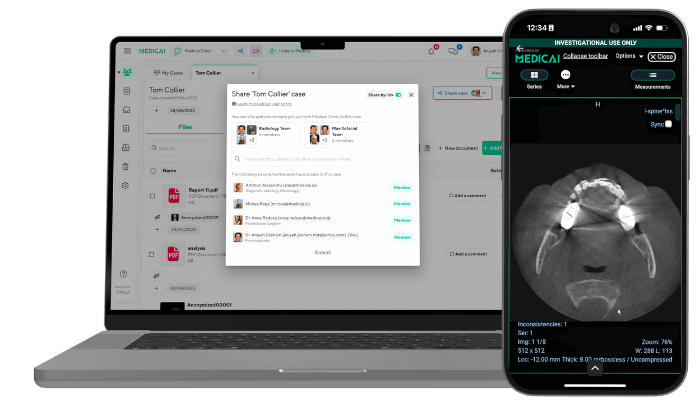
From “pop” to picture: In clinics and research, rapid pressure releases are often captured as ultrasound DICOM cine loops —think microbubbles “popping” under sound waves. If you want to see these pressure events frame by frame, you can open ultrasound DICOM files in a web DICOM viewer (no installation), for educational and demonstration purposes.
Understanding the Sound
Sound is a mechanical wave that travels through a medium by causing particles to vibrate. While its basic properties—frequency, amplitude, and wavelength —each contribute differently to how we perceive sound. Frequency determines pitch and is measured in Hertz (Hz); humans typically hear between 20 Hz and 20,000 Hz. Amplitude determines loudness, measured in decibels (dB), where normal conversation is around 60 dB. Wavelength —the distance between successive wave peaks —influences the tone and resonance of a sound.
The human auditory system converts these vibrations into electrical signals that the brain interprets. Beyond the physical properties, our perception of sound is influenced by culture, personal experiences, and age. People from different cultural backgrounds may interpret certain sounds differently, and prior exposure to specific noises can shape recognition. Hearing sensitivity also changes with age, particularly for high-frequency sounds, demonstrating that sound perception is both a physical and subjective phenomenon.
These same ideas of frequency and amplitude are used in ultrasound imaging. Clinicians review short DICOM cine sequences to analyze changes across frames. Curious readers can drag-and-drop a sample DICOM into a browser-based viewer to explore basic playback, zoom, and windowing—no software installation needed.
The Physics of Popping Sounds
A popping sound occurs when stored energy in a material is rapidly released, creating sudden vibrations in the surrounding medium. This can happen through pressure changes, material rupture, or deformation. The result is a sharp sound that our ears detect almost instantaneously.
Common examples illustrate these principles:
- Balloon Pop: The air inside a balloon creates pressure against the elastic material. When the balloon stretches beyond its tensile strength, it ruptures suddenly. The rapid displacement of air produces the characteristic loud, sharp pop.
- Popping Corn: Each kernel contains water and starch encased in a hard shell. Heat converts water to steam, increasing internal pressure. Once the shell bursts, the starch expands explosively, generating the distinctive pop.
- Bubble Pop: Surface tension maintains the shape of bubbles. When the film breaks, the molecules collapse inward rapidly, producing sound. Larger bubbles create lower-frequency pops, while smaller ones produce higher-pitched sounds.
In medical imaging, microbubble contrast agents behave similarly—tiny spheres respond to ultrasound and can oscillate or “pop,” creating signals that appear in DICOM cine loops for review in online viewers such as Medicai (educational use).
These examples show that pops are not arbitrary but follow predictable physical rules that combine energy, pressure, and material properties.
The Role of the Medium in Sound Transmission
The medium through which a pop travels profoundly affects how it is perceived. In air, sound travels at roughly 343 m/s at 20°C, producing the crisp pops we hear daily. In water, sound travels at around 1,480 m/s, but it can sound muffled due to differences in density and absorption. Solids transmit vibrations efficiently, often producing louder, sharper sounds.
Medium characteristics also influence sound quality through refraction and absorption. Sound waves bend when passing between different densities, slightly altering pitch, while soft materials absorb energy, reducing volume.
For instance, a popcorn pop underwater sounds muted compared to a popcorn pop in the air, demonstrating that context plays a significant role in how we perceive popping sounds.
Applications of Popping Sounds in Science and Technology
Medical diagnostics: Ultrasound uses high-frequency sound to image soft tissue. With microbubbles, clinicians can enhance signals and sometimes detect rapid “pop-like” events across frames. These are stored as DICOM and can be reviewed in a browser-based DICOM viewer for education, case discussions, or teaching demonstrations (not for primary diagnosis).
In acoustic engineering, understanding how materials pop helps design better soundproofing and optimize room acoustics. Future applications may include micro-scale control of popping phenomena in sensors, material testing, or energy-release systems. By studying the mechanics of pops, engineers and scientists can manipulate energy and vibrations for practical purposes, demonstrating that the principles behind simple sounds have far-reaching implications.
Try this (educational)
- Export or download a de-identified ultrasound DICOM cine loop from a public teaching dataset.
- Drag and drop the file or folder into a web DICOM viewer.
- Use playback + frame scrubbing to observe when the “pop” occurs and how amplitude changes over time.
Frequently Asked Questions (FAQs)
1. Why do some pops sound louder than others?
The loudness of a pop depends on the amount of stored energy, the speed of release, and the medium. Balloons produce louder pops because of high internal pressure and elastic rupture. Smaller bubbles release less energy, creating quieter sounds. Environmental acoustics also affect perception.
2. How does temperature affect popping sounds?
Temperature changes influence internal pressure in materials. For example, popcorn requires heat to generate enough steam pressure for the pop. Cooler conditions slow molecular movement, resulting in less forceful or delayed pops.
3. Can humans hear all popping sounds equally?
Not everyone perceives pops the same way. High-frequency pops may be inaudible to older adults or individuals with hearing loss. Familiarity with the sound also affects recognition.
4. Are popping sounds useful in scientific research?
Yes. Scientists use pops to study material properties, detect structural weaknesses, and improve imaging techniques. Acoustic engineers also apply this knowledge to design soundproofing and optimize environments.
5. How is a popping sound related to chiropractic adjustments?
Both involve rapid pressure changes and controlled energy release. Just as a chiropractor safely releases joint pressure to improve mobility, popping sounds reflect sudden energy transitions in materials. Understanding both phenomena highlights the principles of stress, tension, and sudden release in natural systems.
6. How can I view “popping” events in real medical images?
Look for ultrasound DICOM cine loops from public teaching datasets and open them in a web-based DICOM viewer to scrub frame by frame. This is ideal for education and demos.
7. Do I need special software to open DICOM files?
Not necessarily. A browser DICOM viewer lets you drag-and-drop files for quick review. For clinical decisions, follow your organization’s approved, certified tools and policies.
Conclusion
Popping sounds —from balloons to popcorn —are more than mere curiosities; they illustrate complex interactions among physics, materials science, and human perception. Curiosity about everyday “pops” extends to medical imaging, where rapid pressure changes are captured as DICOM cine loops you can explore in a web viewer to understand energy release frame by frame. And just as careful observation advances science, professional care (e.g., a licensed chiropractor such as Cypress Chiropractic & Wellness) supports mobility and well-being. Incorporating knowledge, curiosity, and preventive care empowers both scientific appreciation and personal health.

Related Articles


Lets get in touch!
Learn more about how Medicai can help you strengthen your practice and improve your patients’ experience. Ready to start your Journey?
Book A Free Demo