Radiography vs Radiology: Understanding the Difference in Modern Medical Imaging
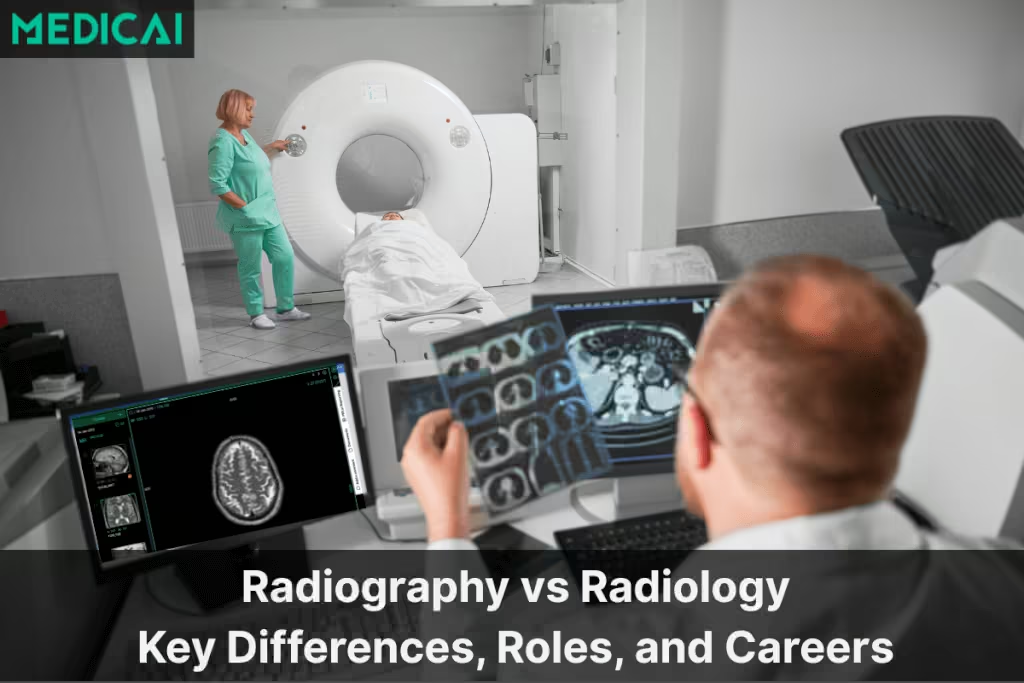
Medical imaging is changing faster than ever — from AI-powered diagnosis to global teleradiology collaboration. But at the foundation of every imaging scan and report are two critical healthcare professionals: radiographers and radiologists.
Although their work overlaps, radiography and radiology are not the same. One focuses on image acquisition, the other on interpretation and clinical decision-making. Together, they shape the patient journey from the moment an X-ray or CT scan is performed to the moment a diagnosis is made.
When comparing radiography vs radiology, it’s essential to understand the core differences—career paths, skills and education requirements, salary comparisons, technology, AI trends reshaping both fields —and how cloud PACS platforms like Medicai connect radiographers and radiologists in a seamless digital workflow.
I am here to guide you through these factors. So, stay put.

Radiography vs Radiology: Quick Comparison Table
| Category | Radiography | Radiology |
|---|---|---|
| Focus | Image acquisition | Image interpretation |
| Role | Radiographer / Technologist | Radiologist (physician) |
| Patient Interaction | High | Limited (varies) |
| Training | 2–4 years | 10+ years |
| Responsibilities | Operate scanners, position patients | Diagnose conditions, guide care |
| Salary | Moderate | High |
| Daily Tasks | Scanning & safety | Diagnosing and reporting |
| Use of AI | Image acquisition assist | AI-augmented diagnosis |
Radiography vs Radiology Salary Comparison
Salaries vary by region and experience, but generally:
| Role | Approx. Salary Range |
|---|---|
| Radiographer / Radiologic Technologist | $50,000 – $90,000/year |
| Radiologist | $250,000 – $500,000+/year |
What Is Radiography? (Image Acquisition)
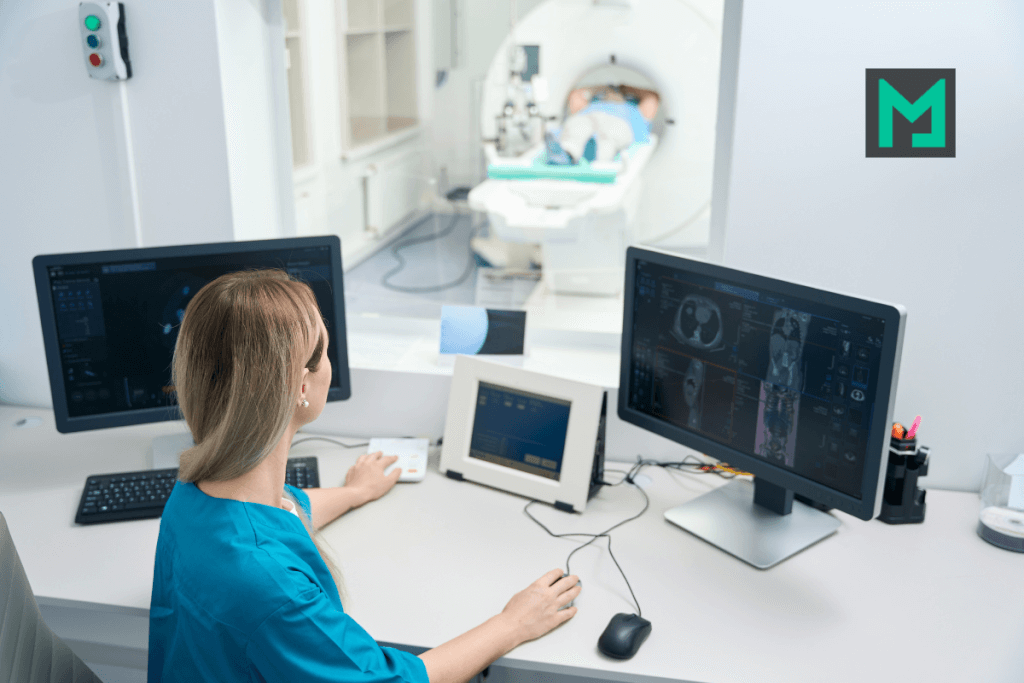
Radiography is the hands-on process of producing medical images. A radiographer — also known as a radiologic technologist — operates imaging equipment and prepares patients for procedures.
Radiographer Responsibilities
- Operating X-ray, CT, MRI, ultrasound, and fluoroscopy machines
- Positioning patients and ensuring comfort and safety
- Selecting the correct imaging protocols
- Following radiation safety standards
- Capturing high-quality diagnostic images
- Transferring images to PACS systems
Radiographers do not diagnose conditions — their expertise lies in acquiring the best possible images for radiologists to interpret.
Education Path
Typically:
- 2-year diploma or associate degree
- 4-year bachelor’s degree (varies by country)
- Professional licensing/certification exams
Personality Fit
Radiography suits individuals who enjoy:
- Dynamic, hands-on roles
- Working directly with patients
- Operating advanced technology
What Is Radiology? (Image Interpretation & Clinical Decisions)
Radiology is the medical specialty focused on interpreting medical images and providing diagnostic insight. Radiologists are licensed physicians (MDs/DOs) who specialize in diagnosing and treating disease using imaging.
Radiologist Responsibilities
- Interpreting X-rays, CT, MRI, PET-CT, and ultrasound
- Writing diagnostic reports
- Consulting with referring physicians
- Guiding minimally invasive procedures (interventional radiology)
- Participating in tumor boards and clinical discussions
Radiologists use imaging findings to detect disease, guide treatment, and support care planning.
Education Path
- Medical degree (5–6 years)
- Residency in radiology (4–5 years)
- Optional fellowship in Neuroradiology, MSK, Breast, Cardiac, etc.
Personality Fit
Radiology suits individuals who enjoy:
- Clinical decision-making and precision
- Solving complex diagnostic problems
- Working with advanced imaging technology
Radiography & Radiology in Digital Healthcare Ecosystem
Historically, radiographers and radiologists worked in separate stages:
Radiographer → Generates images
Radiologist → Reads images
But modern imaging systems blur these lines through:
- Cloud PACS
- AI-powered workflow automation
- Remote collaboration
- Automated document processing
- Patient portals
This teamwork requires unified imaging platforms, like Medicai.
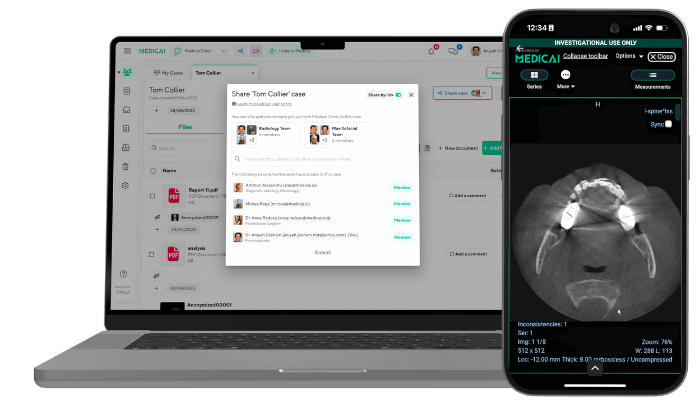
How Medicai Connects Radiographers & Radiologists
Healthcare is moving from disconnected systems → integrated imaging networks.
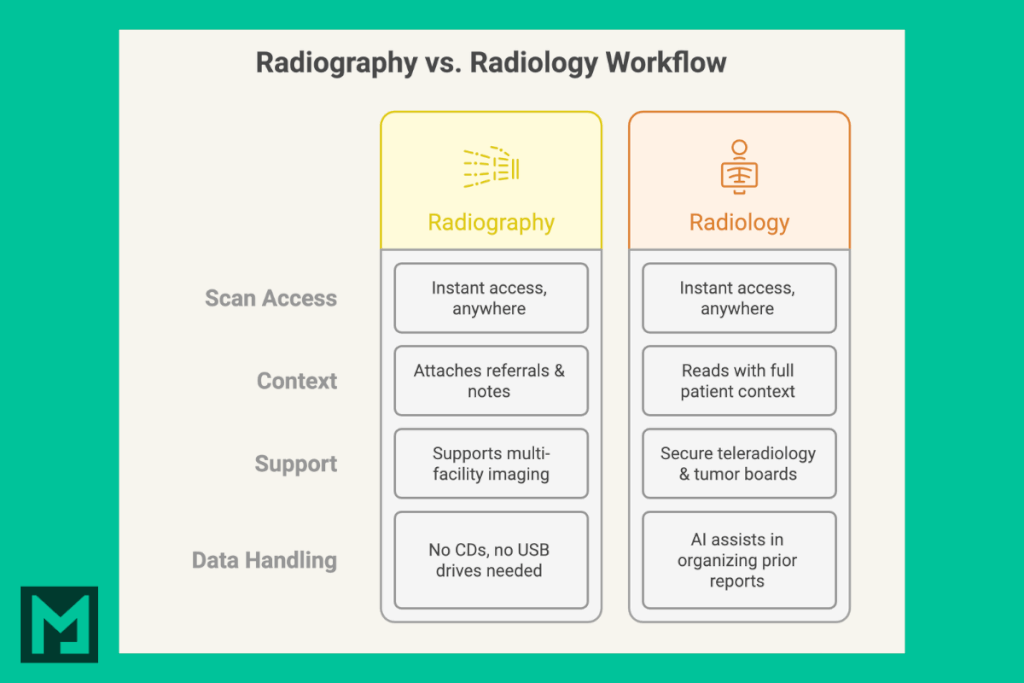
Medicai bridges the workflow between radiographers and radiologists:
| Radiography Workflow | Radiology Workflow |
|---|---|
| Access scans instantly, anywhere | Accesses scans instantly, anywhere |
| Attaches referrals & notes | Reads with full patient context |
| Supports multi-facility imaging | Secure teleradiology & tumor boards |
| No CDs, no USB drives needed | AI assists in organizing prior reports |
Medicai Benefits
- Real-time collaboration & sharing
- Cloud-native PACS
- Zero-footprint DICOM viewer
- Secure patient access portal
- AI-powered referral + report processing

AI and Automation in Radiography & Radiology
AI in Radiography
AI helps technologists:
- Verify correct scan protocols
- Reduce retakes
- Optimize radiation dose
- Improve positioning accuracy
AI becomes a real-time assistant while radiographers remain in control.
AI in Radiology
AI supports radiologists by:
- Triage: flagging urgent cases
- Detecting anomalies
- Summarizing prior reports
- Suggesting follow-up protocols
AI is an assistant — not a replacement.
Conclusion
Radiography and radiology are complementary pillars of medical imaging, where radiographers capture images, radiologists interpret them, and Cloud PACS like Medicai connect the entire workflow.
As AI, the cloud, and automation reshape imaging, both careers will grow — with technology augmenting professionals rather than replacing them.
Whether you’re scanning at the bedside or diagnosing complex oncology cases remotely, the future of imaging is collaborative, digital, and data-driven.


Related Articles

Lets get in touch!
Learn more about how Medicai can help you strengthen your practice and improve your patients’ experience. Ready to start your Journey?
Book A Free Demo