Radiology Jobs and the Average Radiologist Salary: A Comprehensive Guide

Radiology is a vital field in modern medicine. It focuses on utilizing medical imaging techniques to diagnose and, in some cases, treat diseases.
As technology advances, radiology continues to evolve, offering highly specialized roles that command substantial salaries. The radiologist salary depends on multiple factors, including field of expertise, type of medical facility, geographic location, and industry.
I have compiled a comprehensive overview to provide you with a clear picture of the compensation and benefits associated with high-paying jobs, such as radiologists and radiology technicians.

Average Radiologist Salary in the US
According to major industry surveys, the typical annual compensation for radiologists in the United States varies significantly depending on the reporting source and practice setting. However, the average yearly salary of US-based radiologists is around $350,000.
According to Salary.com (as of July 1, 2025), the average radiologist earns $528,790 per year (about $254 per hour). Medscape’s 2024 Compensation Report places the average slightly lower, at $498,000 annually, reflecting a 3% year‑over‑year increase.
For physicians working on a locum tenens basis, compensation can be substantially higher. These temporary assignments often command premium rates, translating into annualized earnings between $500,000 and $650,000, depending on the duration and location of coverage.
Types of Radiologists and Salary in the US
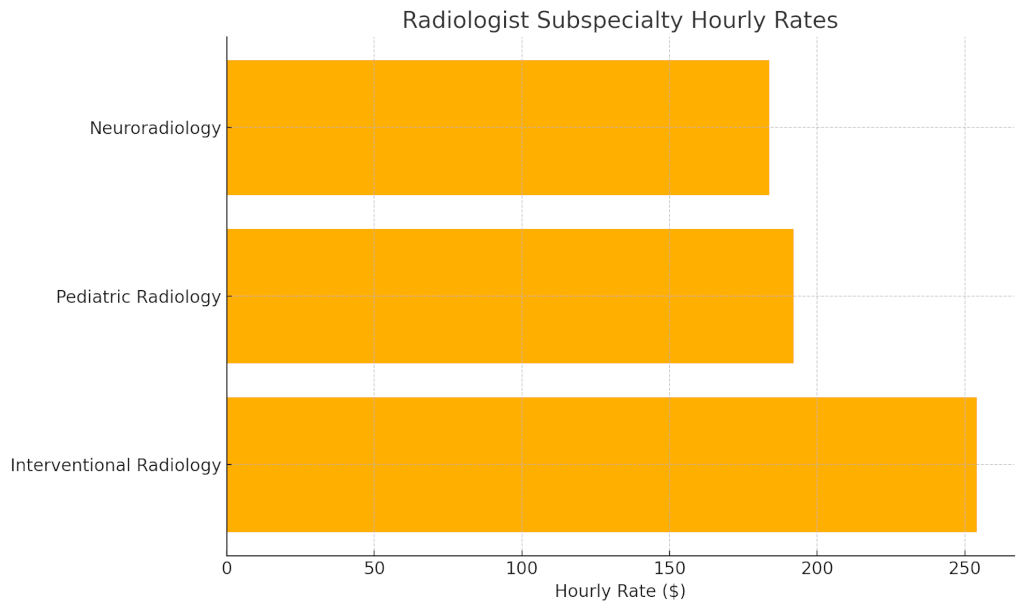
Subspecialty practice also drives variation in pay. Interventional radiologists report annualized earnings of approximately $528,800 (around $254 per hour). Pediatric radiologists earn similarly on a per‑hour basis—roughly $192 (equivalent to about $528,285 per year)—while neuroradiologists average $183.80 per hour (with typical hourly rates ranging from $136.78 to $192.31).
Location plays a significant role in both job availability and salary. Massachusetts and California have the highest employment numbers; South Dakota leads the pack in pay, followed by Arizona and Wisconsin.
Radiologic Technologists and Technician’s Salary
Radiologic Technologists and Technicians earn a mean annual wage of $75,250 at a mean hourly rate of $36.18. Most radiologic technologists work in hospitals. However, physicians’ offices and diagnostic labs also employ a significant number of them. Interestingly, outpatient care centers offer the highest average pay, with an annual mean wage of $89,490.
While Texas and California have the highest employment numbers, California is at the ace in terms of pay, followed by Massachusetts and Hawaii.
Cardiovascular Technologists and Technician’s Salary
Cardiovascular technologists and technicians earn a mean annual wage of $70,270 at a mean hourly rate of $33.79. General medical and surgical hospitals employ the highest number of cardiovascular technologists and technicians; however, the outpatient care centers pay the most, with a mean hourly rate of $50.10 and an annual wage of $104,210.
Florida hires the highest number of cardiovascular technologists and technicians, but Massachusetts pays the most. Medciai’s cardiology PACS makes things way more manageable for the technologists and technicians.
Magnetic Resonance Imaging Technologist’s Salary
The mean annual salary of Magnetic Resonance Imaging (MRI) technologists is $86,600 at a mean hourly rate of $41.64. Medical and diagnostic laboratories hire the most MRI technologists, but the outpatient care centers pay the most, with a mean hourly rate of $58.53 and an annual wage of $121,740.
California is the best place for MRI technologists, with the highest hiring and best pay.
Nuclear Medicine Technologist’s Salary
Nationwide, a nuclear medicine technologist earns a mean annual wage of $95,080 at a mean hourly rate of $45.71. Like other radiology technologists, outpatient care centers offer the highest pay, with an annual mean wage of $132,960, while hospitals hire the most nuclear medicine technologists.

The Highest Paid Radiologists?
1. Interventional Radiologist Salary
Average Annual Salary: $450,000 – $600,000+
Interventional radiologists are at the top of the pay scale in radiology jobs.
These specialists perform minimally invasive procedures using imaging guidance, such as fluoroscopy, MRI, or CT scans, which are central to medical imaging jobs.
Common procedures in interventional radiology include angioplasty, stent placement, and biopsies. Due to the highly specialized nature of the work and the extensive training required, including a fellowship after residency, interventional radiologists are among the highest earners in the field.
Their work is critical in treating complex conditions, such as vascular diseases, cancer, and trauma-related injuries, making this one of the most lucrative paths in medical imaging careers. The high radiologist salary associated with interventional radiology reflects these professionals’ essential role in advanced patient care.
Requirements
- Medical degree (MD or DO)
- Completion of a radiology residency program
- Fellowship in interventional radiology
- Board certification in radiology
2. Neuroradiologist
Average Annual Salary: $400,000 – $550,000
Neuroradiologists specialize in diagnosing and treating conditions of the brain, spine, head, and neck using imaging techniques like MRI, CT, and angiography. Their expertise is crucial in identifying neurological conditions such as strokes, tumors, and degenerative diseases.
Given their work’s complexity and critical nature, neuroradiologists command a high salary. This subspecialty requires additional fellowship training beyond a standard radiology residency.
Qualifications
- Medical degree (MD or DO)
- Radiology residency
- Fellowship in neuroradiology
- Board certification in radiology with a subspecialty in neuroradiology

3. Pediatric Radiologist Salary
Average Annual Salary: $350,000 – $500,000
Pediatric radiologists focus on the unique imaging needs of infants, children, and adolescents. They are skilled in interpreting pediatric imaging studies, which can be more challenging due to the varying stages of development in young patients.
Pediatric radiologists often work closely with pediatricians and surgeons to diagnose congenital conditions, injuries, and diseases in children. The specialized nature of pediatric radiology, combined with the additional training required, leads to higher compensation.
What it’s needed
- Medical degree (MD or DO)
- Radiology residency
- Fellowship in pediatric radiology
- Board certification in radiology with a subspecialty in pediatric radiology
4. Radiation Oncologist
Average Annual Salary: $350,000 – $500,000
Radiation oncologists, though technically distinct from diagnostic radiologists, often fall under the broader umbrella of radiology due to their use of imaging in cancer treatment. They are responsible for designing and overseeing radiation therapy for cancer patients, using imaging to precisely target tumors while minimizing damage to healthy tissues. Their role is critical in multidisciplinary cancer care teams, and their expertise in both oncology and radiology commands a significant salary.
You would need
- Medical degree (MD or DO)
- Residency in radiation oncology
- Board certification in radiation oncology
5. Nuclear Medicine Radiologist Salary
Average Annual Salary: $350,000 – $450,000
Nuclear medicine radiologists specialize in using small amounts of radioactive materials to diagnose and treat diseases. Techniques like positron emission tomography (PET) and single-photon emission computed tomography (SPECT) are central to their work. These radiologists often diagnose and monitor conditions such as cancer, heart disease, and thyroid disorders. Due to the specialized knowledge required to handle radioactive materials safely and interpret nuclear imaging results, these professionals earn top-tier salaries.
Prerequisites
- Medical degree (MD or DO)
- Radiology residency with a focus on nuclear medicine
- Fellowship in nuclear medicine (optional but often pursued)
- Board certification in nuclear medicine
6. Musculoskeletal Radiologist Salary
Average Annual Salary: $300,000 – $450,000
Musculoskeletal (MSK) radiologists focus on diagnosing conditions related to bones, joints, and soft tissues, including sports injuries, arthritis, and fractures. They utilize MRI, CT, and ultrasound to provide detailed images and often work closely with orthopedic surgeons and rheumatologists. Given the demand for their expertise in both clinical and sports settings, MSK radiologists are well compensated, particularly in practices with a high volume of sports-related cases.
What do you need
- Medical degree (MD or DO)
- Radiology residency
- Fellowship in musculoskeletal radiology
- Board certification in radiology with a subspecialty in musculoskeletal radiology
7. Breast Imaging Radiologist Salary
Average Annual Salary: $300,000 – $450,000
Breast imaging radiologists specialize in mammography, breast ultrasound, and MRI to detect and diagnose breast cancer and other breast-related conditions. Their role is crucial in early cancer detection, significantly impacting patient outcomes. Given the high stakes and the increasing reliance on breast imaging for preventive care, these specialists are well compensated. The demand for skilled breast imaging radiologists has grown with the emphasis on early detection and screening programs.
What would you need
- Medical degree (MD or DO)
- Radiology residency
- Fellowship in breast imaging
- Board certification in radiology with a subspecialty in breast imaging
Factors Influencing a Radiologist’s Salary
Several factors can influence the earning potential within radiology, including:
- Location: Radiologists practicing in urban centers or regions with a high cost of living typically earn more. There is also a premium for working in underserved areas.
- Experience: More experienced radiologists with a strong reputation or significant work can command higher salaries.
- Subspecialty: As highlighted, subspecialties requiring additional training and dealing with complex, high-stakes cases generally offer higher salaries.
- Type of Practice: Radiologists working in private practice earn more than those in academic or hospital settings, though this can vary depending on the institution.
Radiologists vs. AI: Is Your Job on the Line?
Okay, let’s address the elephant in the room: will AI replace radiologists? The short answer is… not likely. But it will transform how radiology works.
Studies show that radiologists assisted by AI are more accurate than alone. Think of AI as your super-powered assistant, not your replacement. It excels at crunching massive amounts of data and spotting patterns we might miss. Imagine AI flagging potential issues in a scan, allowing you to focus on the complex cases that need your expertise. This means faster diagnoses and better patient care.
But there’s a catch. Right now, concerns about liability mean radiologists might end up double-checking every AI finding. That could negate the benefits of reduced workload and burnout.
The ideal scenario? A true partnership where AI handles the heavy lifting, freeing you to focus on patient interaction and clinical correlation and using your judgment to guide treatment – areas where human intelligence still reigns supreme.
Conclusion
Radiology is a field where advanced expertise and specialization can lead to substantial financial rewards. Interventional radiologists, neuroradiologists, and other subspecialists often earn salaries that reflect the critical nature of their work and the extensive training required. For medical professionals seeking a lucrative career path, radiology offers numerous opportunities to specialize in areas that not only provide a high income but also significantly impact patient care.
FAQs
1. What is the highest-paying job in radiology?
The highest-paying job in radiology is typically that of an Interventional Radiologist. This role is at the top of the salary scale within radiology jobs due to its highly specialized nature and the extensive training required. Interventional radiologists perform minimally invasive procedures using medical imaging techniques such as fluoroscopy, MRI, and CT scans, making it one of the most sought-after medical imaging jobs. Among radiology tech jobs, radiology technologist jobs, and other imaging jobs, this position stands out for its complexity and high earning potential.
While other high-paying radiology jobs include Nuclear Radiology Physician jobs and MSK Radiology jobs (musculoskeletal radiology), the interventional radiologist’s role remains the most lucrative. For those exploring medical imaging careers, interventional radiology offers the highest rewards, surpassing radiology assistant jobs, radiology nurse jobs, and even some remote medical imaging jobs.
2. Is radiology a difficult career?
Radiology can indeed be a difficult career, but it is also highly rewarding. This field involves interpreting complex medical images, making critical decisions, and staying abreast of the latest advancements in technology. For those in high paying radiology jobs, such as radiologists and specialized roles like MSK radiology (musculoskeletal radiology) or interventional radiology technologist, the demands can be particularly high due to the complexity of the cases and the need for precision.
The difficulty of the career varies depending on the specific role. For instance, radiology remote jobs offer flexibility but may also come with challenges related to working independently and managing a diverse caseload from a distance. Similarly, careers in medical imaging encompass a range of positions, including tomography technologist, each with its own set of responsibilities and challenges.
In terms of compensation, a radiology jobs salary and a radiologist salary are often higher compared to other fields, reflecting the demanding nature of the work. Overall, while medical imaging careers and radiology jobs can be challenging, they offer substantial rewards in both professional impact and financial compensation.
3. What does a radiologist do?
A radiologist is a physician who specializes in diagnosing and treating diseases and injuries using medical imaging techniques. These techniques include X-rays, CT scans, MRIs, ultrasounds, and nuclear medicine. Radiologists interpret the images produced by this equipment to identify various medical conditions, assist in treatment planning, and monitor the progress of diseases.
In their day-to-day jobs, radiologists work closely with other medical professionals, including physicians, radiology assistants, and diagnostic technologists, to ensure accurate diagnoses and effective treatments. Some radiologists specialize in specific areas, such as interventional radiology jobs, performing minimally invasive procedures guided by imaging equipment.
The radiology career also offers various paths, such as radiology assistant jobs, where professionals support radiologists by preparing patients and assisting in procedures, or medical sonographers, who specialize in using ultrasound technology.
Radiologists can work in diverse settings, including hospitals, medical centers, and imaging centers. With technological advancements, remote medical imaging jobs are also becoming more prevalent, allowing radiologists to review and interpret images from various locations.
The need for radiologists remains high, contributing to competitive radiologist salaries across the field. Radiology is a critical component of the healthcare system, providing essential services in diagnosing and managing many medical conditions.
In summary, a career in radiology is not only diverse and in demand but also offers numerous medical imaging careers essential to modern healthcare.
4. What is the career path for a radiologist?
The career path for a radiologist typically begins with obtaining a bachelor’s degree, followed by medical school to become a physician. Many students pursue an MD program as the foundation for their medical career. After earning a medical degree, aspiring radiologists must complete a residency program in diagnostic radiology, where they gain experience interpreting diagnostic images and working closely with other doctors, such as those in cardiology, to diagnose and treat patients.
Upon completing their residency, radiologists can further specialize by pursuing a fellowship in areas like interventional radiology or nuclear medicine. These specializations open up more high-paying radiology jobs, with opportunities to work in hospitals, radiology centers, or remote medical imaging jobs.
Radiologists play a crucial role in producing and interpreting diagnostic images such as MRIs, mammograms, and ultrasounds, working alongside other medical imaging professionals like MRI technologists, mammography technologists, and sonographers. The radiologist salary is among the highest in the medical imaging careers due to the extensive training and expertise required.
Overall, radiology offers a wide range of job opportunities, from diagnostic radiology to highly specialized roles, making it one of the most lucrative and rewarding paths in the medical field.
5. How long does it take to become a radiologic technologist?
Becoming a radiologic technologist typically requires about 2 to 4 years of education and training. Here’s a breakdown:
- Education in Radiology: Most radiologic technologists begin their medical imaging careers by earning an associate degree in radiologic technology, which usually takes about 2 years. Some may pursue a bachelor’s degree, which takes around 4 years. Programs include coursework in anatomy, patient care, radiation physics, and imaging technology.
- Certification and Licensure: After completing the educational requirements, technologists must pass a certification exam from the American Registry of Radiologic Technologists (ARRT). Some states also require additional licensure.
- Specialization: Depending on their career goals, radiologic technologists may specialize in specific areas, such as becoming a nuclear medicine technologist or a mammographer. Specialization often requires additional certification and training.
The demand for radiologists and technologists is high, especially in imaging centers and hospitals, where diagnostic radiology jobs are crucial for patient care. Radiology jobs offer various opportunities, from diagnostic radiology jobs to medical imaging jobs, in a range of health care professions. Additionally, with advancements in information technology jobs, remote medical imaging careers are also on the rise.
Overall, the pathway to becoming a radiologic technologist is relatively short compared to physician jobs, yet it remains a rewarding and in-demand career within the health care sector, with competitive radiologist salaries depending on specialization and location.
6. What is a CT technologist salary?
The salary of a CT technologist varies depending on factors such as location, experience, and the specific employer. On average, in the United States, a CT technologist can expect to earn between $60,000 and $85,000 per year. In higher-paying regions or specialized facilities, this figure can exceed $90,000 annually. For those in “high paying radiology jobs,” such as advanced or specialized radiology positions, the salary can be significantly higher.
The salary for a CT technologist reflects their expertise in operating computed tomography (CT) scanners and contributing to diagnostic imaging, which is a crucial aspect of medical imaging careers.
7. How much do ultrasound techs make?
The salary for ultrasound techs, also known as diagnostic medical sonographers, can vary based on factors such as experience, location, and the specific medical center or facility they work for. On average, ultrasound techs earn between $60,000 and $85,000 per year. However, salaries can be higher in specialized areas or locations with a high cost of living.
For those exploring radiology jobs, including positions like interventional technologist, it’s useful to check job alerts and stay updated with the job market to find the most current salary information. The salary for ultrasound techs falls within the broader category of physician jobs and related technical roles in medical imaging, reflecting their essential role in diagnostic procedures.


Related Articles



Lets get in touch!
Learn more about how Medicai can help you strengthen your practice and improve your patients’ experience. Ready to start your Journey?
Book A Free Demo