How the Future of Radiology Looks Like with Medicai’s “AI Co -Pilot”

Artificial intelligence (AI) has already captured the imagination of many, being seen as a technology that could one day diagnose and solve the most complex medical problems. However, until this ideal is reached, AI can already offer significant benefits in medicine by taking over repetitive and time-consuming tasks, thereby freeing up valuable resources for other essential medical activities.
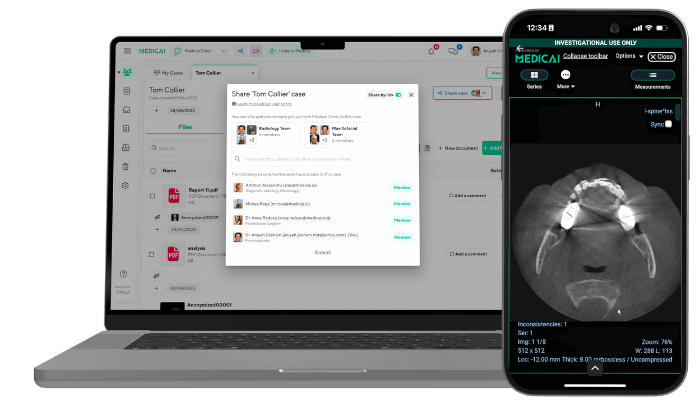
A notable example of the efficient application of AI in the medical field comes from Medicai, a Romanian medtech start-up founded by Mircea Popa. Medicai has developed a cloud-based platform (PACS) that allows the storage and sharing of medical images without the need for traditional CDs. Medical images generated through computed tomography (CT), magnetic resonance imaging (MRI), ultrasound (sonograms), and many other types of medical imaging are saved in an international standard format called DICOM (Digital Imaging and Communications in Medicine) and can be viewed online from any device using an integrated program called DICOM Viewer. The Medicai platform thus facilitates multidisciplinary collaboration between doctors of different specialties, as well as communication between doctors and patients, thereby improving the quality and speed of medical care.
Recently, Medicai has integrated a new feature called “AI Co-Pilot” into the DICOM viewer. This feature is aimed at radiologists and promises to optimize workflows by reducing the time spent dictating and drafting medical reports. It is well known that radiologists and medical staff spend a significant amount of time analyzing images and dictating or writing reports. AI Co-Pilot assists by automating these processes, listening, and completing the medical report in real-time.
With the AI Co-Pilot, excessive dictation is significantly reduced, leading to time savings and an increase in the number of completed reports. Additionally, this digital assistant corrects reports to minimize errors, ensuring greater accuracy. At the end of the investigation, AI Co-Pilot generates a PDF report ready for review and printing with just a few clicks.
In an interview with wall-street.ro, Mircea Popa, founder and CEO of Medicai, emphasized that the future of medicine will be characterized by a personalized approach, where each patient will represent a unique case, requiring special attention, more time, and dedicated treatment. In this context, AI will play a crucial role, facilitating the adoption of new solutions and creating optimized workflows that will help doctors manage cases as efficiently as possible.
Medicai already collaborates with numerous public hospitals and private health networks in Romania, as well as with clients in the USA and the UK. Through this global approach, the company demonstrates that its innovations are appreciated and can bring significant benefits to various healthcare systems.
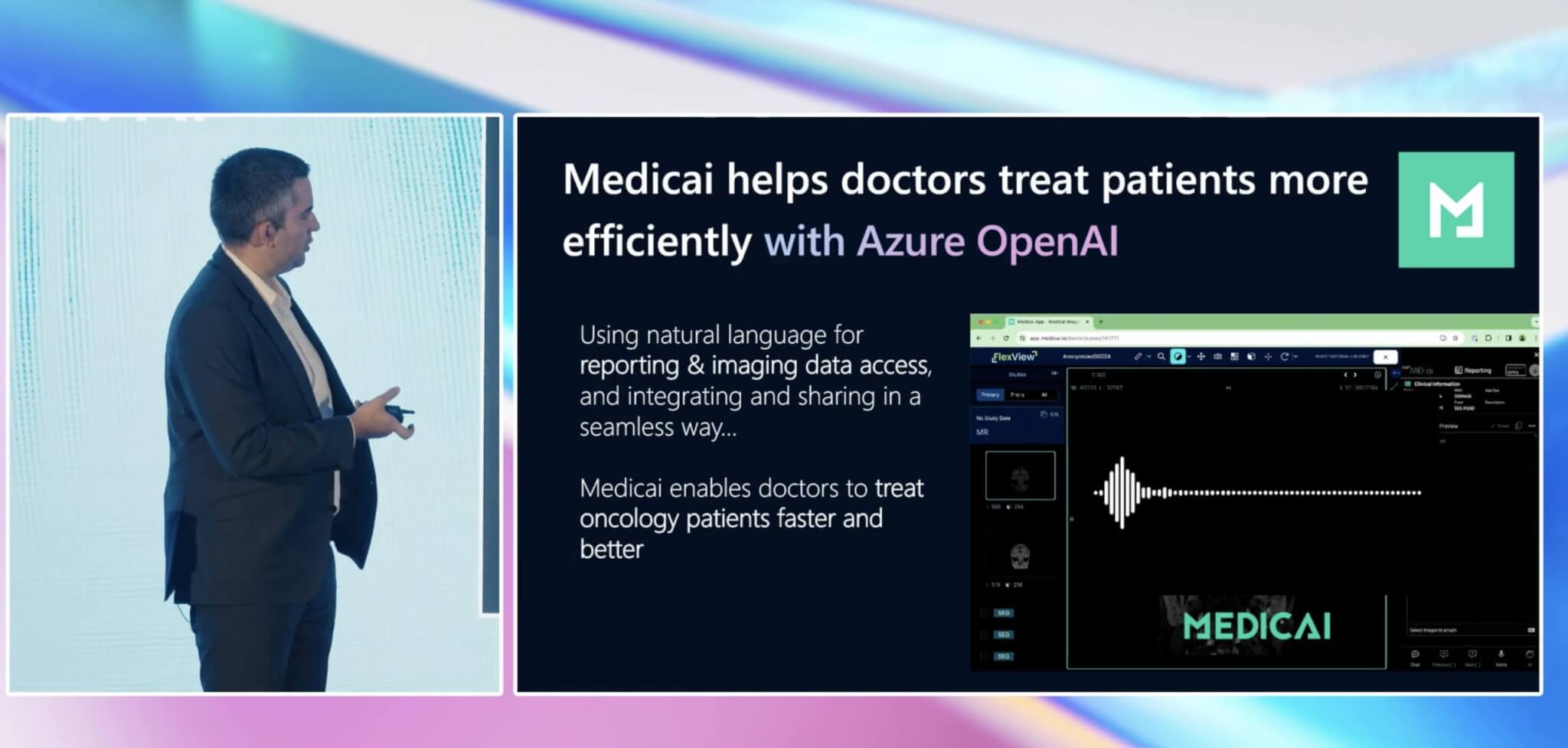
This year, Medicai attended the Microsoft AI Summit Keynote 2024, where the AI Co-Pilot was first introduced: “[…] another amazing startup is the Romanian born Medicai. […] They’ve built the blocks that allow doctors to access, to manage and exchange medical imaging data in the cloud in a safe and secure manner. And then with Azure, OpenAI allowed the dictation, the transcription using natural language in multiple languages, Romanian or English, as well as to create fast reports for remote consultations and then facilitate a connection to specialists as well as the care coordination. And so you think about the end-to-end process in oncology, that they can treat much faster with generative AI.” by presenter Adi Morun, Director Data & AI Central and Eastern Europe Middle East and Africa, Microsoft.
Medicai’s AI Co-Pilot represents an important step in the evolution of radiology, combining advanced artificial intelligence capabilities with the practical needs of medical professionals. By reducing administrative tasks and improving the accuracy of reports, this tool allows radiologists to focus more on direct patient care, leading to better health outcomes overall. Adopting AI Co-Pilot means taking a step toward the future of radiology, where efficiency, accuracy, and direct patient care are paramount.

Related Articles


Lets get in touch!
Learn more about how Medicai can help you strengthen your practice and improve your patients’ experience. Ready to start your Journey?
Book A Free Demo