How to Make Data-Driven Improvements to the Patient Experience

Developments in technology continue to improve the patient experience, mainly due to the role of data in healthcare decisions. Implementing data-driven improvements can drastically increase the accuracy of decisions within healthcare practices, thus improving the patient experience. The question is: how do you go about making these data-driven improvements? We’ll walk you through some of the best tools and practices to implement to do so.
Why Data Matters
Before we dive in, it’s important to understand why these data-driven improvements matter. To start, data-driven improvements can drastically enhance the patient experience – which should be every provider’s priority. Gone are the days when patients were viewed as just another cog in the machine. Today, medicine has taken on a patient-centered approach, ensuring that patients feel valued and cared for.
A significant aspect of delivering a better patient experience is providing accurate care. If a patient is misdiagnosed or receives inaccurate treatment, it could prolong their recovery or even worsen their condition. As a result, it is vital that physicians provide accurate care.
So, how do you ensure the accuracy of care? Data is a huge component of this, as it uses historical, behavioral, demographic, and interaction data. All of these factors come together to impact a patient’s health, and they all must be considered carefully for the best possible care.
As a physician, using all of this information is critical, but it isn’t necessarily straightforward. There’s always the possibility that a patient will fail to mention something important or information will slip through the cracks. Data siloes are common in healthcare practices consuming large volumes of patient data, and they primarily come from a lack of data sharing across the healthcare spectrum.
If doctors cannot get all of the information necessary to make an accurate diagnosis or treatment plan, how can they be expected to care for patients accurately? Fortunately, data-driven improvements can be made within all practices to avoid these mistakes and enhance the patient experience.
Integrated, data-driven technologies will help providers ensure that they have a holistic view of the patient, complete with their entire history and current medical condition. As such, physicians can confidently provide the best and most accurate possible care. Now, let’s discuss exactly which data-driven improvements can help to optimize the patient experience in a practice.
AI-Supported Treatment
One of the best data-driven technologies that healthcare providers can benefit from is AI. There’s no question that AI has taken significant strides in the past few years, especially in medicine. Many healthcare practices are finding that AI can be enabled to use data prescriptively.
For example, suppose a patient is diagnosed with cancer, and their provider needs to determine treatment. In that case, an AI platform can analyze their electronic health records (EHR), which will include their medical history, current health status, and any medical scans and images. Once scanned, the platform will prescribe an action for the treating physicians, such as a treatment plan.
While the physician is not required to use the recommended plan, it provides them with a data-driven starting point. The suggested action will then be evaluated by both the physician and patient to determine if it is the right decision. With the support of the AI platform, the patient and provider receive a fast and accurate care plan to then discuss the next steps in treatment.
Even before treatment, AI platforms can help make diagnoses using the same system. Upon analyzing a patient’s EHRs, the AI tool can pull from recorded historical data and make likely diagnoses. While the physician will still evaluate the output, this system can drastically improve consistency, efficiency, and accuracy in care.
Telehealth Platforms
A significant issue in the healthcare field, particularly concerning accuracy in the patient experience, is data sharing. As mentioned previously, it is unfortunately common for important patient information to slip through the cracks. Without proper and accurate means of sharing data between patients and providers, sensitive and vital information can be lost. As a result, patient care can suffer.
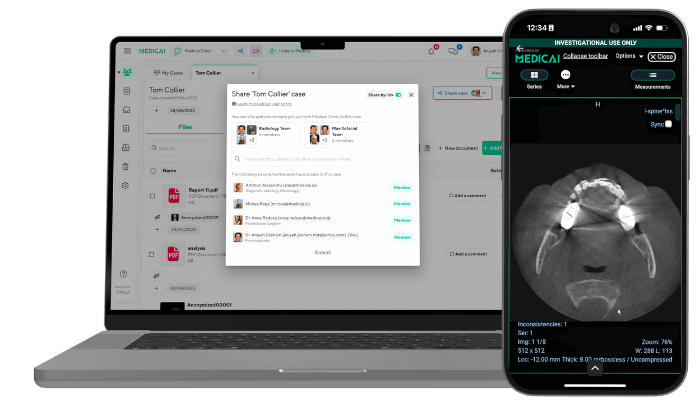
Consider in your own practice: does your current data-sharing technology support patients through the entire care journey? If not, you’re in need of a new solution. Fortunately, telehealth platforms work wonders to eliminate these issues. A telehealth platform serves as a centralized and integrated data-sharing platform between patients and providers. The platform can efficiently facilitate the patient experience from start to finish, ensuring a seamless and accurate process.
Within a practice’s telehealth platform, patients can:
- Schedule appointments
- Upload and access EHRs and medical images
- Communicate with providers (asynchronously and synchronously)
- Make and access their treatment plan
- Fill and refill prescriptions
- Attend follow-up visits remotely
- Complete payment
Every step of the care journey can be conducted through a telehealth platform. Plus, all patient data and records are stored within the platform for instant but secure access. As a result, all relevant information is directly accessible by patients and providers, ensuring that nothing can slip through the cracks.
With a centralized data-sharing platform, patients can communicate more efficiently with their providers, ensuring that they get the care they deserve. Beyond communication, providers can work more efficiently with patients while still ensuring accurate patient-matching. Consequently, patients receive better care, faster and easier than ever before.
Making the Necessary Changes
Data-driven improvements are the key to achieving optimized patient care. With the rate that technology is currently developing, there’s no question that this is recognized by healthcare practices worldwide. But, even if practices are ready to embrace the use of data-driven improvements, they may not have the tools and infrastructure necessary to support it.
Growing volumes of data can be overwhelming for healthcare practices to organize, manage, and distribute. But, if practices take in these mass volumes of patient data without the proper means to accommodate it, they open themselves up to more risk. Without adequate support to handle this data, practices will end up with more errors and mistakes than before.
For this reason, practices must change their current models to fit the data they intake, as opposed to making the data fit their models. Data-driven improvements such as AI supported-systems and telehealth platforms can help practices accommodate the volumes of patient data that they are taking in.
Even beyond this, these tools can help practices efficiently orchestrate data, ensuring that it is stored, disrupted, organized, and managed efficiently. Once this is achieved, practices will soon benefit from the data-driven improvements that have been made, including increased accuracy in treatment and an enhanced patient experience.
Data-driven improvements are the key to future-proofing your practice, but they aren’t possible without the right platform. If you’re interested in learning more about how to future-proof your practice, download our guide below.

Related Articles

Lets get in touch!
Learn more about how Medicai can help you strengthen your practice and improve your patients’ experience. Ready to start your Journey?
Book A Free Demo