Building a Specialist-Centric Minimum Viable Tech Stack

Specialists such as orthopedists, oncologists, and neurologists require tailored technology solutions that streamline clinical workflows, enhance diagnostic precision, and improve patient outcomes. A Minimum Viable Tech Stack (MVS) designed for these specialists integrates essential digital tools to support specialized care delivery effectively. Let’s delve into the key components of an optimized MVS for specialists in healthcare:

1. Electronic Health Records (EHR) software
Examples for Specialists: Canvas, Healthie, AthenaHealth, Elation, Epic, Flatiron OncoEMR
EHR systems streamline data management by consolidating patient information, including medical history, test results, and treatment plans, into a single, easily accessible platform. They can provide features for scheduling, charting, ordering for labs, medications, and referrals, claims and patient payments, clinical data exchange, and workflows for collaboration and results reporting.
For specialists in medical facilities such as orthopedics, oncology, and neurology, EHRs offer tailored workflows and templates that enhance clinical efficiency and decision-making.
2. Doctor Portal
Examples for Specialists: Modernizing Medicine’s EMA, Medicai Doctor Portal
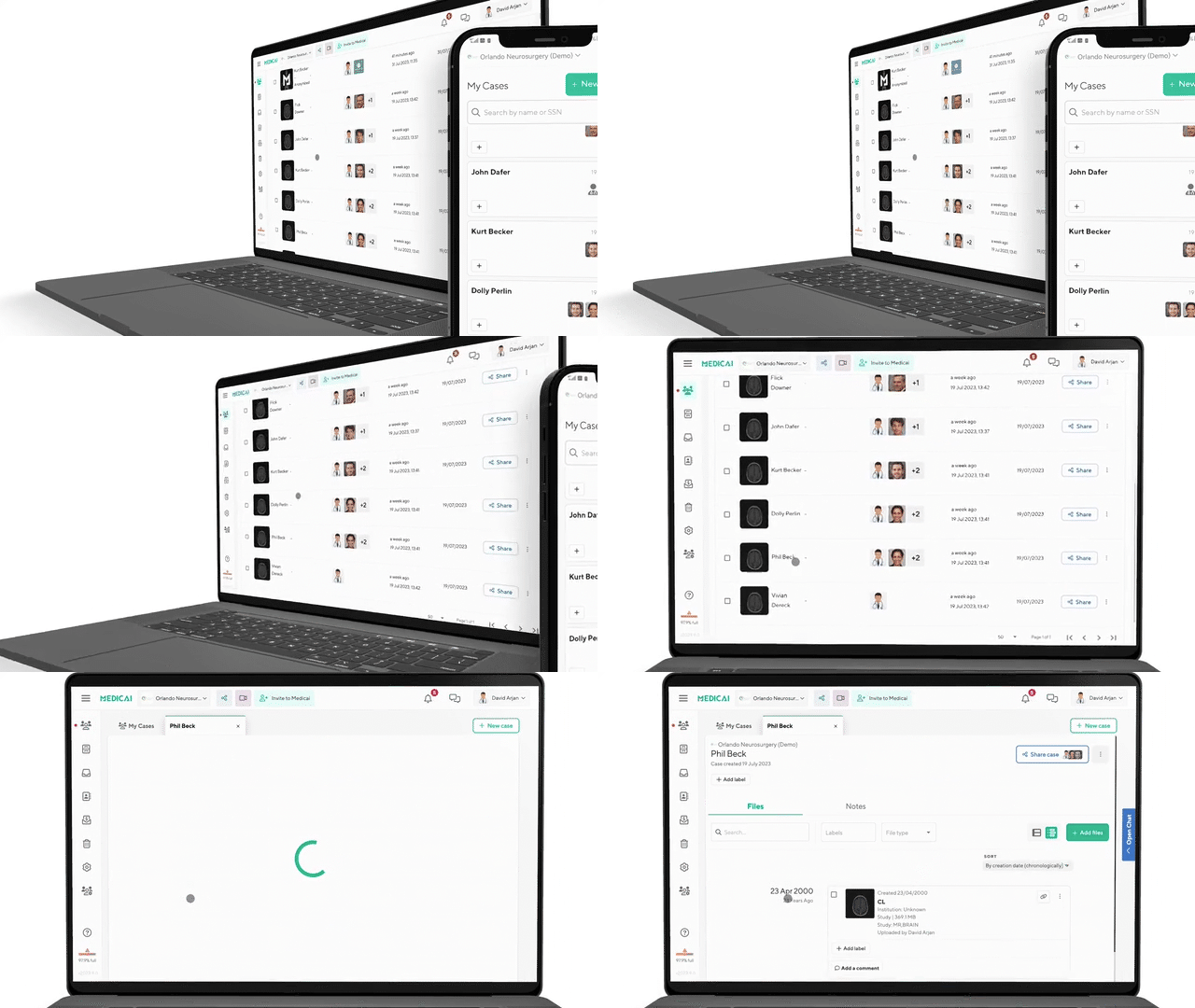
EMA (Electronic Medical Assistant) by Modernizing Medicine is a specialty-specific doctor portal for orthopedists, oncologists, and other specialists. It provides intuitive, specialty-specific workflows, adaptive learning capabilities, and mobile accessibility. EMA streamlines patient encounters, facilitates seamless communication with patients and colleagues, and integrates with EHRs to ensure comprehensive care management.
3. Health Information Exchange (HIE) Network
Examples: Carequality, CommonWell, Konza, Kno2, Health Gorilla
Specialists benefit immensely from Health Information Exchange (HIE) networks, which leverage advanced medical software to facilitate the secure exchange of patient information across different healthcare settings. These software solutions are crucial for enhancing care coordination among specialists, primary care providers, and other healthcare professionals, ensuring timely access to critical patient data.
By seamlessly sharing comprehensive patient histories, treatment plans, and diagnostic results through cloud-based products, HIE networks reduce the need for redundant tests and procedures, ultimately improving the efficiency and quality of precision care. Specialists can make more informed decisions quickly, leading to better patient outcomes and a more streamlined healthcare experience.
4. Mobile Imaging App with Integrated DICOM viewer
Examples: IMAIOS, Medicai
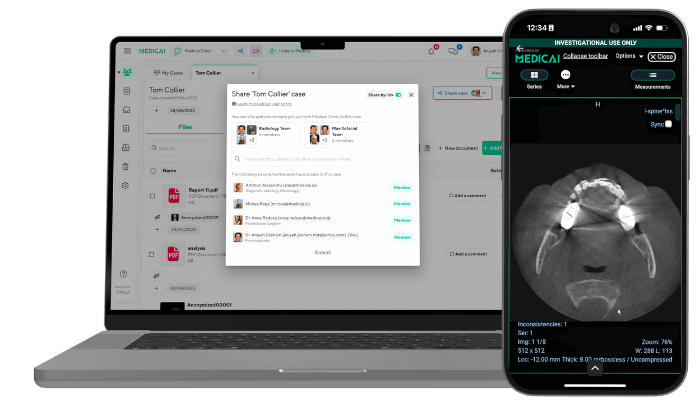
Specialists can leverage mobile imaging apps such as Medicai Mobile App to view and share medical imaging directly from their mobile devices. This capability supports remote consultations, enhances diagnostic accuracy, and improves patient engagement by enabling specialists to access imaging data anytime. By providing instant access to critical images, these apps help specialized providers deliver timely and precise care, streamline workflows, and foster better patient communication, ultimately leading to improved healthcare outcomes.
5. Clinical Decision Support Tools
Examples: AIDoc, Rad AI, Viz.ai, Sirona, Curation Health
Clinical decision tools transform healthcare through advanced technologies such as artificial intelligence, significantly enhancing diagnostic precision and operational efficiency. Start-ups like Viz.ai exemplify this evolution by utilizing AI to automate the analysis of medical imaging data, including DICOM viewer capabilities for interpreting CT scans and other digital imaging modalities. Viz.ai’s platform streamlines the detection of abnormalities like strokes and facilitates rapid communication among clinicians by promptly alerting relevant providers.
Meanwhile, Sirona offers a specialized workflow platform for radiologists, leveraging AI to anticipate actions such as diagnoses, manage worklists, and optimize operational workflows. Curation Health integrates seamlessly with major electronic health records, providing a clinical decision support platform with analytics-driven insights. This supports healthcare providers and plans to transition effectively to value-based care models, ensuring enhanced patient outcomes and efficient resource utilization.
6. ADT Feeds (Admission, Discharge, Transfer)
Examples: InterSystems HealthShare
Specialists benefit from ADT feeds integrated within platforms like InterSystems HealthShare, which automate the exchange of real-time patient admission, discharge, and transfer information. This functionality improves care coordination, patient flow management, and operational efficiency across specialty departments and healthcare facilities.
7. Analytics Tools
Example: Tuva Health, Arcadia, Ribbon Health
Analytics tools like Tuva Health play a pivotal role in healthcare by offering services and open-source software that transform raw healthcare data into analytics-ready formats. By simplifying data preparation for healthcare analytics and AI development, Tuva Health empowers organizations to harness the full potential of their data.
These tools facilitate data-driven decision-making, enabling healthcare providers to implement quality improvement initiatives and develop personalized patient care strategies.
Conclusion
A specialist-centric Minimum Viable Tech Stack in healthcare empowers orthopedists, oncologists, neurologists, and other specialists to effectively deliver high-quality, personalized care. By integrating EHRs with specialty-specific doctor portals, HIE networks, mobile imaging apps, clinical decision support tools, ADT feeds, and analytics tools, healthcare organizations can optimize clinical workflows, enhance care coordination, and improve patient outcomes in specialized fields.
Embracing these advanced technologies fosters innovation and supports specialists in navigating complex healthcare challenges, ultimately elevating the standard of care for patients across diverse medical specialties.

Related Articles
Lets get in touch!
Learn more about how Medicai can help you strengthen your practice and improve your patients’ experience. Ready to start your Journey?
Book A Free Demo