Are EHR and EMR the Same Thing

The introduction of digital technologies has resulted in a dramatic shift in the healthcare sector. A key part of this development has been using electronic health records (EHR) and electronic medical records (EMR).
Let me introduce the nuances of EHR and EMR, offer insights into the future of EHR solutions, and investigate the integration of medical imaging capabilities with EHR and EMR platforms. I will also cover popular platforms and discuss their advantages and disadvantages.

Are EHR and EMR the Same Thing?
Not quite! While Electronic Medical Records (EMRs) and Electronic Health Records (EHRs) are often used interchangeably, they serve different purposes.
An EMR is a digital version of a patient’s medical chart, used within a single practice for diagnosis and treatment. On the other hand, an EHR is a more comprehensive system that shares patient data across multiple healthcare providers, improving coordination and long-term care.
Think of an EMR as a clinic’s internal record, while an EHR travels with the patient. Both enhance healthcare, but EHRs promote interoperability, making them the future of digital health.
EHR: What is it?
Electronic Health Records (EHRs) are digital representations of paper charts that hold a patient’s complete medical history.
These records contain information about the patient’s medical history, diagnosis, prescriptions, plans of care, dates of immunizations, allergies, radiological images, and laboratory test results, in addition to standard clinical data.
EHRs are designed to be shared among healthcare providers, ensuring seamless communication and collaboration in patient care.
Key features of EHR systems
EHR systems excel in comprehensive patient information storage, capturing a detailed and holistic view of an individual’s medical history, treatments, and outcomes.
The emphasis on interoperability and data sharing ensures seamless communication among healthcare providers, promoting collaborative and well-informed decision-making.
Security and privacy measures are paramount in EHR systems, safeguarding sensitive patient data against unauthorized access and cyberthreats. These systems also prioritize user experience with user-friendly interfaces and enhanced accessibility, facilitating easy navigation for healthcare professionals.
Lastly, integration with other healthcare technologies underscores EHRs’ adaptability, allowing them to complement and enhance various aspects of healthcare delivery, from diagnostic tools to telemedicine platforms.
Advantages of EHR
- Improved accessibility and portability of patient records
- Enhanced communication and collaboration among healthcare providers
- Streamlined and efficient workflows
- Reduction in medical errors
- Facilitation of data-driven decision-making
Disadvantages of EHR
- Initial high implementation costs
- Time-consuming data entry
- Concerns about data security and privacy
- Potential for interoperability issues
- Resistance to change among healthcare professionals

EMR: What is it?
Electronic medical records, or EMRs, are digital representations of conventional paper charts kept in medical offices. They are generally used for diagnosis and treatment and contain the typical medical and clinical data collected in one provider’s office.
In contrast to EHRs, EMRs are frequently restricted to a particular healthcare facility and may be difficult to transfer between several providers.
Advantages of EMR
a. Efficient record-keeping within a single healthcare organization b. Streamlined billing and coding processes c. Improved legibility and accuracy of medical records d. Enhanced coordination of care within a specific practice e. Potential for increased productivity for individual healthcare providers
Disadvantages of EMR
a. Limited interoperability between different healthcare organizations b. Incomplete patient data when shared among providers c. Potential for data redundancy and inefficiencies d. Challenges in keeping up with evolving technology e. Concerns about data security and confidentiality
How do you integrate medical imaging capabilities with your EHR solution?
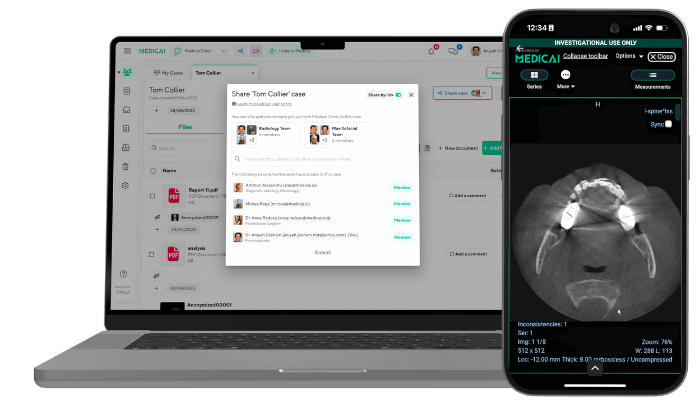
Healthcare organizations can use Picture Archiving and Communication Systems (PACS) or a lightweight, interoperable medical imaging software such as Medicai to connect medical imaging capabilities with EHR solutions.
Medicai allows medical pictures, such as MRIs and X-rays, to be distributed, stored, retrieved, and presented inside the EHR system. This integration offers a thorough perspective of the patient’s medical history and improves diagnostic skills.
Emerging standards and technologies for seamless healthcare data exchange
Fast Healthcare Interoperability Resources (FHIR): FHIR is a modern standard for exchanging healthcare information electronically. It utilizes a web-based approach that is fast, scalable, and easily implementable. FHIR promotes interoperability by providing a standardized framework for exchanging data among healthcare systems.
HL7 Version 3 (HL7v3) and HL7 Version 2 (HL7v2): Health Level Seven (HL7) standards have long been integral to healthcare data exchange. HL7v3 and HL7v2 facilitate the seamless clinical and administrative data transmission between different healthcare applications and systems.
SMART on FHIR: Substitutable Medical Applications and Reusable Technologies (SMART) on FHIR is a standard that enables the development of healthcare applications easily integrated with EHR systems. It promotes interoperability by allowing third-party applications to interact with and access EHR data.
CCDA (Consolidated Clinical Document Architecture): CCDA is an XML-based standard for exchanging clinical documents, such as discharge summaries and progress notes, among healthcare systems. It ensures that documents are structured consistently, promoting interoperability and information exchange.
IHE Profiles (Integrating the Healthcare Enterprise): IHE is an initiative focused on improving how healthcare computer systems share information. IHE Profiles define specific implementation guidelines that help ensure interoperability between different systems and devices.
Blockchain Technology: Blockchain is gaining traction in healthcare for its potential to enhance data security and interoperability. It provides a decentralized and tamper-proof ledger for health data exchange, ensuring transparency, integrity, and secure sharing of information.
Application Programming Interfaces (APIs): APIs enable different software applications to communicate and share data. In healthcare, APIs facilitate interoperability by allowing EHR systems to connect with other health IT applications and services.
CommonWell Health Alliance and Carequality: These collaborative initiatives aim to establish a national framework for health data exchange. They bring together different healthcare stakeholders to define and implement standards for interoperability.
What is the future of EHR solutions?
The evolving landscape of Electronic Health Records (EHRs) is witnessing a profound transformation driven by emerging technologies, patient-centered innovations, and regulatory updates.
Firstly, a surge in EHR technology is notable with the integration of Artificial Intelligence (AI) and Predictive Analytics . These advancements empower EHRs to analyze vast datasets, offering insights into patient outcomes, predicting potential health risks, and aiding healthcare providers in making more informed decisions.
Additionally, patient-centered innovations and customization are taking center stage, tailoring EHR solutions to meet individual patient needs. These innovations, from interactive patient portals to personalized health plans, aim to enhance patient engagement, foster collaboration, and ultimately improve health outcomes.
Simultaneously, regulatory updates shape how EHRs are utilized in the healthcare landscape. Evolving standards and requirements, such as those set forth by organizations like the Office of the National Coordinator for Health Information Technology (ONC) and the Centers for Medicare & Medicaid Services (CMS), impact how EHRs handle data, ensuring compliance with privacy and security regulations.
As the regulatory landscape continues to evolve, EHR developers and healthcare providers must adapt to these changes to maintain electronic health records’ integrity, security, and interoperability. The synergy of these trends, innovations, and regulatory updates positions EHRs as powerful tools in advancing patient care and the overall efficiency of healthcare systems.

Related Articles


Lets get in touch!
Learn more about how Medicai can help you strengthen your practice and improve your patients’ experience. Ready to start your Journey?
Book A Free Demo