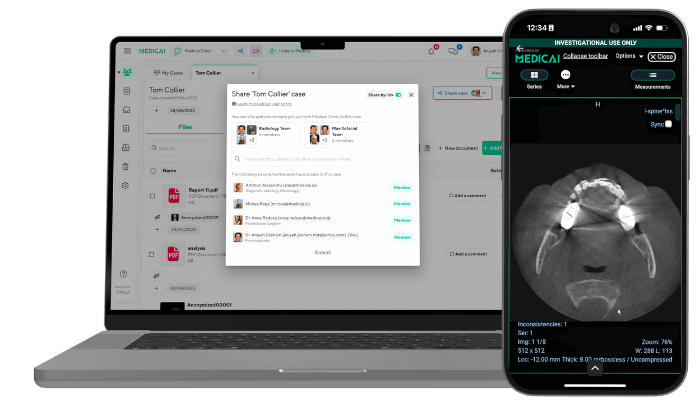
Why Mobile Device Management is Essential for Securing Healthcare Devices

Gone are the days when accessing healthcare meant multiple trips, visits to a doctor, trips to a lab for tests, and returning to collect reports. This cycle was time-consuming and tiresome, especially for patients who are already dealing with illness.
Today, healthcare has moved closer to the patient because of technology. From faster communication to easier access to services, digital devices have significantly improved both efficiency and patient experience.
However, this shift has also introduced new risks. Healthcare environments now rely heavily on connected devices that handle sensitive patient information and are often used in shared, fast-paced settings. Without proper security and management, these devices can quickly become points of vulnerability.
Let’s explore the significance of mobile devices in healthcare, the key security challenges, and how healthcare organizations can effectively secure their devices using a device management solution.
Growing role of mobile devices in healthcare
Mobile technology is transforming healthcare from a reactive, clinic-centered system to a proactive, patient-focused model. With hundreds of thousands of health apps and billions of users worldwide, smartphones, tablets, and wearables are now essential tools for both healthcare professionals and patients.
Some of the critical applications of healthcare mobile devices are:
1. Remote patient monitoring & IoT
Wearables and connected devices such as smart scales and blood pressure monitors track vital signs and transmit data directly to providers, supporting chronic condition management.
2. Telemedicine & expanded access
Video consultations via apps connect patients to specialists remotely, reducing travel, costs, and care gaps for patients living in faraway, rural, or underserved communities.
3. Patient engagement
Apps help patients track habits, set medication reminders, and access personalized health information.
4. Clinical workflow
Healthcare workers access electronic health records (EHR), update charts, and coordinate care on mobile devices, replacing paperwork with real-time, encrypted team communication.
Security challenges in healthcare device management
Healthcare organizations manage highly sensitive data, and as device environments become increasingly complex, it can be difficult to secure everything.
1. Data security & compliance requirements
Patient data is governed by strict regulations such as HIPAA and GDPR. Meeting these standards requires encryption, access controls, and audit records across every device that touches patient information. Even a single misconfigured device can result in a compliance violation, regardless of intent.
2. Device diversity
A typical hospital network includes smartphones, tablets, laptops, rugged handhelds, patient kiosks, and IoT-connected medical equipment. These devices run on different operating systems owned by different parties. This diversity is further complicated by shadow IT, where staff install unapproved apps for work or personal use, often without the IT team’s knowledge. Managing security policies consistently across this mix, without a centralized system, is a difficult undertaking.
3. Risk of unauthorized access
Healthcare devices are often shared across shifts and roles. Without role-based access control (RBAC) and automatic session timeouts, there’s no reliable way to ensure that only the right person accesses the data at the right time.
4. Unsecured app & data loss
Unvetted third-party apps installed on medical devices can quietly expose the network to malware, ransomware, or even data loss. Especially on BYOD, the line between personal and work data is dangerously thin without proper constraints in place.
5. Lost or stolen devices
A lost or misplaced device containing unencrypted patient records constitutes both a security risk and a compliance violation. Without the ability to remotely lock or wipe a device, the damage is largely out of the organization’s control.
Why traditional security approaches fall short in healthcare
Traditional security models in healthcare are built around a fixed perimeter or network, on-premise systems, and controlled access within hospital infrastructure. But today’s healthcare environment no longer operates within those boundaries.
Mobile devices move across locations, connect to different networks, and are used beyond hospital premises for remote care and consultations. This makes it difficult for perimeter-based security tools, such as firewalls and network controls, to track and protect device-level activity.
Additionally, traditional approaches offer limited visibility into endpoint behavior. They cannot enforce policies on individual devices, monitor and restrict app usage, or respond quickly if a device is lost or compromised.
As healthcare becomes more mobile and distributed, security needs to shift from a network-centric to a device-centric model, where command, visibility, and protection extend directly to the endpoints handling patient data.
What is MDM? Why does healthcare need it?
Mobile device management (MDM) is a centralized platform that empowers IT teams to remotely configure, monitor, and secure every device in their fleet, at scale. In healthcare, this translates directly to safer devices, protected patient data, and easier compliance.
1. Enable strong access control
IT teams can enforce passcode policies, multi-factor authentication, and automatic session timeouts across all devices, so that only authorized personnel have access to healthcare data.
2. Secure patient data at rest & in transit
Encryption policies, VPN configurations, and remote wipe capabilities ensure that patient data stays protected, whether a device is in use, at rest, or lost.
3. Manage & restrict apps
IT teams can whitelist approved medical apps and block unvetted apps, eliminating security threats and the risk of unauthorized data access through third-party apps.
4. Implement remote management
All the devices used in field care, ambulance services, or across multiple facilities can be monitored, updated, troubleshot, and wiped remotely, without requiring physical access.
5. Support compliance & audit readiness
MDM automates compliance configurations and generates reports that support HIPAA audits, reducing reliance on manual, error-prone processes.
6. Manage shared & purpose-built devices
Role-based profiles and automatic logoff between shifts make shared devices safer. Kiosk mode locks devices to single- or multi-app kiosk mode, eliminating the risk of data exposure.
Best practices for implementing MDM in healthcare
1. Prioritize continuous monitoring & visibility
Deploy an MDM solution that continuously monitors device health, compliance status, and suspicious activity to detect risks early and prevent security drift over time.
2. Start with high-impact use cases
Focus on managing critical devices used for EHR access, patient monitoring, or communication. Securing these first reduces immediate risk and improves care continuity.
3. Take an iterative approach
Avoid large-scale device rollouts. Start with a specific department, create device groups, test policies, and expand gradually. This helps refine configurations and ensures smoother adoption.
4. Prioritize HIPAA-compliant security controls
Implement RBAC, device encryption, and detailed audit logs to meet HIPAA, HITECH Act, and CMS requirements, and to ensure accountability for devices accessing patient data.
5. Use healthcare-ready MDM capabilities
Leverage MDM features that support shared device management, kiosk mode, and secure access to medical apps and data, tailored to real healthcare workflows rather than generic enterprise requirements.
6. Train healthcare staff on device security
Educate staff on secure usage practices, phishing risks, and proper handling of patient data, as human error remains a major source of security incidents.
Make MDM a strategic priority in healthcare security
Healthcare’s shift to mobile-first operations isn’t slowing down. As device fleets grow and care delivery becomes more distributed, the gap between convenience and security only widens without the right management layer in between.
MDM bridges that gap, giving IT teams the visibility, management access, and automation they need to protect patient data, enforce compliance, and keep devices performing reliably across every care setting.
For healthcare organizations evaluating where to start, it’s important to choose a purpose-built MDM platform. Such solutions address the full spectrum of healthcare device challenges from shared device management and kiosk deployments to HIPAA-aligned compliance workflows and remote device control.
It’s a practical foundation for organizations that are ready to move from reactive device protection to proactive device security and structured management.

Related Articles
Lets get in touch!
Learn more about how Medicai can help you strengthen your practice and improve your patients’ experience. Ready to start your Journey?
Book A Free Demo