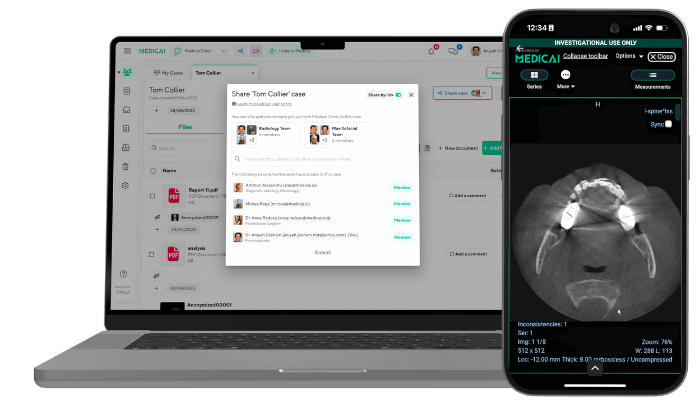
Streamlining multidisciplinary team boards using a cloud based medical imaging platform

Multi-disciplinary team (MDT) boards play a crucial role in the management of cancer patients, allowing medical professionals from various disciplines to collaborate and develop treatment plans tailored to each patient’s unique needs. However, MDT meetings can be time-consuming and challenging to organize, especially when dealing with complex cases that require input from multiple specialists. Fortunately, cloud-based medical imaging platforms can streamline MDT meetings and improve patient outcomes by facilitating real-time collaboration between medical professionals. Here are some ways in which a cloud-based medical imaging platform can streamline MDT meetings:
Real-Time Collaboration
Cloud-based medical imaging platforms can facilitate real-time collaboration between members of the MDT, regardless of their location. With a cloud-based platform, medical professionals can review imaging data and collaborate on treatment plans in real-time, even if they are located in different geographic regions. This can improve communication between members of the MDT and reduce delays in the development of treatment plans.Customizable Workflows
Cloud-based medical imaging platforms allow for customizable workflows that can be tailored to the needs of the MDT. Medical professionals can design workflows that reflect the specific needs of their team and streamline the process of reviewing imaging data and developing treatment plans. This can reduce the time spent on administrative tasks, such as organizing meetings and managing patient data, and allow medical professionals to focus on patient care.Automated Notifications
Cloud-based medical imaging platforms can send automated notifications to medical professionals when new imaging data becomes available or when a new treatment plan has been developed. This can reduce the time spent on manual notifications and ensure that all members of the MDT are kept up-to-date on the latest developments in patient care. Automated notifications can also improve patient outcomes by ensuring that treatment plans are updated in a timely manner.Enhanced Security
Cloud-based medical imaging platforms offer enhanced security features to protect sensitive patient data. Medical professionals can control access to patient data and ensure that only authorized personnel can view and edit patient information. Cloud-based platforms also offer encrypted data transmission and storage, which can reduce the risk of data breaches and protect patient privacy.Conclusion
Cloud-based medical imaging platforms can streamline MDT meetings and improve patient outcomes by facilitating real-time collaboration between medical professionals, customizable workflows, automated notifications, and enhanced security features. By using a cloud-based platform, medical professionals can reduce the time spent on administrative tasks and focus on patient care, improving the efficiency and effectiveness of MDT meetings. The use of cloud-based medical imaging platforms is a significant step forward in the fight against cancer, and it is essential that healthcare systems embrace these technologies to enhance patient outcomes and reduce healthcare costs.
Related Articles
Lets get in touch!
Learn more about how Medicai can help you strengthen your practice and improve your patients’ experience. Ready to start your Journey?
Book A Free Demo