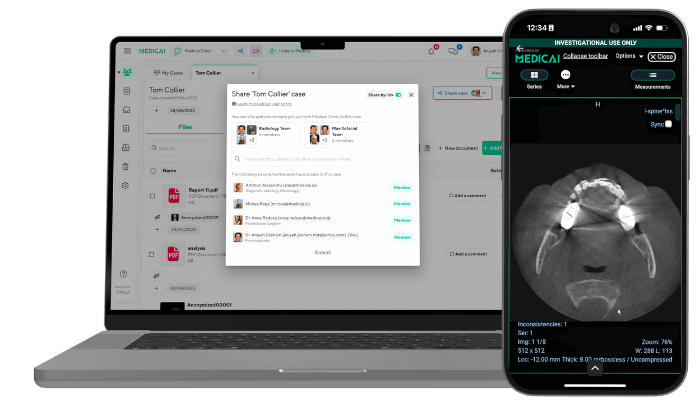
AI-Powered Software Testing in Medical Imaging Platforms: Ensuring Accuracy and Compliance

Medical imaging platforms have evolved into highly sophisticated systems that manage, process, and transmit critical diagnostic data across interconnected healthcare environments. From radiology workflows to cloud-based image sharing, these platforms operate at the intersection of technology and patient care, where accuracy is not optional, but essential.
In such a high-stakes domain, software testing must go far beyond conventional validation techniques. The integration of AI tools for testing is transforming quality assurance into a more intelligent, adaptive, and predictive discipline. Rather than simply identifying defects, modern testing frameworks are now designed to anticipate risks, ensure compliance, and maintain system integrity at scale.
Limitations of Traditional Testing in Medical Imaging Systems
Traditional software testing methodologies, manual testing, rule-based automation, and static validation are increasingly inadequate for today’s complex medical imaging platforms. These systems handle diverse data formats, large imaging volumes, and real-time integrations with hospital infrastructure.
The inherent rigidity of legacy testing approaches makes it difficult to simulate real-world clinical scenarios. For example, validating the behavior of a system under fluctuating network conditions, high concurrency, or cross-platform data exchange requires a level of adaptability that traditional frameworks cannot provide.
As a result, gaps in test coverage, delayed defect detection, and increased maintenance overhead become inevitable. In a healthcare setting, these shortcomings can compromise both system reliability and patient outcomes.
The Role of Artificial Intelligence in Modern Software Testing
Artificial intelligence introduces a paradigm shift in how software testing is approached, particularly in healthcare environments. By leveraging machine learning algorithms, AI-driven frameworks can analyze vast datasets, learn from historical patterns, and continuously refine test scenarios.
Regulatory bodies such as the U.S. Food and Drug Administration emphasize the importance of reliability, transparency, and risk management in AI-enabled medical software. Consequently, testing methodologies must evolve to validate not only system functionality but also behavioral consistency under diverse operational conditions.
Advanced platforms, including those explored by testRigor in their work on AI in software testing, demonstrate how AI can enable self-healing test cases, natural language-based scripting, and intelligent test execution. These capabilities significantly reduce maintenance efforts while improving overall test coverage. In some QA workflows, teams may also generate QR codes to quickly link test reports, imaging validation logs, or defect tracking dashboards for faster access during clinical software reviews.
Improving Accuracy Through Intelligent Test Automation
Accuracy is fundamental in medical imaging platforms, where even minor inconsistencies can lead to diagnostic errors. AI-driven testing enhances precision by identifying subtle irregularities that may not be captured through conventional methods.
Unlike static test scripts, AI-based systems dynamically adapt to changes in the application. They can simulate real-world usage patterns, analyze system responses, and identify deviations from expected behavior with a high degree of sensitivity.
Research indicates that AI-based validation methods significantly enhance anomaly detection in imaging workflows. These findings highlight the importance of integrating intelligent automation into quality assurance strategies, especially in environments where data accuracy directly influences clinical decision-making.
Ensuring Regulatory Compliance Across Healthcare Standards
Medical imaging platforms must comply with stringent regulatory frameworks, including HIPAA and GDPR, which govern the handling of sensitive patient data. Additionally, evolving guidelines from regulatory authorities require continuous validation of software performance and risk mitigation strategies.
AI-powered testing frameworks support compliance by continuously monitoring data flows, validating access controls, and ensuring adherence to privacy requirements throughout the software lifecycle. This proactive approach enables organizations to identify compliance gaps early and address them before they escalate into regulatory issues.
Regulatory guidance on artificial intelligence software in medical devices emphasizes the importance of lifecycle oversight, highlighting continuous testing and post-deployment monitoring as essential components of compliance.
Testing Complex Imaging Workflows and DICOM Integrations
Medical imaging platforms rely heavily on the DICOM standard for storing and transmitting imaging data. Ensuring seamless interoperability across systems requires rigorous testing of both data integrity and workflow consistency.
AI-driven testing solutions are particularly effective in validating DICOM workflows. They can simulate image acquisition, transmission, and rendering across multiple systems, ensuring that data is accurately processed and displayed in various clinical environments.
Insights from industry research highlight how AI-powered diagnostic technologies are transforming medical devices, underscoring the importance of testing strategies that accurately reflect real-world clinical use rather than relying on isolated test scenarios.
Proactive Anomaly Detection and Risk Mitigation
One of the most significant advantages of AI in software testing is its ability to identify anomalies at an early stage. By continuously analyzing test data and system behavior, AI models can detect patterns that indicate potential risks.
These anomalies may include performance degradation, inconsistencies in image processing, or irregular API responses. Early detection allows development teams to address issues before they impact system performance or patient safety.
Studies show that AI-driven systems are increasingly able to detect patterns that may go unnoticed with traditional analysis. This capability is especially valuable in healthcare, where early detection can help prevent critical failures.
Strengthening API Reliability and System Interoperability
Interoperability is a cornerstone of modern healthcare systems. Medical imaging platforms must seamlessly integrate with electronic health records, hospital information systems, and third-party applications.
AI-powered testing enhances API reliability by continuously validating endpoints, monitoring performance metrics, and simulating complex interaction scenarios. This ensures that data exchange remains consistent, secure, and efficient across all connected systems.
By proactively addressing potential integration issues, AI-driven testing supports the development of resilient and scalable healthcare ecosystems.
Future Outlook: Intelligent Testing for Evolving Healthcare Systems
As medical imaging platforms continue to advance, the role of AI in software testing will become increasingly critical. Future testing frameworks will likely incorporate predictive analytics, autonomous test generation, and real-time system monitoring.
These innovations will enable organizations to move toward continuous testing models, where quality assurance is seamlessly integrated into the development lifecycle. The result will be more reliable, scalable, and secure medical platforms capable of meeting the growing demands of modern healthcare.
Conclusion
The integration of AI into software testing represents a significant advancement in the quality assurance of medical imaging platforms. By enhancing accuracy, improving test coverage, and ensuring regulatory compliance, AI-driven testing frameworks provide a robust foundation for reliable healthcare systems.
In an industry where precision directly impacts patient outcomes, the adoption of intelligent testing methodologies is not merely an innovation; it is a necessity. As healthcare technology continues to evolve, organizations that embrace AI-powered testing will be better positioned to deliver safe, compliant, and high-performing medical solutions.

Related Articles
Lets get in touch!
Learn more about how Medicai can help you strengthen your practice and improve your patients’ experience. Ready to start your Journey?
Book A Free Demo