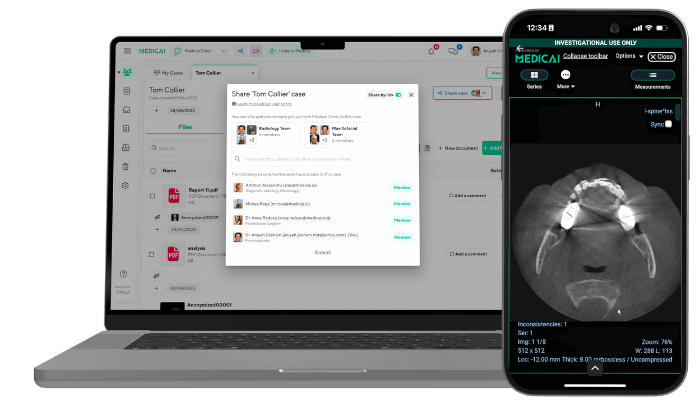
Breaking Clinical Silos in Psychiatry with Cloud-Native PACS

Cloud-native Picture Archiving and Communication Systems (PACS) represent a transformative shift in diagnostic collaboration across psychiatric care. Modern psychiatric treatment increasingly relies on integrated imaging, neurological assessments, behavioral health collaboration, and decentralized care delivery.
The technology leverages modern architectures like microservices and containerization. It allows healthcare providers to store, view, and share DICOM studies securely over the internet, eliminating the need for bulky on-premises hardware. This structural evolution drastically improves interdisciplinary collaboration between psychiatrists, radiologists, neurologists, behavioral health teams, and remote care providers.
Worldwide spending on public cloud services is expected to exceed $1 trillion in 2026, thanks to accelerating Platform-as-a-Service demand and widespread artificial intelligence adoption. The healthcare industry is no exception, as clinical teams are abandoning legacy setups for fluid, decentralized data pipelines.
Architectural Comparison
First, let’s discuss the infrastructure differences between legacy PACS environments and modern cloud-native systems used in collaborative psychiatric diagnostics. True cloud-native PACS use decoupled microservices and serverless infrastructure that dynamically processes images. This eliminates the hardware dependency of legacy on-premises designs. It also bypasses the vertical constraints of cloud-enabled software.
On-Premises Monoliths
On-premise monolithic PACS are stored on hardware (servers, NAS, or hard drives) physically located at the facility. They require custom interfaces for basic external connectivity.
Cloud-Enabled Hosted Systems
This setup moves legacy code into remote virtual machines. However, they scale vertically, which requires costly manual provisioning during data traffic surges.
Cloud-Native Engines
Engineers build these systems from the ground up, using specialized modular technology. Microservices run independently to isolate operational tasks. Containerization engines like Docker and Kubernetes dynamically spin up rendering containers. This balances compute loads automatically. Serverless functions ensure institutions only pay for processing resources actively consumed.
| Structural Attribute | True Cloud-Native PACS | Cloud-Enabled Hosted PACS | On-Premises Legacy PACS |
| Software Architecture | Microservices and modular APIs built entirely for hyperscale cloud platforms. | Monolithic legacy code lifted into a third-party virtual machine. | Monolithic code bound directly to local server operating systems. |
| Compute Scaling | Elastic horizontal auto-scaling; instantiates containers based on instant client load. | Vertical scaling only; requires manual provisioning of larger virtual servers. | Capped by physical CPU, RAM, and hardware array limitations. |
| Update Mechanism | Continuous automated integration; rolls out features with zero system downtime. | Scheduled batch deployments; requires off-peak operational downtime. | Manual patching; requires on-site IT intervention and system suspension. |
| Data Interoperability | Native API-first design; embeds HL7, FHIR, and web-based DICOM protocols. | Layered translation wrappers; requires specialized middleware bridges. | Siloed environments; depends on customized point-to-point connections. |
| Financial Model | Pure predictable operational expense (OpEx); pay-per-use rendering matrix. | Hybrid model; high host fees combined with ongoing software maintenance. | Intensive capital expenditure (CapEx); recurrent server hardware refresh costs. |
Key Advantages in Collaborative Networks
Wilkes University notes that healthcare provider shortages and widening service gaps are some of the reasons why nearly half of all Americans currently lack adequate mental health care. Modern psychiatric care tackles these gaps by combining digital imaging platforms, behavioral health collaboration tools, and remote psychiatric nursing solutions into unified diagnostic ecosystems.
While universities and online PMHNP courses are trying to bridge provider shortages, cloud-native ecosystems break down structural barriers by providing instant diagnostic access. These ecosystems integrate machine learning pipelines and elastic image viewing mechanics for distributed care teams, supporting collaborative psychiatric diagnostics across multiple facilities and specialties.
Real-Time Consultations
Centralized cloud repositories facilitate instant, concurrent image viewing and reporting across multiple clinical disciplines and locations. This dramatically speeds up turnaround times. Massive cloud-hosted GPUs handle complete multi-gigabyte files in the cloud.
Server-side rendering streams an interactive, ultra-high-definition video feed to standard web browsers. A zero-footprint web viewer uses native HTML5 APIs in standard browsers, so it requires no custom plugins, local cache history, or residual local storage.
Collaborative access becomes especially important when psychiatrists, neurologists, emergency physicians, and radiologists must jointly review imaging studies for acute behavioral, neurological, or cognitive presentations.
Remote Imaging Collaboration
Radiologists and distributed diagnostic teams can achieve flexible, location-independent reporting from home or multi-site hospital networks. It allows specialists and referring physicians to securely access high-resolution imaging studies from any internet-connected device. This eliminates complex, high-latency virtual private networks (VPNs).
The global teleradiology market will surge to $60.3 billion by 2030 at a compound annual growth rate of 25.7% starting from 2025. For psychiatric and behavioral health systems, borderless access improves coordination between distributed mental health clinics, emergency departments, neurological specialists, and remote diagnostic teams.
Integrated AI Workflows
Modifiable architecture makes it easy to plug in machine learning tools for automated image analysis. Algorithms run directly into the clinical workspace, while automated workflows manage critical findings.
They can automate imaging measurements, flag neurological abnormalities, or assist with structured diagnostic reporting workflows. Unified platforms merge global diagnostic worklists, viewer features, speech reporting modules, and archive tiers into one cohesive workspace.
In psychiatric and neurological diagnostics, AI-assisted imaging workflows may support the evaluation of structural brain abnormalities, neurodegenerative indicators, trauma-related findings, and comorbid neurological conditions.
Market Trajectory and Economic Realities
According to Tracy Byers, former CEO of enterprise imaging at Optum Insights, massive interest in moving enterprise imaging to the cloud is primarily driven by two factors. First, operational efficiency is critical as radiologists, behavioral health teams, and patient care locations move outside hospital walls. Second, intense financial pressures force health systems to invest in technologies that actively lower operating costs.
Growing clinical study volumes and decentralized care models accelerate the global consolidation of core imaging platforms. This shifts institutional investments from physical hardware to scalable diagnostic networks. The global PACS and RIS market is expected to reach $7,167.1 million in 2033. It is estimated to be valued at $4,463.3 million in 2026. This exhibits a CAGR of 7.0% from 2026 to 2033.
This transition from CapEx (Capital Expenditure) to OpEx (Operational Expenditure) lowers the total cost of ownership (TCO). It removes physical storage maintenance, power cooling, and unexpected IT overhead. Real-time study streaming cuts image load delays. This reduces overall report generation backlogs.
Clinical cases show major improvement in study retrieval speeds and reduction in ongoing system infrastructure support costs. Geographically distributed cloud data archives also have built-in disaster recovery profiles, which guarantee continuous uptime.
Navigating the Transition
Deploying a cloud-first infrastructure requires a strategic evaluation to ensure long-term clinical success. Organizations must manage complex healthcare compliance protocols, verify localized bandwidth availability, and implement modern security frameworks.
Security and Compliance
Platforms must adhere strictly to regional medical data regulations like HIPAA. All data in transit and at rest requires secure encryption. Cloud storage offers significant advantages for HIPAA-compliant de-identification of Protected Health Information (PHI). This process requires removing or masking 18 PHI identifiers, which makes data preparation highly complex without automated cloud clearing tools.
Network Stability
The architecture requires a highly reliable, low-latency internet connection. Redundant bandwidth handles the rapid transfer of large multi-slice imaging datasets. System engineers integrate edge-node configurations alongside advanced pre-fetching logic to balance local clinic data pipelines.
Total Cost of Ownership
Technology buyers must look into transparent, predictable subscription-based pricing models. These subscription frameworks replace massive upfront capital expenditures. Evaluation focuses on native API connections that tie smoothly into existing EHR and RIS software. It promotes flexible Software-as-a-Service (SaaS) structures over fixed, multi-year legacy software models.
Frequently Asked Questions
What are the benefits of cloud native PACS in psychiatric healthcare?
Cloud-native PACS eliminates expensive on-premises hardware and reduces total IT maintenance costs. They enable instant, borderless access to high-resolution images for remote diagnostic workflows, collaborative psychiatric care, and teleradiology teams. Furthermore, their modern modular architecture allows seamless integration with clinical artificial intelligence tools.
Which healthcare organizations use cloud native PACS?
Large multi-site hospital networks use cloud-native PACS to centralize disparate imaging data silos. Small and mid-sized outpatient imaging clinics also use them to avoid heavy upfront capital expenditures. Additionally, distributed teleradiology groups and behavioral health systems use these networks to read diagnostic studies from diverse geographic locations.
What is the difference between cloud native and traditional PACS?
Cloud-native PACS are built on elastic microservices that automatically scale horizontally across secure web connections. Traditional PACS rely on monolithic software tied directly to localized physical servers. This legacy design limits external data sharing and creates isolated clinical silos that complicate collaborative psychiatric diagnostics.
Are cloud native PACS suitable for all types of healthcare facilities?
Yes, cloud-native PACS scales effectively to support everything from small rural clinics to massive enterprise hospital networks. However, facilities must maintain a stable, high-speed internet connection to transfer large imaging datasets rapidly. They also need to ensure their cloud vendor meets strict regional data security compliance guidelines.
Key Metrics
| Global Cloud Spending | Public cloud spending will exceed $1 Trillion in 2026, driven by PaaS demand and AI platform adoption. |
| Teleradiology Market Growth | Global valuation will surge to $60.3 billion by 2030, maintaining a 25.7% CAGR starting from 2025. |
| PACS and RIS Market Value | Estimated at $4,463.3 million in 2026 and reaching $7,167.1 million by 2033 with a 7.0% CAGR. |
| Data Security Mandates | Compliance requires complex masking or removal of exactly 18 distinct Protected Health Information (PHI) identifiers. |
| Operational Drivers | Adoption is fueled by decentralized care locations, interdisciplinary psychiatric collaboration, and intense financial pressures to lower operational costs. |
| Architectural Features | True cloud-native setups utilize horizontal auto-scaling, serverless functions, microservices, and native HTML5 APIs. |
Conclusion
The shift toward enterprise-wide imaging increasingly relies on cloud-native infrastructure. These platforms transform psychiatric and medical imaging from isolated clinical silos into accessible, collaborative diagnostic assets shared across behavioral health, neurology, radiology, and distributed care teams. Cloud-native microservices improve care collaboration.
They boost operational speed and strengthen data protection. Healthcare technology leaders must evaluate these trends when planning long-term infrastructure investments. Scalable, cloud-delivered architectures ultimately power integrated, patient-centered psychiatric diagnostic workflows.

Related Articles


Lets get in touch!
Learn more about how Medicai can help you strengthen your practice and improve your patients’ experience. Ready to start your Journey?
Book A Free Demo