Radiology Second Opinions for Scans: What Patients Should Know

Ever walked out of a scan feeling unsure about what the report really meant?
Medical imaging can be confusing, and the results often leave patients with more questions than answers.
A radiology second opinion provides a fresh, independent review of your scans, helping you be confident in your diagnosis. It helps catch missed details, clarify confusing findings, and guide safer treatment decisions.
Read to find out exactly when a second opinion matters and how it can change your care for the better.

What a Radiology Second Opinion Actually Means
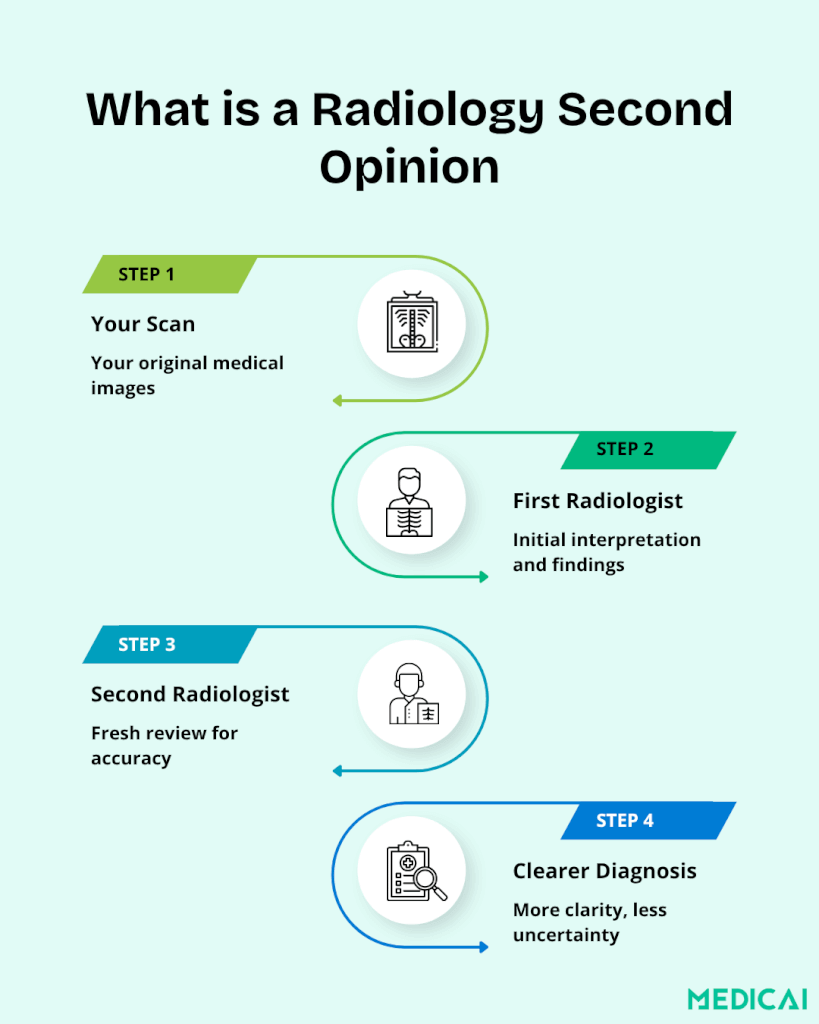
A radiology second opinion involves another qualified radiologist reviewing your existing medical images, like MRI, CT scans, or X-rays. It provides an independent interpretation without any new tests or additional radiation. This second opinion offers a fresh perspective and helps minimize that uncertainty.
Research from the Mayo Clinic shows just how valuable a second opinion can be. In 88% of cases, the diagnosis was refined or completely changed after a second review. This proves that second opinions play a major role in improving accuracy and guiding patients toward the safest, most effective treatment plan.
Radiologists analyze patterns and details in scans, blending science and experience. As a result, two radiologists may focus on different aspects based on their backgrounds.
This is where sub-specialty expertise becomes important.
A general radiologist reads many types of scans every day. But a sub-specialist spends years reading the same type of scan over and over.
- A neuroradiologist looks at the brain and spine all day.
- A breast radiologist knows subtle changes in mammograms and breast MRIs.
- A musculoskeletal (MSK) radiologist focuses on bones, joints, and sports injuries.
- A cardiac radiologist reads heart and vascular scans with a different lens.
Sub-specialists have unique training and expertise, allowing them to identify details that general radiologists might overlook or interpret differently. It can refine the diagnosis, confirm it, or point you toward a safer or more effective treatment path.
When You Should Consider a Radiology Second Opinion
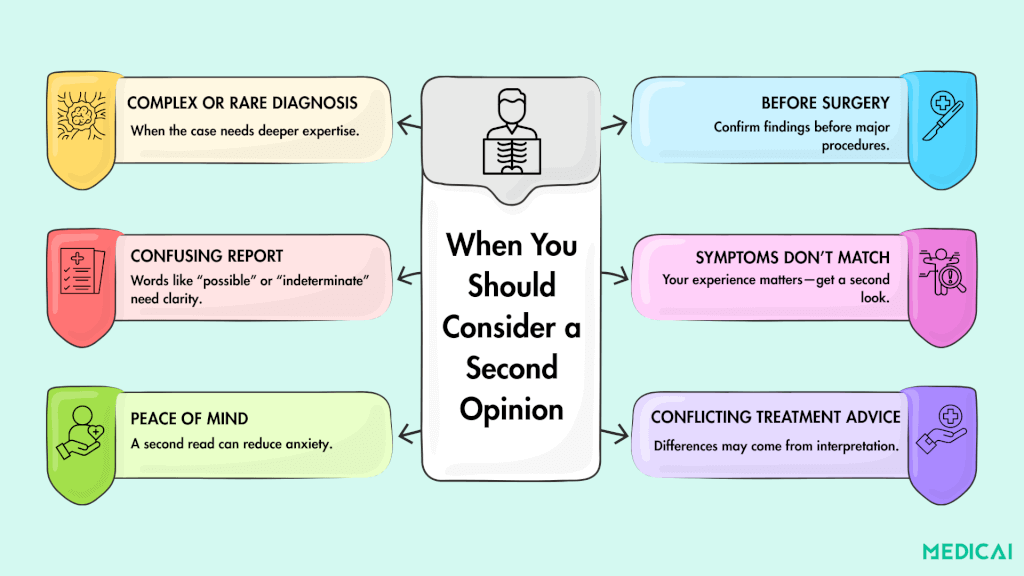
Not every scan needs a second opinion. But certain situations and scans may need a second opinion, as accuracy can affect treatment.
When the Diagnosis Is Complex or Rare
Some conditions are tricky. Tumors, neurological disorders, unusual joint injuries, or unexplained pain often need a deeper look. In these cases, small details can change the whole diagnosis.
A sub-specialty radiologist, someone who reads that exact type of scan every day, may spot patterns that others might overlook.
Before Major Surgery
If a surgery depends on imaging, you want to be absolutely sure the scan was read correctly.
Spine surgeries, joint replacements, tumor removals, or heart procedures often rely on tiny details on the MRI or CT. A second opinion can confirm the problem, clarify the severity, or even adjust the surgical plan.
In some cases, it may help you avoid surgery altogether.
When Imaging Results Are Confusing or Vague
Reports sometimes include phrases like “possible,” “likely,” “indeterminate,” or “cannot rule out.” These words are common in radiology, but they can leave patients unsure.
A second opinion helps turn vague language into a clearer answer. Another specialist may read the images through a different lens and provide you with more precise guidance.
When Your Symptoms Don’t Match the Report
If the report says “normal,” but you are still in pain, something doesn’t add up.
Radiology is powerful, but it isn’t perfect. Sometimes a finding is missed. Sometimes it looks different in context.
When your body tells you one thing and the report tells you another, a second opinion can bring clarity.
When You Want Peace of Mind
Peace of mind is a valid medical reason. Even when the diagnosis is simple, some patients feel more secure with a second read, especially when dealing with cancer scares, chronic pain, or long-term conditions.
Knowing that two experts agreed can reduce stress and help you move forward with confidence.
When Treatment Decisions Conflict
Sometimes one doctor recommends surgery, while another suggests physical therapy.
Or one specialist sees “mild changes” while another sees “moderate.”
These differences usually come from how the scan was interpreted. Getting a second radiology read can help clarify the confusion and give you clearer direction.
Why Radiology Reads Can Differ: The Real Reasons Behind Interpretation Gaps
It can feel surprising when two radiologists give slightly different opinions on the same scan. But in reality, this happens more often than most people think.
- Imaging relies on human interpretation. Radiologists analyze patterns and subtle details, so different experts may focus on different findings.
- Training shapes perspective. Backgrounds in trauma, oncology, pediatrics, or general practice influence what each radiologist is trained to notice.
- Experience levels matter. Specialists who read the same type of scan daily develop stronger pattern recognition and may catch subtler issues.
- Sub-specialties see things differently. Neuroradiologists spot brain and spine nuances. MSK radiologists catch joint and ligament problems. Breast and cardiac specialists identify highly specific early changes.
- Image quality varies. Older machines or lower-resolution scans can hide important details.
- Context influences interpretation. Differences in clinical notes, history, or symptoms can lead to different but valid conclusions.
How Radiology Second Opinions Have Become Easier Than Ever
Getting a second opinion used to be overwhelming with physical CDs, long drives, and lengthy referral processes. Today, technology has simplified this process, removing many barriers that made second opinions slow and difficult.
No More CDs, No More Travel
For years, the only way to share your scans was by carrying a CD from one hospital to another. These CDs often got scratched, corrupted, or couldn’t be opened on certain computers.
Besides, patients sometimes made long trips just to drop them off.
Now, that stress is gone. Digital sharing has replaced physical media. You can access your scans online and send them directly to a specialist without leaving your home.
Online DICOM Viewers Have Changed Everything
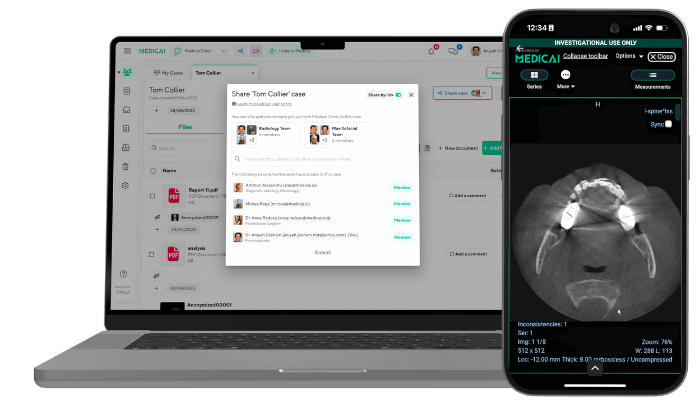
Modern DICOM viewers, especially cloud-based ones offered by platforms like Medicai, allow patients to securely and instantly upload their scans. It marks a major shift, making medical images portable, accessible, and shareable beyond hospital systems.
With a few clicks, your MRI or CT can reach a radiologist at another clinic, in another state, or even in another country. Distance no longer limits the quality of care.
Faster Access to Sub-Specialists
In the past, many people depended only on local radiologists. But now, online access allows patients to reach sub-specialty experts who read specific types of scans every day.
So if your case is complex, you’re no longer bound by geography. A small-town patient can get the same quality of review from a remote radiologist as someone visiting a major academic hospital.
With tools like Medicai, patients can quickly reach the right sub-specialist, even if that expert is in another state or at a major academic center.
Specialists Can Review from Anywhere
Because everything is digital, radiologists don’t need the physical files. They can log in, view your scan at high resolution, compare series, measure, and provide an expert opinion—all remotely.
This flexibility means faster turnaround times and fewer delays.
What to Expect When Getting a Radiology Second Opinion
Getting a radiology second opinion shouldn’t be intimidating. The process is simple.
Gather Your Scans
First, you need your images. These might be from an MRI, CT scan, X-ray, or ultrasound.
You can request them from the hospital or imaging center where you had the test done.
Ask for both:
- The DICOM images (the actual scan files)
- And, if possible, the original radiology report
Upload Your Scans to a Viewing Platform
Your scans should be uploaded to a secure online DICOM viewer for specialist access instead of using a CD.
- Log in to a secure platform
- Upload the DICOM files from a CD, USB, or direct download
- Make sure your name and details are attached correctly
On a platform like Medicai, uploading scans feels as simple as adding a file to cloud storage, but with medical-grade security built in.
Choose the Right Specialist
This step matters a lot.
A second opinion is most effective from a radiologist specialized in your specific scan and condition. For example:
- Brain or spine issue: Neuroradiologist
- Joint or sports injury: MSK (musculoskeletal) radiologist
- Breast imaging: Breast radiologist
- Heart or vessels: Cardiac radiologist
Share Relevant Clinical Notes
Radiologists give better opinions when they understand your story. You should share:
- Your main symptoms
- The questions you want answered
- Any past reports or previous scans
- Key medical history (for example: cancer history, surgeries, injuries)
On many digital platforms, you can either upload these documents or type a short summary.
This context helps the radiologist see what matters most in your images.
Receive Your Revised or Confirmed Findings
After reviewing your images and notes, the second radiologist will prepare a report.
This may:
- Confirm the original diagnosis
- Refine it (give more detail, clarify severity, or narrow down the possibilities)
- Or change it significantly, which may lead to a different treatment plan
You might receive:
- A written report to download or share with your doctor
- Sometimes, a short summary or explanation in simpler language
- In some services, a chance to discuss the findings with your doctor or care team
The goal is to gain more clarity, build more confidence, and make a safer decision.
How Long Does It Usually Take
Timing can vary. But in most cases, a radiology second opinion is completed within 24–72 hours.
It depends on several factors, including-
- How complex your case is
- How many images do you have
- The sub-specialty you need
- How busy the radiologist or the center is
With online image sharing and cloud viewers, the process is now much faster. It often provides expert input within days instead of weeks.
Conclusion
Getting a radiology second opinion means making sure your diagnosis is clear, accurate, and truly aligned with your symptoms. When results feel confusing or high-stakes, a second review can offer the clarity you need.
And with cloud platforms like Medicai making it easy to upload and securely share scans, reaching the right specialist is faster than ever.


Related Articles


Lets get in touch!
Learn more about how Medicai can help you strengthen your practice and improve your patients’ experience. Ready to start your Journey?
Book A Free Demo