Telehealth 3.0: What's Next for Virtual Healthcare?

In 2020, telehealth took root in response to the COVID-19 pandemic. During its introductory phase, telehealth was primarily about speed. Patients hadn’t met with their providers in quite some time, so telehealth platforms were primarily used to play catch-up and quickly move through patients. Now, two years later, telehealth is still in prominent use – and accelerating in popularity.
As we enter “Telehealth 3.0,” telehealth is about more than speed. Today, telehealth is about improving patient care – not just checking off boxes. Telehealth is continuing to advance in its capabilities and improve healthcare for patients and providers alike. If you’re looking forward to what the future of telehealth has to offer, keep reading.
1. Greater Patient Utilization
When telehealth emerged, healthcare practices suddenly had to change their perspective of the patient experience. While telehealth may have started as a means to reduce community exposure to COVID, without patients coming into the office, providers had to place a greater focus on patient care.
With a newfound appreciation for the patient experience through telehealth, patients not only received greater access to their providers, but more attention and better care. Today, with the rise of consumerism, a patient-centered focus, we can expect to see a greater patient utilization of telehealth in this new era.
As patients continue to discover the benefits that telehealth offers them – convenience, access, and improved care – there’s no question that telehealth 3.0 will be led by patient demand. With more and more patients utilizing telehealth services, patients can also expect an even further improved user experience.
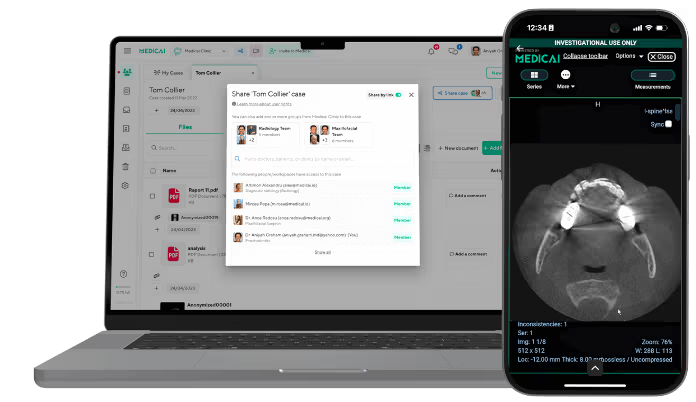
For healthcare practices to stay competitive in a newly patient-focused, digital environment, they’re going to have to step up their game and embrace modern healthcare trends. Fortunately, the right telehealth platform will help practices consolidate all of their patient services into one centralized location. Patients can access health records, providers, and beneficial resources all in one location. Providers that can offer this to patients will definitely have an advantage in the age of telehealth 3.0.
2. Increased Focus on Mental Health
As mentioned, telehealth was initially designed as a solution during the outbreak of the COVID-19 pandemic. Patients who hadn’t seen their provider in months needed care, but today telehealth serves more as an option than a necessity for patients. As such, providers are branching out in the services they offer through their telehealth platform.
Beyond a patient’s physical health, many practices are increasing their focus on mental health within their telehealth platform. The pandemic worsened mental health disorders such as depression and anxiety for many patients, increasing the need for mental health services.
If traditional care can be provided digitally, then why can’t mental health care? This is exactly what thousands of patients are thinking. Fortunately, as providers are more receptive to patient demand today, they are listening and beginning to implement mental health services.
Just as physicians turned to video conferencing to support their patients remotely, so have many therapists and counselors. As such, patients can get the mental and physical support they need from their provider – from any location. Telehealth platforms also provide patients with other services such as health resources, ePrescriptions, and a network of providers, ensuring that no matter the care a patient needs, they can find it with ease.
3. Advanced Remote Monitoring Services
Speaking of remote care, we can expect to see more advanced remote technologies through the rise of telehealth 3.0. Supported by a practice’s telehealth platform, patients can utilize remote monitoring devices for around-the-clock remote care and support.
Wearable technology is already a reality today. Consider a Fitbit or Apple watch. Similarly, patients who focus on physical rehabilitation or cardiovascular health can use a smart trainer app to track indoor cycling sessions, with key performance data securely shared with healthcare providers for more personalized remote care.
Users can wear these devices and monitor their blood pressure, heart rate, activity levels, and even sleep cycles. Many physicians are using this technology for healthcare purposes to track a patient’s health even when they aren’t in the office.
These monitoring capabilities are excellent for patients requiring consistent care, such as individuals with chronic conditions. When wearing the device, essential patient data can be collected and recorded to then be automatically shared onto their telehealth platform. Providers can then view this data in real-time to monitor patient conditions and even be alerted of potential health issues as they arise.
Such technology can greatly comfort patients who require ongoing care and attention but don’t want to disrupt their lives with daily doctor’s appointments. Wearable technology allows patients to go about their daily routine, rest assured that their health is in good hands.
4. Improved Integrated Data Sharing
Hand-in-hand with remote monitoring services is integrated data sharing. With the recently improved digitization of healthcare, data sharing is already faster and easier than ever. Technologies like remote monitoring devices or fitness apps can automatically share data to a telehealth platform in real-time, giving both patients and providers access to valuable health data.
Integrated data sharing is driven by interoperability, the ability to access and share data across different devices and networks. Beyond designated remote monitoring devices, many practices are looking to expand their telehealth services to more platforms. In telehealth 3.0, we can expect to see more telehealth services compatible with smart devices such as phones and tablets. As such, patients can truly access their healthcare information at any time, from any location.
Additionally, with integrated data sharing, patients can easily collect or upload data from one device and have it visible to all. Patients can also share health data with providers quickly and easily, which is highly beneficial when seeking a consultation or second opinion. With advanced data sharing, exchanging, integrating, and using healthcare data is easier than ever.
5. Adoption of AI-Supported Telediagnoses
AI has become more and more integrated into telemedicine over the years, but recent developments have expanded its capabilities. Telediagnosis has been in the works for some time but supported by AI; it is becoming more of a possibility in telehealth 3.0. AI can be used to analyze historical patient data with real-time data such as medical images and patient vitals to provide physicians with diagnoses.
Integrated with a practice’s telehealth platform, AI can help providers make more accurate and consistent diagnoses. With such technology, providers can make more accurate diagnoses faster, accelerating patient treatment. This also helps to significantly reduce medical errors such as misdiagnosis or inconsistent treatment plans.
But, not to worry, while the AI technology will make suggestions to providers, physicians will have the ultimate decision regarding care. Still, the insights provided by AI have the potential to improve and expedite patient care drastically.
The Future of Medicine is Here
For a long time, it seemed as though virtual care was always something of the future. Today, advanced virtual care is a reality, and it’s only growing in its capabilities. Telehealth 3.0 will continue to provide patients with greater access to reliable and accurate care. Today’s modern healthcare technology is already improving the healthcare industry for patients.
As we advance into the era of telehealth 3.0., we can expect to see more growth in telehealth services – in adoption and capabilities. As this phenomenon progress, the healthcare industry will continue to see improvements in public health, patient care access, reduced pressure on healthcare providers, and even the potential to reduce financial stress on patients. While telehealth started as a temporary solution during the pandemic, it has grown to so much more than that – and it’s only just beginning.
Want to learn more about how technology can support your growing practice? Check out our latest guide, Future-Proof Your Practice. It offers insights on top challenges, emerging trends, and much more.

Related Articles


Lets get in touch!
Learn more about how Medicai can help you strengthen your practice and improve your patients’ experience. Ready to start your Journey?
Book A Free Demo