Medical Imaging Technology
The Medical Imaging Technology category highlights the latest advancements and innovations in medical imaging. This section covers topics such as the development of new imaging techniques, improvements in diagnostic accuracy, and the integration of technologies like artificial intelligence and cloud-based solutions. Articles explore how these innovations are transforming the way healthcare professionals capture, analyze, and utilize imaging data to improve patient care and streamline medical workflows.
142 posts
Read MorePACS in Healthcare: How Picture Archiving and Communication Systems Work in Radiology
PACS in Healthcare: How Picture Archiving and Communication Systems Work in Radiology A picture archiving and communication system (PACS) is the software that stores, retrieves, and distributes medical images across a hospital or imaging center. For the full definition and what the acronym stands for, see our guide to PACS meaning and...

Read MorePACS: 130 Years of Medical Imaging Evolution to Sustain Personalized Care
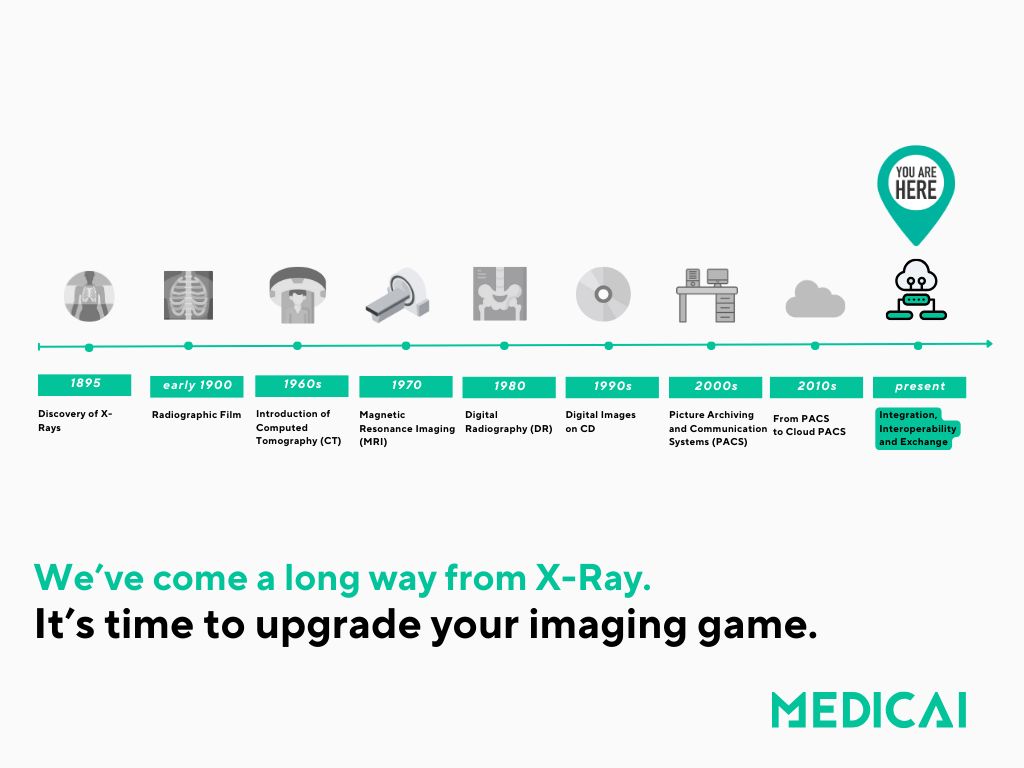
PACS: 130 Years of Medical Imaging Evolution to Sustain Personalized Care Medical imaging data (from X-rays, CT scans, ultrasounds, MRIs, and digital pathology) was once primarily stored in physical formats, such as film. Today, however, these images are captured, managed, and stored digitally using advanced systems, improving accessibility and sharing capabilities....

Read MoreOpen MRI vs Closed MRI: What’s the Difference and Why It Matters
Open MRI vs Closed MRI: What’s the Difference and Why It Matters Open MRI is usually better for comfort, claustrophobia, and larger body size, while closed MRI is usually better when image quality and exam flexibility matter most. Closed MRI is usually the right choice when the exam requires the highest image...

Read MoreEHR Systems integrations with medical imaging
EHR Systems integrations with medical imaging The landscape of electronic health records (EHR) continues to evolve rapidly, with numerous vendors offering robust, innovative solutions designed to enhance the efficiency and effectiveness of healthcare delivery. In 2024, several EHR vendors stand out for their comprehensive features, usability, and ability to integrate with other health tech solutions.
EHR integrations are crucial in this ecosystem, facilitating seamless data exchange and interoperability. In this article, we showcase the top EHR vendors of the year and explore how Medicai, a leading medical imaging platform, can seamlessly integrate with these systems to optimize healthcare operations.

Read MoreWhat would it mean to have a data exchange in medical imaging?
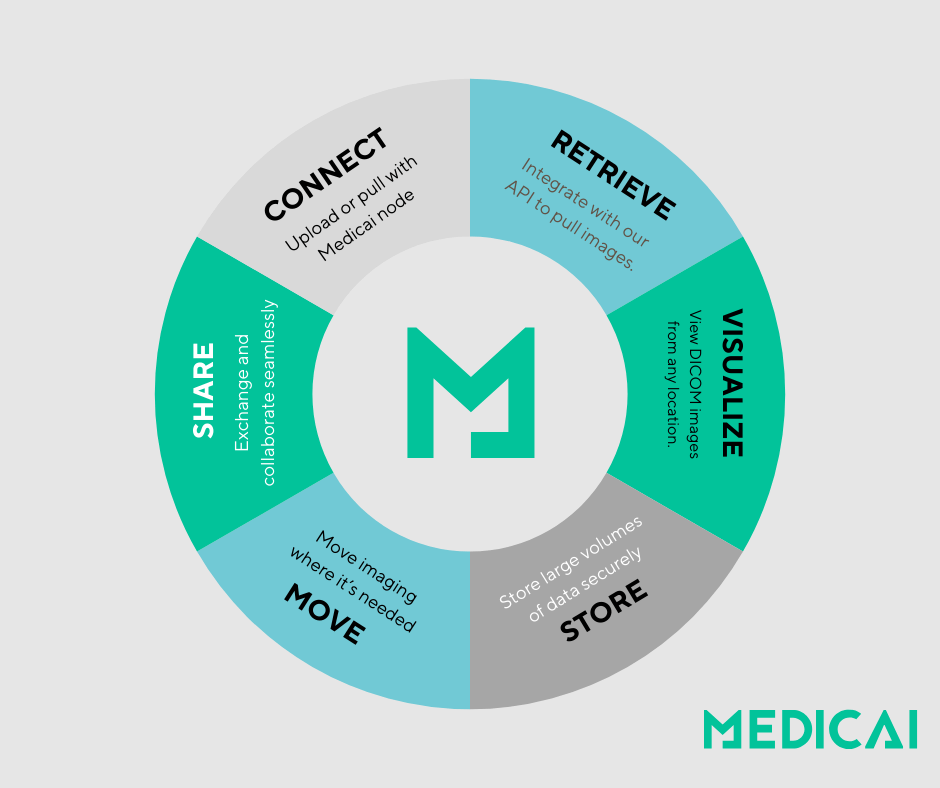
What would it mean to have a data exchange in medical imaging? Health Information Exchange (HIE) is the electronic sharing of health-related information among healthcare organizations and providers. This system enables the secure and efficient exchange of patient medical data, including demographics, medical histories, laboratory results, medication lists, and diagnostic images, across diverse healthcare settings.

Read MoreCloud PACS vs On-Premise PACS: Architecture, Cost, and Performance Compared
Cloud PACS vs On-Premise PACS: Architecture, Cost, and Performance Compared Cloud PACS is a medical imaging platform that stores, retrieves, and distributes DICOM studies on remote cloud infrastructure; on-premises PACS performs the same functions on servers physically located within the healthcare facility — the choice between them determines the cost...

Read MoreMedicai: Enhancing Teleradiology and Telemedicine with Lightweight Cloud Infrastructure
Medicai: Enhancing Teleradiology and Telemedicine with Lightweight Cloud Infrastructure Teleradiology is a branch of telemedicine that focuses on transmitting radiological images, such as X-rays, CT scans, and MRIs, from one location to another for the purpose of interpretation and diagnosis.
This technology enables radiologists to provide their expertise to remote or underserved areas where on-site radiology services are unavailable. Teleradiology leverages advanced communication technologies and digital imaging systems to ensure patients receive timely and accurate diagnoses, irrespective of geographical constraints.

Read MoreBest Software Comparison Platforms to Compare Healthcare Software and Digital Health Solutions
Best Software Comparison Platforms to Compare Healthcare Software and Digital Health Solutions Everyone already understands how massive the software industry is. It shouldn’t be surprising, then, that the health software sector is also large. According to data from Grand View Research, the healthcare software-as-a-service market was worth over $25.13 billion in 2024....

Read MoreIntegrating a Medical Imaging Healthcare API into Your Healthcare IT Strategy
Integrating a Medical Imaging Healthcare API into Your Healthcare IT Strategy Healthcare API are essential tools that enable the seamless exchange of data between different healthcare systems and applications. Medical imaging is a critical component of modern healthcare, providing invaluable insights for diagnosis, treatment planning, and patient management. As healthcare systems...

Read MoreThe role of neuroimaging in diagnosing Alzheimer's disease

The role of neuroimaging in diagnosing Alzheimer's disease Explore the power of imaging techniques in unraveling the mysteries of Alzheimer's, and learn how they are paving the way for more accurate diagnosis.

Read MoreEnhancing Medical Imaging Integration with Medicai's Healthcare API
Enhancing Medical Imaging Integration with Medicai's Healthcare API In healthcare, integrating advanced technologies is pivotal in enhancing patient care, streamlining workflows, and improving diagnostic processes. One such advancement is the use of healthcare APIs, with Medicai API standing out as a seamless avenue for healthcare organizations to integrate powerful imaging capabilities into existing applications.

Read MorePACS Architecture: How It Works, Key Components, and Architecture Models
PACS Architecture: How It Works, Key Components, and Architecture Models PACS architecture, DICOM workflow, tiered storage, and VNA integration — a technical breakdown of how medical imaging infrastructure is designed and deployed.
