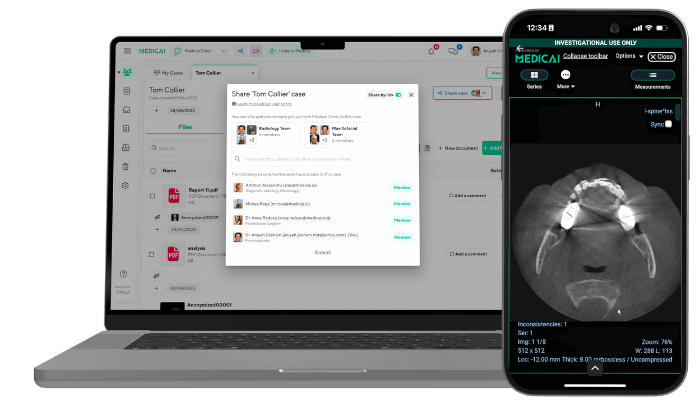
How can AI change medical imaging?

Artificial intelligence (AI) can revolutionize medical imaging by improving diagnoses’ accuracy and speed, reducing costs, and increasing access to care. This article will explore how AI is currently being used in medical imaging and how AI could change the field in the future.
Improving diagnostic accuracy and speed
One of the most meaningful ways that artificial intelligence is changing medical imaging is by improving the accuracy and speed of diagnoses. AI algorithms can be prepared to recognize patterns in medical images that are difficult for humans to detect. This can lead to more accurate and faster diagnoses, improving patient outcomes and reducing unnecessary tests and procedures.
One example of this is using AI to detect breast cancer in mammograms. Traditional mammography is often subject to interpretation errors, leading to false negatives or positives. AI algorithms, however, can be trained to recognize patterns in mammograms that are indicative of breast cancer, resulting in more accurate diagnoses.
Another example is using AI to detect lung cancer in chest X-rays. According to a study published in The Lancet Digital Health, an AI model correctly identified lung cancer in chest X-rays with an accuracy of 96%. This is significantly higher than the accuracy rate of traditional diagnostic methods, which can be as low as 50%.
Reducing costs
Another way that AI is changing medical imaging is by reducing costs. By automating specific diagnostic processes, AI can reduce the need for human expertise and labor, leading to lower costs. Additionally, by improving the accuracy of diagnoses, AI can reduce the number of unnecessary tests and procedures, which can also lower costs.
One example of this is the use of AI to analyze ultrasound images. According to a study published in the Journal of Medical Imaging, an AI algorithm could accurately identify abnormalities in ultrasound images with a sensitivity of 96%. This is similar to the accuracy rate of a human radiologist but with the added benefit of being faster and cheaper.
Increasing access to care
A third way that AI is changing medical imaging is by increasing access to care. By automating specific diagnostic processes, AI can make it possible to provide care in remote or underserved areas where there may not be enough human expertise to provide care. Additionally, by reducing the need for human expertise, AI can make it possible to provide care to more patients more quickly.
One example of this is the use of AI to analyze CT scans in remote areas. According to a study published in The Lancet Digital Health, an AI model accurately identified abnormalities in CT scans with an accuracy of 94%. This is similar to the accuracy rate of a human radiologist but with the added benefit of being faster and cheaper.
Conclusion
AI has the possibility to revolutionize the area of medical imaging by improving the accuracy and speed of diagnoses, reducing costs, and increasing access to care. While AI is already being used in medical imaging, much more can be done to improve the technology. In the future, we can see even more AI-powered medical imaging tools that will transform how we diagnose and treat diseases.
Want to learn more about how technology can support your growing practice? Check out our latest guide, Future of A.I. in Healthcare. It offers insights on top challenges, emerging trends, and much more.

Related Articles


Lets get in touch!
Learn more about how Medicai can help you strengthen your practice and improve your patients’ experience. Ready to start your Journey?
Book A Free Demo