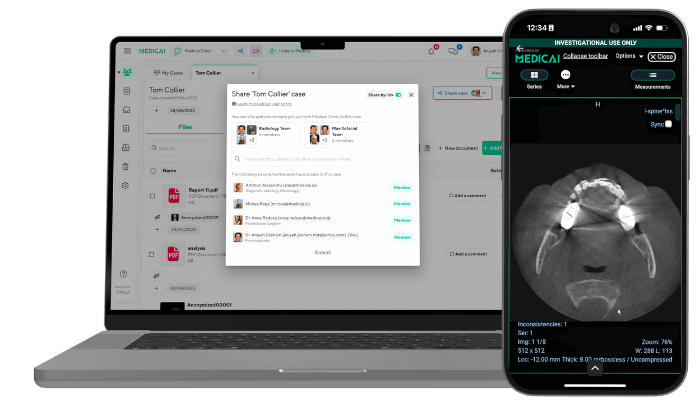
Why Lawyers Need a Smarter Way to Handle Medical Images

In legal cases, medical imaging is more than just evidence—it’s the key to proving injuries, strengthening arguments, and winning higher settlements. But traditional image-sharing methods—CDs, emails, and manual file retrieval—are slow, outdated, and full of security risks.
What if lawyers could instantly access, analyze, and share medical images without the delays? Modern, cloud-based image-sharing solutions eliminate inefficiencies, enhance case presentations, and ensure HIPAA compliance.
Discover how secure medical image sharing for lawyers enhances legal practice, helps lawyers build stronger cases, collaborates with experts, and improves client outcomes.
The Role of Medical Imaging in Legal Cases
Medical imaging is essential evidence in legal proceedings, particularly in personal injury, medical malpractice, and liability cases. It provides clear, visual proof of injuries, which can strengthen legal claims and influence case outcomes.
Lawyers often struggle with slow retrieval times, security risks, and file compatibility issues when accessing medical images. Traditional methods like CDs, USBs, and email attachments are unreliable and can delay case preparation.
Secure, cloud-based image-sharing solutions eliminate these problems, allowing legal professionals to access, share, and present medical images instantly and securely.
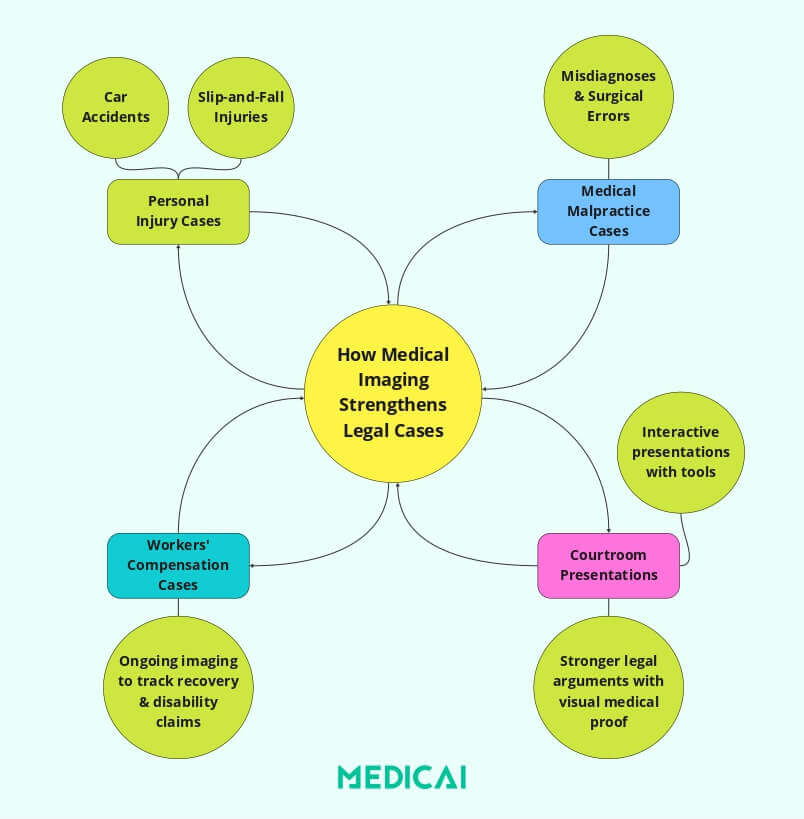
How Medical Imaging Supports Legal Proceedings
Medical images help lawyers build stronger cases by providing visual, objective proof of injuries and medical conditions.
Providing Objective Proof of Injuries
Medical reports can be disputed, but X-rays, MRIs, and CT scans provide clear, irrefutable evidence.
- X-rays show fractures and dislocations, proving the severity of broken bones.
- MRIs reveal soft tissue damage like ligament tears or herniated discs.
- CT scans highlight internal bleeding, brain injuries, and spinal trauma.
These images eliminate doubt and help speed up settlement negotiations.
Supporting Expert Testimony
Medical imaging allows radiologists, forensic specialists, and accident reconstruction experts to analyze injuries accurately.
- Experts use imaging to confirm injury severity and cause.
- Annotations highlight critical damage areas, making complex medical details easier to explain.
- AI-powered imaging tools can detect hidden abnormalities, strengthening legal claims.
These insights make expert testimonies more compelling and credible in court.
Enhancing Case Strategy & Settlement Negotiations
Medical images help lawyers:
- Verify medical reports and challenge opposing claims.
- Use pre- and post-treatment scans to show injury progression or medical negligence.
- Strengthen courtroom presentations by making injuries visually clear to juries and judges.
Strong visual evidence reduces disputes, improves settlement negotiations, and increases client compensation.
Image Sharing for Personal Injury Lawyers
Personal injury lawyers need quick and secure access to medical images. Delays in retrieving or sharing images can weaken a case, making cloud-based solutions necessary.
Car Accidents
Car crashes often cause injuries that are not immediately visible, requiring medical imaging for confirmation.
- X-rays detect fractures and broken bones.
- MRIs reveal soft tissue damage and whiplash.
- CT scans help identify concussions and brain trauma.
These images prove the severity of injuries and their direct link to the accident, making them vital in insurance claims.
Slip-and-Fall Cases
Falls can lead to spinal cord injuries, concussions, and internal bleeding, which may not be visible through physical exams alone.
- CT scans confirm head trauma and brain swelling.
- MRIs detect spinal damage and herniated discs.
- Ultrasounds reveal internal bleeding that may not have immediate symptoms.
Using medical imaging, lawyers can prove that injuries resulted from hazardous conditions at a property, strengthening liability claims.
Medical Malpractice Cases
Medical malpractice cases often involve misdiagnoses, surgical errors, or delayed treatments. Comparing before-and-after scans can reveal mistakes.
- X-rays or MRIs may show that a surgeon left a foreign object inside a patient.
- CT scans can confirm a misdiagnosed tumor that led to incorrect treatment.
- Repeated imaging over time can prove that a medical provider failed to address a worsening condition.
Medical images serve as critical evidence in holding negligent healthcare providers accountable.
Workers’ Compensation Cases
In workplace injury cases, ongoing medical imaging tracks injury progression and supports disability claims.
- X-rays and MRIs document healing progress or show long-term damage.
- Consistent scans prove whether a worker is unable to return to work.
- Medical imaging helps determine if permanent disability compensation is justified.
For workers’ compensation lawyers, timely access to these images can determine case success.
Legal and Ethical Requirements for Image Sharing
Medical images contain sensitive information, requiring strict adherence to legal and ethical regulations. Lawyers handling medical imaging must comply with HIPAA, GDPR, and other data protection laws to safeguard client confidentiality and ensure evidence is legally admissible.
Non-compliance with these regulations can lead to privacy breaches, legal penalties, and inadmissible evidence. Medicai’s secure cloud-based image-sharing solutions help legal teams ensure compliance, monitor access, and maintain chain of custody.
Ensuring HIPAA & Legal Compliance
Medical images are classified as Protected Health Information (PHI), which must be handled with utmost security and compliance.
HIPAA (Health Insurance Portability and Accountability Act)
HIPAA regulates the storage, sharing, and handling of medical images in the United States. Lawyers working on medical malpractice, personal injury, or insurance cases must ensure that PHI remains secure and accessible only to authorized personnel.
To remain compliant, medical image-sharing platforms must use data encryption to protect images both in transit and at rest. It prevents unauthorized access and reduces breach risks.
Legal teams should implement access controls to limit image access to approved personnel, such as attorneys, expert witnesses, and medical professionals. Any unauthorized access could violate HIPAA.
Maintaining audit trails is also crucial. The system should log timestamps for access, edits, or downloads to ensure accountability and compliance if audited.
Instead of storing medical images on physical media like CDs or USBs, which can be lost or stolen, secure cloud-based solutions ensure that legal teams have controlled and encrypted access to the files.
GDPR & International Compliance (For Global Legal Cases)
GDPR imposes extra requirements on lawyers handling international cases or clients in Europe regarding medical images and personal data.
Under GDPR, legal teams need a valid reason to process and share medical images, such as explicit client consent or a legal basis like ongoing litigation. They must also adhere to data minimization, collecting only necessary imaging data for the case.
For cross-border sharing of medical images, law firms must implement GDPR-compliant data transfer mechanisms, like Standard Contractual Clauses (SCCs), to ensure secure international data transfers.
Non-compliance with GDPR can result in severe penalties, with fines reaching up to 4% of a firm’s annual global revenue. Using secure, legally compliant image-sharing platforms is crucial for law firms across different jurisdictions.
Image Authentication & Chain of Custody
Tampered or unverified medical images can be challenged as hearsay evidence, making them inadmissible in court. A missing timestamp or an altered file could raise concerns that the image was manipulated or misrepresented.
DICOM metadata preserves medical images‘ original timestamps, source details, and technical information. It records the creation time, device used, and any modifications, ensuring that legal teams can verify that the image remains unaltered.
An opposing party might claim that an image was edited, taken out of context, or misattributed without proper authentication. Using metadata verification for medical imaging records helps prevent these issues and maintains the legal integrity of the evidence.
Maintaining a Secure Chain of Custody
Legal teams must establish a clear chain of custody for medical images to remain admissible in court. It means tracking who accessed the image, when it was viewed, and whether any changes were made.
Traditional medical image sharing methods, such as CDs and emails, create chain-of-custody issues. It may risk unauthorized access and compromise image integrity.
Cloud-based image-sharing solutions address this issue by keeping detailed access logs. They automatically record a timestamped audit trail when an image is opened, downloaded, or shared, ensuring traceability of who accessed the image and when.
User authentication is key to secure image sharing. It allows only authorized individuals to access medical images and reduces the risks of unauthorized access.
Tamper-proof storage guarantees that once an image is uploaded, it cannot be altered without detection. Any editing attempts are recorded, assisting lawyers in defending against evidence tampering claims.
Secure image-sharing platforms help legal teams protect confidentiality, ensure compliance, and strengthen cases.
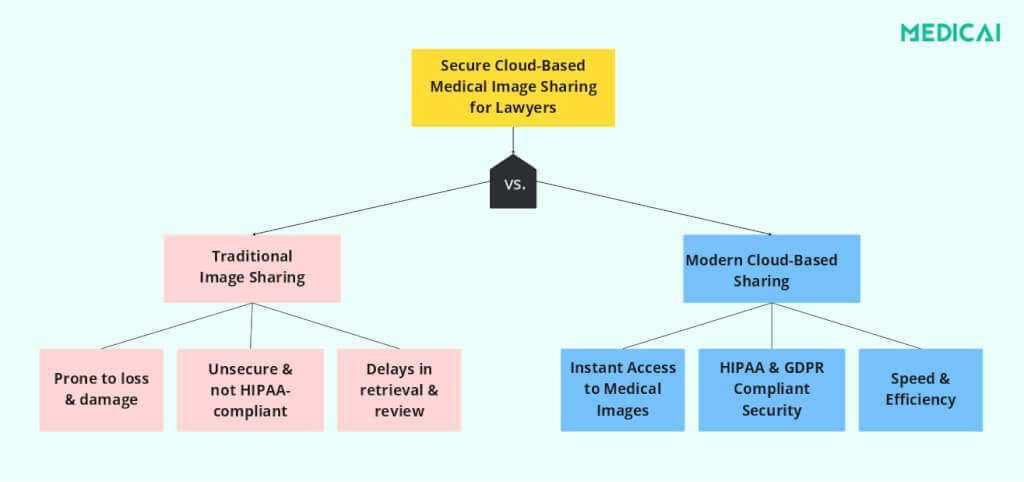
The Challenges of Traditional Image Sharing for Lawyers
Handling medical images via CDs, USBs, and email slows processes and raises security risks, compromising legal cases. Secure cloud-based solutions eliminate these issues, providing faster and safer workflows for legal teams.
Time-Consuming Retrieval & Delays
Accessing medical images often causes delays. Hospitals typically burn images onto CDs, requiring in-person retrieval. This process can take days or weeks, hindering settlement negotiations and trial preparations.
Law firms often encounter compatibility issues with DICOM files, which require specialized viewing software for image review. Due to size limits, emailing large DICOM files is problematic, and compressing them can degrade quality.
Besides, using physical storage devices like USBs poses risks of loss or damage.
A cloud-based solution provides instant, remote access to medical images, allowing lawyers to retrieve, view, and share files seamlessly.
Security Risks & Compliance Violations
Law firms handle sensitive medical imaging data, making them targets for cyberattacks. Improper sharing can expose confidential client information.
Data breaches in law firms pose significant risks, particularly regarding medical images that contain Protected Health Information (PHI) under HIPAA regulations. Sending unencrypted medical images via email or external devices increases the likelihood of theft and unauthorized access.
A single leak can result in major HIPAA violations, leading to fines and legal issues.
Unauthorized access is also a significant concern. Stolen or lost storage devices can compromise client confidentiality, and email forwarding makes tracking access difficult.
A HIPAA-compliant, cloud-based image-sharing platform offers end-to-end encryption, role-based access control, and audit logs, minimizing security risks and ensuring legal compliance.
Compatibility & Viewing Issues
Medical images are stored in DICOM format, incompatible with most law firm software. This creates challenges for attorneys and experts when opening, reviewing, and annotating these files.
Sharing images can be difficult, as many experts and opposing counsel may lack the necessary tools. This can lead to miscommunication and workflow disruptions.
Cloud-based solutions with built-in DICOM viewers allow lawyers, medical experts, and clients to access, review, and collaborate on medical images in real time—without needing specialized software.
How Modern Image Sharing Solutions Benefit Law Firms
Secure, cloud-based image-sharing solutions transform how law firms handle medical imaging evidence. They enable faster case preparation, stronger courtroom presentations, and higher settlements for personal injury and medical malpractice lawyers.
Efficiency & Cost Savings
Lawyers working on personal injury and medical malpractice cases often wait days or even weeks for hospitals to release imaging records. CDs and USB drives require physical pick-ups, adding unnecessary delays.
Modern image-sharing solutions eliminate manual retrieval processes, allowing lawyers to access medical images securely from any device.
By using Medicai’s cloud-based medical image-sharing platform, law firms can:
- Eliminate in-person CD retrieval and instantly access medical images via secure cloud storage.
- Reduce administrative workload, as staff no longer need to track, store, or transfer physical media.
- Speed up case preparation by allowing legal teams to access and review medical images in real-time.
Improved Case Presentations & Jury Engagement
High-quality medical imaging is key in persuading judges, juries, and insurance adjusters. Simple X-rays may not always be compelling, but modern tools enhance how legal teams present medical evidence.
With Medicai’s visualization tools, legal teams can create compelling courtroom presentations that increase juror engagement. Our advanced imaging features improve legal presentations by offering:
- High-resolution 3D imaging that makes fractures, internal injuries, and surgical mistakes easier to understand.
- Side-by-side comparisons that allow legal teams to show pre- and post-treatment images, strengthening personal injury claims.
- Interactive image analysis, enabling lawyers to zoom in on key areas, highlight injury progression, and add annotations for expert discussions.
Stronger Legal Arguments & Higher Settlements
Medical imaging is often the most powerful evidence in personal injury cases. The ability to clearly show injury severity strengthens legal arguments and increases settlement amounts.
When medical images are easily accessible, well-organized, and visually compelling, insurance companies and opposing counsel are more likely to settle cases faster and for higher amounts. With Medicai’s AI-powered image analysis, legal teams can:
- Detect anomalies that may have been missed, reinforcing injury claims with detailed, AI-assisted analysis.
- Disprove false injury claims, preventing insurance fraud by identifying inconsistencies in medical imaging.
- Strengthen expert testimony, allowing medical professionals to provide precise, data-backed insights using Medicai’s annotation tools.
Conclusion: Medical Image Sharing for Lawyers
Medical imaging is crucial in legal cases, but outdated sharing methods can hinder case preparation and compromise security. Secure, cloud-based solutions improve efficiency, ensure compliance, and enhance case presentations, giving lawyers a competitive advantage.
With instant access, AI-powered analysis, and seamless expert collaboration, platforms like Medicai help legal teams build stronger cases and secure better settlements.
The future of legal imaging is smarter, faster, and more secure. Are you ready to upgrade?


Related Articles



Lets get in touch!
Learn more about how Medicai can help you strengthen your practice and improve your patients’ experience. Ready to start your Journey?
Book A Free Demo