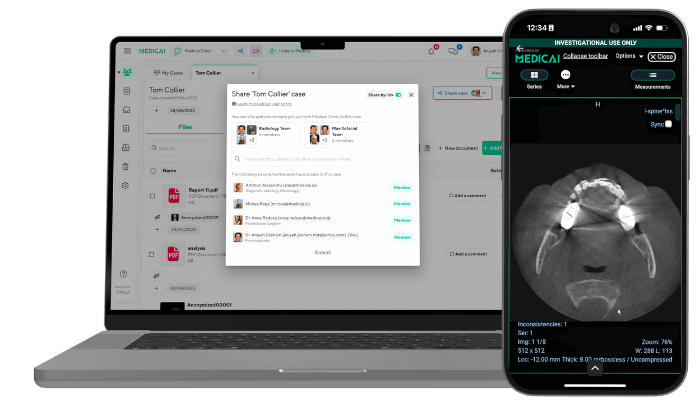
Teleradiology Workflow: How Is It Bridging Gaps In Modern Radiology?

A teleradiology workflow is the end-to-end process that moves a medical imaging study from acquisition at the originating facility through secure transmission, remote interpretation by a radiologist, and delivery of the diagnostic report back to the referring physician. It is the operational backbone of teleradiology: the sequence of steps and the software that runs them determine how quickly and accurately a remotely-read study reaches a diagnosis.
This guide covers the four stages of the teleradiology workflow, the software and systems that run it, the benefits of an optimized workflow, and the challenges to address. For the broader picture of how teleradiology works as a service and a model, see the Medicai teleradiology guide.

Teleradiology Workflow: A Step-By-Step Guide
Teleradiology workflows are at the core of remote diagnostic imaging.
They make it easy for healthcare facilities and radiologists to communicate. Every step in this process counts for making fast and accurate diagnoses.
Here’s a closer look at the key components of a teleradiology workflow.
Step 1: Image Acquisition
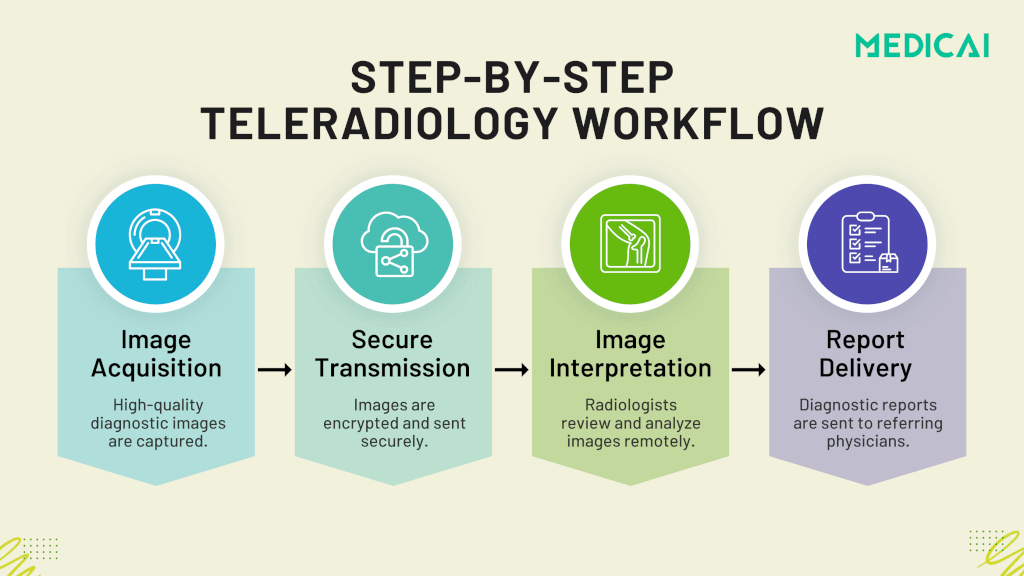
Teleradiology starts at the hospital or clinic, where medical images are taken. A radiologic technologist usually performs the scan so the images meet diagnostic standards.
Advanced imaging equipment provides high-quality images. It captures every fine detail radiologists need to make accurate interpretations.
These images include X-rays, CT scans, MRIs, and other diagnostic images. The images are then prepared for the next step in the workflow.
Step 2: Secure Transmission
Now that the images have been captured, it’s time to transfer them to radiologists for interpretation. This step is crucial as it involves securing sensitive medical data.
Images are usually encrypted to prevent unauthorized access and protect patient privacy. Compliance with standards such as DICOM (Digital Imaging and Communications in Medicine) also ensures consistent image formatting that integrates seamlessly with the teleradiology platform.
Sometimes medical imaging studies, such as MRIs, involve large files. In those cases, advanced systems such as cloud-based PACS help provide quick transmission without compromising quality.
The process ensures radiologists can start their analysis quickly, without concerns about data breaches, compatibility issues, or delays.
Step 3: Image Interpretation
It’s time for the third stage, where radiologists’ expertise comes into play: image interpretation. The radiologists analyze the images to identify abnormalities, confirm diagnoses, or assess the progress of treatments.
These interpretations provide the foundations for the care plans that follow.
Teleradiology helps radiologists provide efficient work remotely. It often involves reviewing cases from multiple facilities.
The platforms often comprise tools to support radiologists in their work. Advanced features like AI assistance can flag potential areas of concern, helping radiologists focus on critical cases first.
These tools speed up the process and enhance accuracy.
Step 4: Report Delivery
The final step in the teleradiology workflow is delivering the diagnostic report back to the referring physician. The report usually includes the radiologist’s findings and recommendations, and provides guidance for the next step in patient care.
Modern teleradiology platforms deliver reports securely and efficiently. They often connect directly to the referring doctor’s electronic health records (EHR) system, making communication easier.
The process helps the care team access the necessary information without delays and technical complications.
Platforms like Medicai streamline the teleradiology workflow by integrating advanced technologies, secure transmission protocols, and seamless report delivery systems.
The result? Faster diagnoses, better collaboration, and improved patient outcomes.
Teleradiology Software and Systems: What Runs the Workflow
Teleradiology software is the platform that runs the workflow: it handles secure image transmission, presents studies to the radiologist via a worklist, provides a diagnostic viewer for interpretation, and delivers the report to the referring physician’s EHR. A teleradiology system combines these functions into a single platform, or integrates them across a cloud PACS, a diagnostic viewer, and reporting tools. The components below are what a teleradiology system provides, and the quality of each determines how efficiently the workflow runs.
The effectiveness of teleradiology workflows depends on several technologies and standards for efficiency, accuracy, and reliability.

Advanced Imaging Technologies
Teleradiology starts with high-quality imaging; advanced imaging technologies are at the heart of this process. Without them, the diagnostic value of the teleradiology would be significantly diminished.
Modern equipment, such as high-resolution X-ray machines, CT scanners, and MRIs, captures the fine details needed for precise diagnoses. The clarity and accuracy of these images are crucial to identify subtle anomalies that could go unnoticed.
These technologies also integrate seamlessly with teleradiology platforms. They make sure that images are prepared and formatted correctly for remote transmission.
Cloud-Based Solutions
Cloud-based platforms provide scalable, secure, and accessible storage for imaging data. They provide scalable, secure, and accessible storage solutions for imaging data.
Instead of depending on physical storage or localized servers, healthcare facilities can effortlessly store and share medical images in the cloud. It is vital as imaging volumes grow and file sizes increase.
Cloud platforms help radiologists to access imaging studies from anywhere. It facilitates faster interpretations and reduces delays.
A rural clinic can upload an X-ray to the cloud, and a specialized radiologist in a different city can review it in real-time. This removes the location barrier in providing patient care.
Another advantage of cloud solutions is security. Advanced encryption and compliance with regulations like HIPAA and GDPR protect sensitive patient data. It maintains privacy throughout the process.
Last but not least, scalability—cloud platforms offered by Medicai help healthcare providers manage large volumes of imaging data without spending a lot and compromising speed and security.
Artificial Intelligence Integration
Artificial intelligence has changed teleradiology workflows substantially by automating repetitive tasks, enhancing diagnostic accuracy, and prioritizing urgent cases. It has transformed the process by automating repetitive tasks, enhancing diagnostic accuracy, and prioritizing urgent cases.
Platforms like Medicai provide AI tools to analyze imaging studies in seconds, flagging potential anomalies for radiology review. This saves a lot of time and ensures that critical cases receive immediate attention.
Besides, AI supports radiologists by identifying subtle patterns in imaging data that might be difficult to detect with only human eyes. It acts as a second set of eyes that complements radiologists’ expertise and reduces oversight risk.
AI-driven tools also enhance teleradiology workflows by generating preliminary reports and automating administrative tasks.
Standardization Protocols
Interoperability—the ability of different systems and devices to work together—is crucial for teleradiology’s success. Standardization protocols like DICOM (Digital Imaging And Communication in Medicine) facilitate consistent medical image storage, transmission, and display.
DICOM’s best support is that it eliminates compatibility issues, allowing radiologists to work seamlessly with diverse healthcare systems. It provides a universal format for imaging studies. Thus, a CT scan is captured on one system, shared, and interpreted on another.
APIs (Application Programming Interfaces) further enhance interoperability by enabling teleradiology platforms to integrate with other healthcare systems, such as PACS (Picture Archiving and Communication System) or EHRs (Electronic Health Records).
This level of standardization reduces delays and improves collaboration between healthcare teams.
Medicai brings these technologies together, empowering healthcare providers to deliver better, faster, and more collaborative care.
Benefits of An Optimized Teleradiology Workflow
An optimized teleradiology workflow offers transformative benefits for patients, radiologists, and healthcare providers.
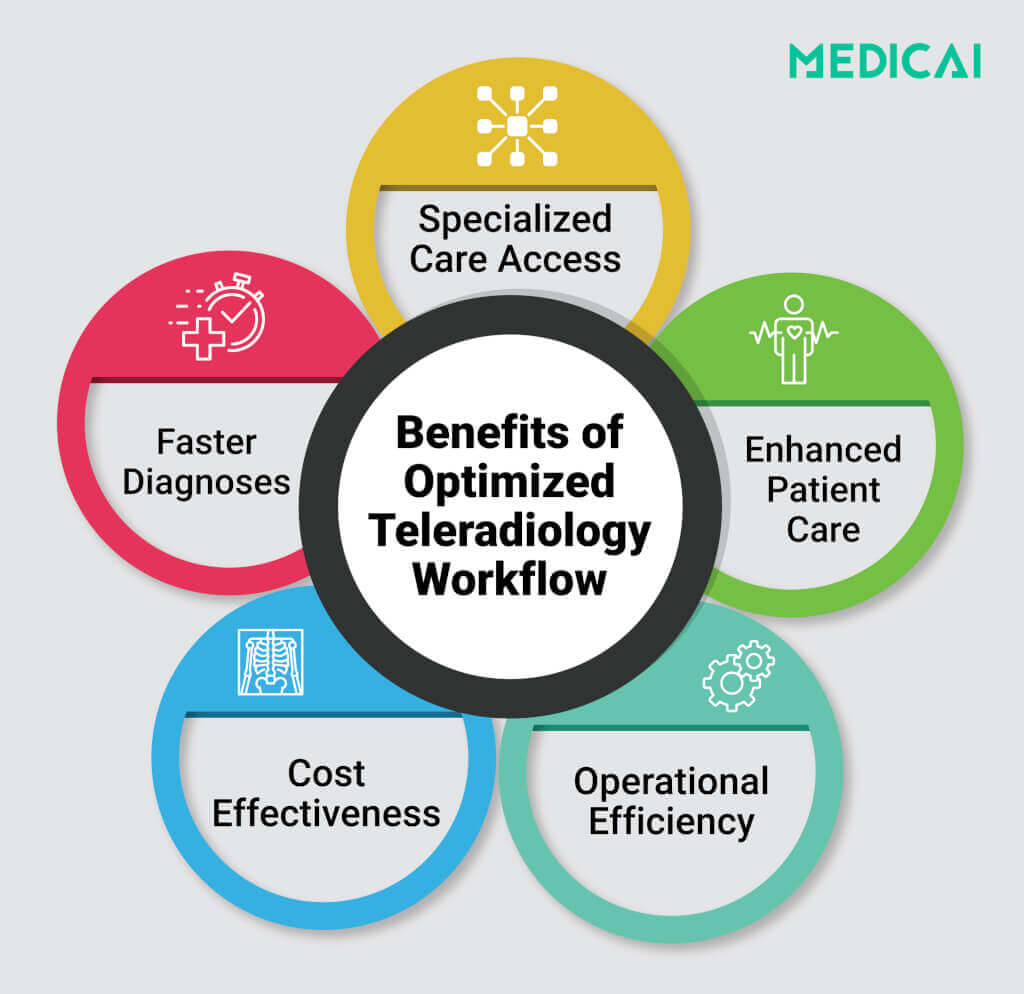
Improved Access to Specialized Care
Access to subspecialty radiologists, such as neuro-radiologists or pediatric radiologists, is extremely limited in many underserved regions. Teleradiology bridges this gap by helping healthcare facilities connect with specialists from anywhere in the world.
Even patients in rural or remote areas can receive expert diagnoses and recommendations through remote consultation.
Faster Diagnosis and Treatment
Optimized teleradiology workflows drastically reduce turnaround times by supporting rapid image transmission and interpretation. Radiologists can prioritize urgent cases, ensuring life-saving treatments are not delayed.
Suppose a patient is in the emergency department showing symptoms of a stroke. The teleradiology system quickly sends their CT scan to a radiologist on call. The radiologist finds a clot and promptly shares this information with the care team.
This quick process makes it possible to start treatment immediately, boosting patient outcomes.
Enhanced Patient Care
Teleradiology enhances the overall quality of patient care. Timely interventions prevent complications, and optimized workflows ensure patients receive results and treatment recommendations quickly.
Patients also benefit from the convenience of staying closer to home while still accessing top-tier care. Accessing expert second opinions also builds patient confidence in their diagnoses.
Cost-Effectiveness
Teleradiology eliminates many of the costs associated with traditional radiology setups. Healthcare facilities no longer need to maintain on-site radiologists, reducing staffing expenses.
Besides, cloud-based storage solutions replace the need for physical archives, cutting infrastructure costs.
Operational Efficiency
An optimized workflow helps radiologists share their workload. Instead of burdening in-house staff, cases can go to a network of radiologists. This speeds up turnaround times and lowers the risk of burnout.
Automated workflows make things easier by prioritizing urgent cases and streamlining routine tasks.
Challenges In Teleradiology Workflow
Teleradiology provides many benefits, but some challenges need to be addressed for it to work smoothly.
Connectivity Issues
Fast and reliable internet is crucial for sending large medical images like MRIs and CT scans. In rural areas, weak internet connections can cause delays in uploading images and getting results. Interruptions during transmission can also affect the quality of teleradiology services.
To address connectivity issues, Medicai offers advanced data compression techniques that reduce file sizes without sacrificing image quality. Cloud caching temporarily stores data on local devices so it can be uploaded later when the internet connection improves.
Besides, new technologies like 5G networks are set to address these issues by offering faster, more reliable internet access.
Data Security Concerns
Medical imaging files contain sensitive patient information, making them attractive targets for cyberattacks. A data breach can compromise patient privacy, lead to hefty fines, and erode people’s trust in the healthcare system. That’s why keeping data secure is a top priority for teleradiology workflows.
Encryption protects data when it is stored and sent. Multi-factor authentication provides extra security by requiring more than one factor to confirm identity before granting access.
Compliance with regulations such as HIPAA and GDPR also ensures that all data-handling practices meet legal and ethical standards.
Interoperability Hurdles
Teleradiology depends on effective teamwork between different systems, devices, and platforms.
Many healthcare providers struggle with interoperability due to differences in software and imaging equipment. Without standard protocols, data exchange can be slow and may lead to errors.
DICOM standards are key to teleradiology’s smooth operation. They allow imaging studies taken on one system to be easily shared and read on another.
APIs help even more by linking teleradiology platforms to other healthcare systems, such as PACS and EHRs.
Frequently Asked Questions
What are the steps in a teleradiology workflow?
A teleradiology workflow has four stages. First, image acquisition: a technologist captures the study (X-ray, CT, MRI) at the originating facility. Second, secure transmission: the study is encrypted and transmitted to the radiologist, typically through a cloud PACS using the DICOM standard. Third, image interpretation: the radiologist reviews the study remotely, often with AI assistance that flags urgent cases. Fourth, report delivery: the diagnostic report is sent to the referring physician, typically via direct EHR integration. The software and systems that run these four stages determine how quickly and accurately the study reaches a diagnosis.
What is teleradiology software?
Teleradiology software is the platform that runs the teleradiology workflow: it handles secure image transmission, presents studies through a worklist, provides the diagnostic viewer for interpretation, and delivers reports to the referring physician’s EHR. A teleradiology system combines these functions into a single platform or integrates them across a cloud PACS, diagnostic viewer, and reporting tools. Modern teleradiology software is cloud-native, allowing radiologists to read from any location and enabling facilities to scale imaging storage without on-premise hardware.
What is a teleradiology system?
A teleradiology system is the combined software and infrastructure that enables remote reading of medical imaging: the transmission layer, the storage (typically cloud PACS), the diagnostic viewer, the worklist that routes studies to radiologists, AI tools that prioritize urgent cases, and reporting and delivery integration with the referring facility’s EHR. A well-designed teleradiology system provides these as an integrated platform, so studies move through acquisition, transmission, interpretation, and reporting without the friction of disconnected systems.
What are the benefits of an optimized teleradiology workflow?
An optimized teleradiology workflow improves access to subspecialty radiologists for underserved regions, reduces turnaround time so urgent cases like stroke are read quickly, enhances patient care through timely intervention, lowers cost by reducing the need for on-site radiologists and physical archives, and improves operational efficiency by sharing workload across a radiologist network and reducing burnout. The workflow’s performance depends on the teleradiology software and systems that run it.
What are the main challenges in teleradiology?
The main challenges are connectivity (transmitting large imaging files reliably, especially in rural areas, addressed through data compression and cloud caching), data security (protecting patient imaging through encryption, multi-factor authentication, and HIPAA and GDPR compliance), and interoperability (different systems working together, addressed through the DICOM standard and APIs connecting teleradiology platforms with PACS and EHR systems). Each is addressed by the software and systems layer of the workflow.
Conclusion
An optimized teleradiology workflow reduces turnaround time, expands access to subspecialty expertise, and improves patient outcomes by efficiently moving imaging studies through acquisition, transmission, interpretation, and reporting. The software and systems that run the workflow (cloud PACS, diagnostic viewer, AI triage, and standards-based integration) determine how well it performs. Medicai provides these as an integrated cloud-native platform. To evaluate the platform, see the Medicai cloud PACS; for how teleradiology works in general, see the teleradiology guide.


Related Articles


Lets get in touch!
Learn more about how Medicai can help you strengthen your practice and improve your patients’ experience. Ready to start your Journey?
Book A Free Demo