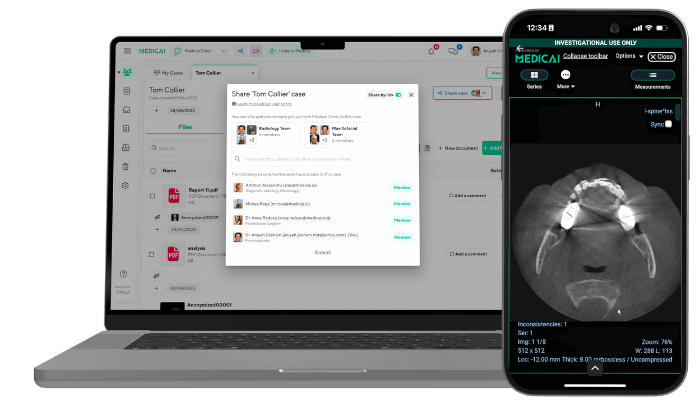
Secure Cloud PACS to Bridge Between Medical Specialists and Attorneys

A spine scan could make or break your case, but only if you can access it quickly.
For attorneys handling injury claims or doctors coordinating care, fast and secure access to medical images isn’t optional; it’s essential. Yet, outdated systems often get in the way, delaying outcomes and making collaboration more complicated.
That’s where secure cloud-based PACS steps in. They offer a smarter, faster way to share and review diagnostic images across industries.
Discover how cloud PACS bridges the gap between healthcare and law, streamlines teamwork, and protects patient data.

Cloud PACS for Lawyers to Strengthen Legal Case Outcomes
In personal injury, workers’ compensation, and medical malpractice cases, timely access to diagnostic images is critical for favorable outcomes. A secure cloud-based PACS enhances attorneys’ ability to share images efficiently, helping them prepare strong cases supported by visual medical evidence.
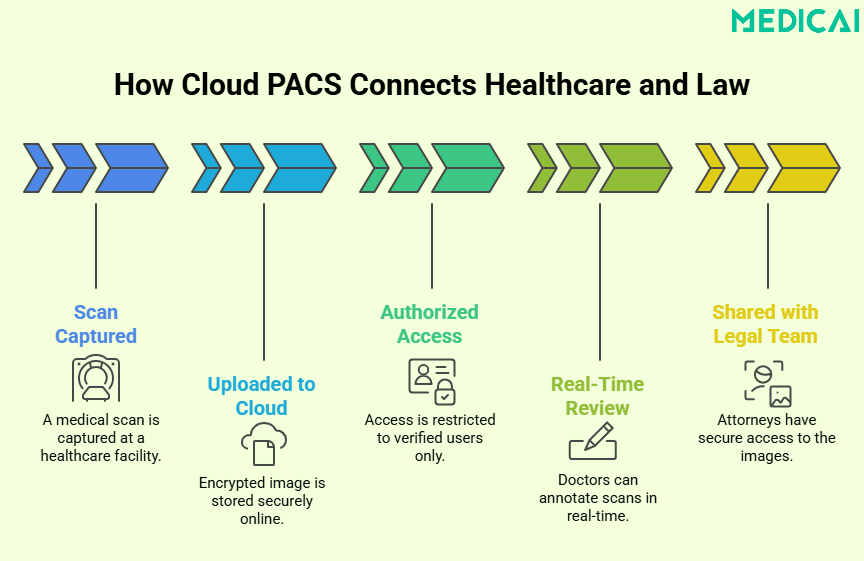
Faster Case Preparation and Filing
Traditionally, obtaining medical images meant chasing down CDs, coordinating with clinics, or waiting days, sometimes weeks, for file transfers to be completed. This delay could delay a case’s progress or even risk missing critical filing deadlines.
With cloud PACS, attorneys receive instant access to imaging studies, often within hours of the scan.
This real-time availability allows legal teams to:
- Review injuries immediately after they are diagnosed
- Begin filing paperwork sooner
- Initiate expert consultations without delay
By speeding up this process, cloud PACS shortens the timeline from diagnosis to action, giving attorneys a competitive advantage in high-stakes cases.
Stronger Evidence Backed by Visual Clarity
Medical images, particularly when annotated by radiologists or specialists, are some of the most persuasive forms of evidence in personal injury litigation. Cloud PACS allows attorneys to access full-resolution, annotated scans without degrading quality or relying on secondhand copies.
With real-time annotations and markup tools, radiologists can highlight:
- Herniated discs or spinal fractures
- Soft tissue damage or swelling
- Degenerative changes or past injury patterns
It helps lawyers understand the true medical context of the injury, making it easier to explain the damage to insurers, judges, or juries.
Easier Expert Consultations and Depositions
Many legal teams rely on medical experts to review imaging and provide written opinions or testimony. With a cloud-based PACS, attorneys can grant time-limited, HIPAA-compliant access to these experts, regardless of location.
Instead of mailing files or transferring USB drives, a secure link with role-based permissions is sent. Experts can view the images online, add notes, or download annotated views for deposition preparation.
This convenience:
- Reduces scheduling delays
- Ensures experts are working with the latest files
- Cuts back-and-forth time between legal and medical teams

Real-Time Sharing and Collaboration on Patient Cases
Delays can hinder decision-making in fast-paced medical and legal fields. A cloud-based PACS system enables real-time collaboration on patient cases, improving diagnosis and evidence preparation.
Instant Synchronized Access
Every authorized user receives immediate access when a scan is uploaded to the cloud. This means that radiologists, surgeons, and attorneys can all view the same image simultaneously, ensuring everyone works from the most recent data.
Real-time synchronization eliminates the delays associated with traditional media transfers and reduces the chance for miscommunication.
Collaborative Tools Built into the Platform
Cloud-based PACS platforms are designed with collaboration at their core. They often include features such as:
- Simultaneous Viewing: Multiple users can access and examine the same image concurrently, even if they are located in different parts of the country.
- Annotation Tools: Medical specialists can highlight specific areas of an image, add notes, and mark areas of concern. These annotations can be instantly visible to others, providing clarity and context.
- Integrated Communication Channels: Some systems offer real-time chat or comment features, enabling immediate discussion around findings. It ensures that all team members, including legal experts, stay aligned while reviewing critical evidence.
Role-Based Access Control for Secure Collaboration
Cloud-based PACS systems use role-based access control to ensure that each user can only view or modify information that is relevant to them. It provides proper control over access and teams.
For instance, radiologists may have full editing rights for annotations, while attorneys might only have view-only access.
This layered approach ensures compliance with HIPAA and other privacy standards, guaranteeing that sensitive medical data is used appropriately.
Benefits for Legal and Medical Teams
Real-time sharing of patient images offers several tangible benefits:
- Faster Clinical Decisions: Immediate access to the latest images can lead to rapid diagnosis and treatment adjustments, which may significantly affect patient outcomes.
- Strengthened Legal Case Building: Attorneys gain up-to-date, high-quality visual evidence, which they can leverage during negotiations or litigation.
- Efficient Multidisciplinary Collaboration: A cloud-based PACS fosters a unified approach by enabling direct and timely communication among specialists. This is invaluable in complex cases where a multi-angle review is needed to determine the best action.
Cloud-Based PACS: Quick, Secure Access for Multiple Stakeholders
A Picture Archiving and Communication System (PACS) is a digital solution for storing, retrieving, and sharing medical imaging files such as MRIs, CT scans, and X-rays. Traditionally, these systems were installed on local servers inside hospitals or imaging centers.
However, healthcare and legal workflows demand more flexibility, speed, and data security. That’s where the cloud-based model comes in.
A secure cloud-based PACS hosts medical imaging data on encrypted cloud servers, rather than on local drives. This means that authorized users can instantly view and share diagnostic images through a secure web portal, whether they are in a clinic, law office, or courtroom. There’s no need to burn CDs or physically transport files.
This is especially critical when multiple stakeholders like radiologists, surgeons, and attorneys collaborate quickly and securely.
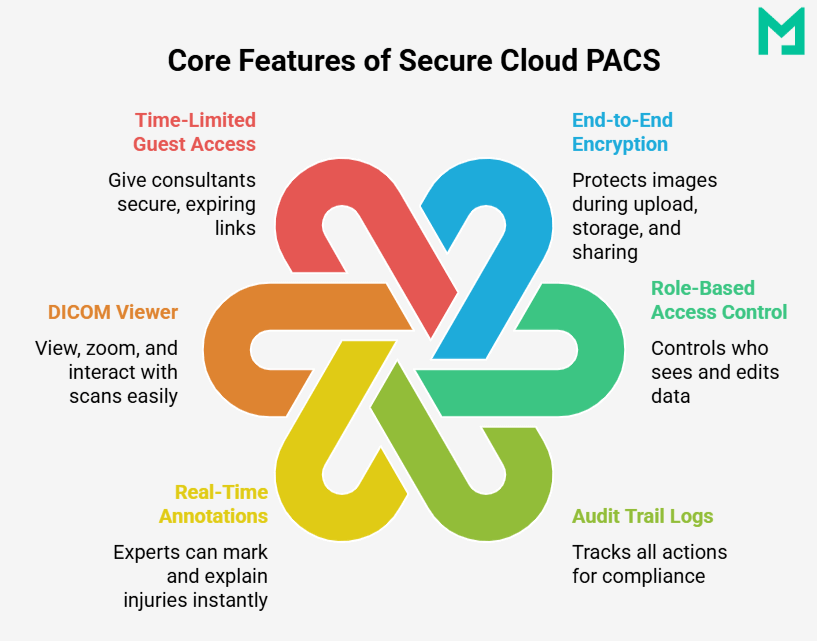
Core Features Of Cloud-Based PACS
A secure Cloud-based PACS offers several features, including-
- Online access to high-quality diagnostic images
- A centralized image archive for continuity across cases and care teams
- Built-in DICOM viewers to review scans without needing specialized software.
- End-to-end encryption and role-based access control
- Real-time collaboration tools like annotations and sharing links
- Audit trails to track who accessed what and when
Cloud-based PACS is designed for a diverse network of professionals who need quick and compliant access to medical images.
- Chiropractors and podiatrists: They review orthopedic scans and collaborate with radiologists to confirm findings, often in the context of injury or workers’ comp claims.
- Radiologists and imaging centers: They upload and share images quickly, eliminating the need for physical transfers or courier services.
- Personal injury and malpractice attorneys: They gain instant access to visual medical evidence, enabling stronger case preparation and faster settlements.
The real power lies in the shared ecosystem. Instead of siloed communication and scattered records, a cloud PACS allows all stakeholders to access the same files securely and in real-time, from anywhere.
Key Security Features in a Secure Cloud-Based PACS
Modern cloud PACS systems come equipped with built-in protections that meet or exceed industry standards for data safety.
- End-to-End Encryption: All data is encrypted during upload, storage, and transmission, ensuring no unauthorized party can intercept or view sensitive files.
- Role-Based Access Control (RBAC): Different users (radiologists, podiatrists, attorneys) receive tailored permissions. For example, a lawyer may have read-only access, while a specialist may be able to annotate and share.
- Two-Factor Authentication (2FA): This adds an extra layer of login security, preventing unauthorized access even if passwords are compromised.
- Audit Logs: Every login, view, download, or annotation is recorded, creating a clear activity trail. This not only supports HIPAA compliance but also protects organizations in legal audits.
- Time-Limited Guest Links: Attorneys and external consultants receive temporary, restricted access to specific images, ensuring that sensitive data is not left open indefinitely.
Besides, whether sharing images with a consulting expert or presenting evidence in court, every action within the PACS must comply with HIPAA standards. It ensures that patient privacy is protected, even when legal professionals outside of healthcare are involved.
Challenges and Considerations
Secure cloud-based PACS platforms may pose challenges for non-traditional users like legal professionals.
Technical Onboarding for Non-Medical Users
While cloud PACS removes the need for downloads or physical transfers, there’s still a learning curve when it comes to:
- Understanding basic medical image formats (like DICOM)
- Navigating annotation tools or side-by-side comparisons
- Accessing multi-slice studies (e.g., MRI or CT scans)
Legal teams may hesitate to use or underuse the platform without adequate support, limiting the benefits of quick access.
Managing Permissions and Access Expiration
Security is a core benefit of cloud PACS, but managing access rights comes with responsibility. Giving external users (such as attorneys or consulting physicians) the correct permissions can be tricky without accidentally breaching HIPAA compliance.
These scenarios could lead to data exposure, compliance risks, or legal liability if not handled carefully.
How Modern Platforms Are Addressing These Issues
The good news is that many modern PACS providers recognize these challenges and are actively designing their systems to minimize friction and user errors. It includes offering:
- Simplified user interfaces for non-medical users
- Quick training modules or help guides for legal teams
- Auto-expiring guest links and pre-set permission templates
- Support chat or onboarding sessions to assist new users
Platforms like Medicai streamline medical-legal workflows with user-friendly, secure sharing tools. Even first-time users can easily access imaging files, collaborate with specialists, and ensure compliance without needing technical or medical expertise.
Conclusion
Medical images shouldn’t slow you down, but should drive your decisions. With a secure cloud-based PACS, healthcare providers and attorneys can collaborate instantly, without having to chase CDs or worry about privacy risks. From faster diagnoses to stronger legal cases, the impact is real and immediate.
If you’re ready to ditch outdated systems and work smarter across teams, it’s time to upgrade. Discover how platforms like Medicai can speed, secure, and simplify your workflow.


Related Articles

Lets get in touch!
Learn more about how Medicai can help you strengthen your practice and improve your patients’ experience. Ready to start your Journey?
Book A Free Demo