

In personal injury law, medical evidence can make or break a case. However, relying on slow hospital processes, outdated CDs, or unclear medical reports can hinder progress and weaken legal arguments.
That’s where a DICOM viewer for personal injury lawyers comes in—a game-changing tool.
A DICOM viewer offers lawyers quick access to high-quality medical images, allowing them to analyze injuries, collaborate with experts, and craft compelling courtroom visuals. With the right DICOM viewer, attorneys can strengthen their cases, speed up settlements, and enhance client compensation.
Let me help you discover how valuable a DICOM viewer can be for personal injury lawyers.

Why Personal Injury Lawyers Need a DICOM Viewer?
Personal injury lawyers need quick, direct access to medical records, and a DICOM viewer makes that possible. It allows lawyers to access, analyze, and present medical scans to strengthen their legal arguments and maximize case outcomes.
A DICOM viewer is software designed to open and analyze medical imaging files, such as MRIs, CT scans, and X-rays. These files can be crucial evidence in personal injury cases.
Let’s see why every personal injury attorney should use a DICOm viewer.
- Medical Images as Key Evidence: Courts and insurance companies require solid, objective proof of injuries. MRIs, X-rays, and CT scans offer undeniable evidence crucial for a claim’s success or failure.
- Instant Access to Medical Records: No more waiting on hospitals or struggling with CDs. With a DICOM viewer, lawyers can pull up medical scans instantly, reducing delays and keeping cases moving.
- Stronger Case Preparation: Zooming in on fractures, measuring soft tissue damage, and annotating images allows lawyers to pinpoint injuries and build more compelling arguments.
- Higher Settlements & Court Wins: Clear visual evidence of injuries prompts insurance companies and opposing lawyers to take cases more seriously. It leads to better settlement offers and stronger courtroom presentations.
- Seamless Collaboration with Medical Experts: Lawyers can use built-in annotation tools to highlight important details and share scans with radiologists or expert witnesses. It helps them get insights that strengthen their legal strategies.
In short, a DICOM viewer transforms how personal injury lawyers handle medical evidence—making their job faster, easier, and more effective.
The result? Stronger cases, bigger settlements, and happier clients.

Key Features of a DICOM Viewer for Personal Injury Lawyers
Not all DICOM viewers are created equal. For personal injury lawyers, the right tool must be simple, secure, and effective in handling medical evidence. Here are the essential features of a DICOM Viewer for Personal Injury Lawyers.
Ease of Use – No Medical Training Required
Lawyers aren’t radiologists, so a DICOM viewer must be intuitive. A simple, user-friendly interface ensures that attorneys can handle medical images, zoom in on injuries, and adjust contrast or brightness without specialized training.
The goal? Quickly identify key injury details without getting lost in complex medical software.
Annotations & Measurements – Turning Images into Stronger Evidence
Raw medical scans don’t always speak for themselves. That’s why annotation and measurement tools are game-changers. Lawyers can:
- Highlight fractures, muscle tears, or disc injuries with drawing tools.
- Add notes directly onto the image for easy reference.
- Measure injury size or misalignments—critical for proving severity in settlement negotiations.
These features make medical imaging easier to interpret, ensuring clearer explanations for clients, insurance adjusters, and judges.
Secure & HIPAA-Compliant Access – Protecting Sensitive Medical Data
Legal cases deal with confidential medical information, making security a top priority. A good DICOM viewer ensures:
- HIPAA-compliant encryption, so patient data is protected.
- Secure logins and restricted access, preventing unauthorized use.
- Audit trails, tracking who accessed the files for legal compliance.
Lawsuits can involve millions of dollars in settlements. Because of this, it is very important to keep medical data secure and usable in court.
Integration with Case Management Software – Streamlining Legal Workflows
Time is money in law firms. A DICOM viewer integrates seamlessly with existing legal case management systems like:
- SmartAdvocate
- Clio
- Filevine
Attorneys can attach medical images directly to case files. This reduces back-and-forth communication between different software platforms, improving organization and saving time.
Cloud-Based Collaboration – Work Anytime, Anywhere
Legal teams don’t work in isolation. Whether reviewing medical records with expert witnesses or preparing for court, a cloud-based DICOM viewer makes collaboration effortless:
- Access files from any device, anytime.
- Share medical images instantly with colleagues and doctors—no CDs, no downloads.
- Eliminate IT headaches, as cloud solutions don’t require software installations or updates.
The flexibility speeds up decision-making and strengthens case preparation for law firms juggling multiple injury cases.
Export Options – Converting Images for Legal Use
DICOM files are not standard image formats, which can be problematic when presenting evidence in court or negotiations. A top-tier DICOM viewer allows lawyers to export medical scans into commonly used formats, including:
- PDF – Ideal for filing evidence in court or attaching scans to legal documents.
- JPEG/PNG – Easy sharing via email or case management systems.
These options help lawyers present medical evidence clearly to judges, insurance companies, and clients, removing technical barriers.

How DICOM Viewers Elevate Personal Injury Case Strategies?
A DICOM viewer improves legal strategies by aiding personal injury lawyers during negotiations and in court proceedings in various ways.
Eliminating Delays in Medical Evidence Review
One of the biggest hurdles in personal injury cases is waiting for hospitals or imaging centers to release medical records. Traditional methods—requesting CDs or printed scans—can take days or weeks, slowing settlements or trial preparations.
With a DICOM viewer, lawyers can:
- Instantly retrieve, view, and analyze digital medical images without relying on third-party access.
- Avoid compatibility issues, as DICOM files can be opened directly without special hospital software.
- Speed up case timelines by reviewing injuries as soon as scans become available.
Strengthening Medical Evidence Through Expert Collaboration
Medical testimony can be pivotal in personal injury cases, but delays in expert analysis may weaken a claim. A DICOM viewer facilitates real-time collaboration between lawyers and medical professionals.
DICOM viewers eliminate physical copies and unsecured emails by allowing secure file sharing between radiologists and expert witnesses. This gives lawyers quicker access to expert insights, enhancing the credibility of medical evidence in court.
Making Injury Evidence More Persuasive in Court
Medical reports are often complex and full of technical terms, making them difficult for judges, juries, and insurance adjusters to grasp fully. A DICOM viewer helps simplify medical evidence into compelling visual proof.
DICOM viewers improve courtroom presentations in several ways. They:
- Enhance X-rays, MRIs, and CT scans for clarity.
- Show pre- and post-accident comparisons to demonstrate the extent of trauma.
- Overlay annotations and labels, making injury details easier to understand.
A strong visual presentation can make injuries undeniable, increasing the chances of favorable settlements or court verdicts.
Strengthening Negotiation Power for Higher Settlements
Insurance companies often try to minimize payouts by disputing the severity of injuries. A DICOM viewer provides undeniable proof, making it harder for insurers to challenge claims.
A DICOM viewer greatly influences settlement discussions by providing high-resolution images of injuries that enhance the credibility of claims. These visuals justify higher compensation by clearly showing the severity of injuries and serve as objective proof against insurance disputes.
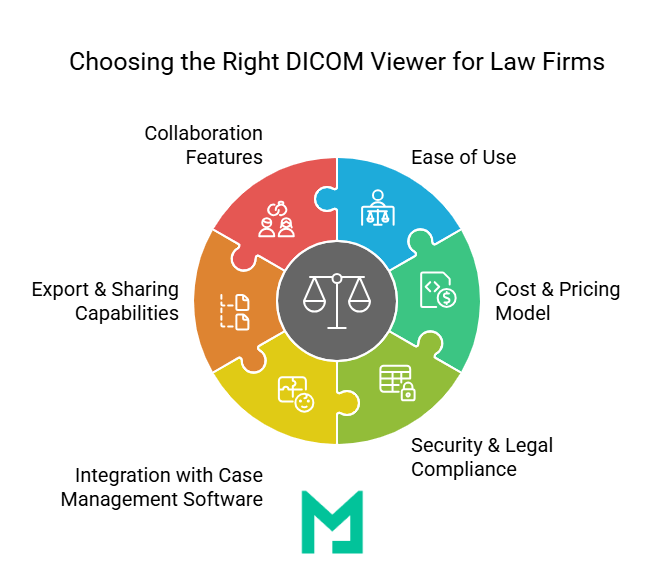
How to Choose the Right DICOM Viewer for Your Law Firm
Not all DICOM viewers are designed with legal professionals in mind. Consider the following factors to ensure you get the best tool for your firm.
- Ease of Use: A simple, intuitive interface is a must. Lawyers should be able to open, navigate, and annotate medical images without requiring medical training.
- Cost & Pricing Model: Some DICOM viewers are free or open-source. Others require a one-time payment or a subscription. When choosing a viewer, consider the long-term costs and stick to your budget.
- Security & Legal Compliance: Medical images are confidential and legally protected. The software must be HIPAA-compliant, secure through encryption, and regularly updated to meet data protection regulations.
- Integration with Case Management Software: Does the DICOM viewer sync with your legal case management system (e.g., SmartAdvocate, Clio, Filevine)? Integration streamlines workflows by keeping medical evidence organized.
- Export & Sharing Capabilities – A good DICOM viewer allows attorneys to export scans as PDFs or JPEGs, making them easy to attach to legal filings, emails, or case presentations.
- Collaboration Features: Can it share images securely with expert witnesses, clients, or co-counsel? Cloud-based options offer instant, remote access for legal teams across multiple locations.
Legal and Ethical Considerations in Using DICOM Viewers
Personal injury lawyers must ensure they use DICOM viewers securely, ethically, and legally.
Ensuring HIPAA Compliance When Handling Patient Medical Images
Medical images contain sensitive health information protected under HIPAA. To mitigate legal risks, law firms should use HIPAA-compliant DICOM viewers with secure encryption, store images securely, and limit access to relevant team members to maintain confidentiality.
Misusing non-compliant software or mishandling data can lead to legal penalties and loss of credibility in court.
Avoiding Evidence Tampering Risks with Proper Image Management
Managing DICOM files correctly is essential to maintaining credibility in court and using evidence responsibly. If these files are altered or mishandled, it can harm a case and lead to accusations of tampering.
- Always use original DICOM files and modify them only to highlight specific findings for legal purposes.
- Mark any annotations and maintain a secure, timestamped record of all access and modifications as an audit trail.
Working with Certified Radiologists for Expert Medical Interpretations
Lawyers aren’t medical professionals; misinterpreting an MRI or X-ray can weaken a case. To avoid errors, consult board-certified radiologists for expert opinions. Use a DICOM viewer for secure collaboration and ensure accurate documentation of medical interpretations to prevent court challenges.
Conclusion
Whether negotiating with insurers or presenting in court, medical images can speak louder than words—if you have the right tools to showcase them. A DICOM viewer is a game-changer for personal injury lawyers, transforming how they handle medical evidence.
Medicai offers a cutting-edge, cloud-based DICOM viewer designed to help law firms access, analyze, and share medical imaging effortlessly.
So, why rely on outdated methods when Medicai makes medical imaging effortless?


