Synchronous vs. Asynchronous Telehealth: Which One Fits For You?

Synchronous and asynchronous are the two primary modes of telehealth and telemedicine. Synchronous telehealth is real-time, live interaction between the patient and the provider, typically via video. Asynchronous telehealth, also called store-and-forward, is not real-time: clinical information (images, messages, recorded data) is captured, stored, and reviewed later. The difference is timing: synchronous happens live and simultaneously, while asynchronous happens at a later time. Most practices use both, matching the mode to the clinical situation.
This guide defines synchronous and asynchronous telehealth (the terms apply equally to telemedicine), compares them on the dimensions that matter for choosing between them, and explains when each mode is appropriate. For the broader distinction between telehealth and telemedicine as terms, see the telehealth vs telemedicine guide.
Telehealth can take a variety of forms, the two primary being synchronous and asynchronous. For providers to offer the best and most accessible care possible, they must align their telehealth platform with their patient’s telehealth preferences. To do so, they must have a clear understanding of both synchronous and asynchronous telehealth and determine which method best fits their practice.
Synchronous vs Asynchronous Telehealth
| Dimension | Synchronous telehealth | Asynchronous telehealth |
|---|---|---|
| Timing | Real-time, live, simultaneous | Delayed; store-and-forward, reviewed later |
| Typical format | Live video or phone consultation | Recorded messages, uploaded images, shared data |
| Both parties present | Yes, at the same time | No; patient and provider act at different times |
| Best for | Real-time assessment, diagnosis, discussion | Non-urgent review, follow-up, specialist sharing |
| Not suitable for | High-volume routine data review | Emergencies or situations needing live response |
| Imaging relevance | Live review of images during a consult | Sharing studies for later specialist review |
| Example | A video visit for a follow-up appointment | Uploading a scan for a specialist to read later |
Synchronous Telehealth
Synchronous telemedicine and telehealth are real-time modes: the patient and provider meet live, typically via video, at the same time. It is what most people picture when they think of a virtual visit. The defining feature is simultaneity: both parties are present at once, connected by a live link that allows real-time assessment, discussion, and decision-making, much like an in-person visit conducted remotely.
This form of virtual meeting allows both parties to meet in real time, with some level of face-to-face communication without being physically present. As such, this form of meeting requires both parties to be present simultaneously via a communication link that enables real-time communication.
Many patients utilized synchronous telehealth communication for the first time in recent years due to the COVID-19 pandemic. Desperate times called for desperate measures, and patients had to resort to virtual meetings with their providers to get the care they needed. While synchronous communication may no longer be as necessary today, many practices still use it for its clear benefits.
Benefits
The synchronous approach of telehealth is advantageous for a variety of reasons, but primarily for its convenience and efficiency. Convenience is a huge factor in synchronous telehealth as it eliminates the need for patients to report to doctor’s appointments in person. This is a tremendous benefit and time-saver for patients who do not live near their provider, are suffering from a contagious ailment, or require regular care for a chronic condition.
With convenience, patients also have greater access to healthcare, particularly those who do not have the means to commute to their doctor or require time off work and child care to report to these appointments. As a result, regardless of the limitations they face, patients can access the care they deserve.
In terms of efficiency, synchronous doctor’s appointments are more efficient than traditional in-person visits. Synchronous appointments require less time with each appointment, allowing providers to meet with more patients each day.
While some fear that this would compromise patient care, the opposite is true. Providers can still give patients the care and attention they need without dealing with waiting rooms or interruptions. Because providers can still physically see their patients, and because of their records and medical images, synchronous visits enable assessment, diagnosis, and treatment just as traditional visits can.
By adopting synchronous telehealth, providers can enhance the care they provide to patients while significantly improving convenience, accessibility, and efficiency. That being said, there are some essential features of the asynchronous approach to discuss before you decide exclusively on the synchronous approach.
Asynchronous Telehealth
Asynchronous telemedicine and telehealth is the store-and-forward mode: clinical information is captured, uploaded, and reviewed later rather than in a live session. Instead of a real-time meeting, patients and providers, or providers and specialists, exchange stored data: recorded messages, uploaded images, and medical records transferred through a secure platform. Because the exchange is not live, it is not bound by a shared appointment time, which is what makes it efficient for non-urgent care and specialist review.
This means that rather than participating in a live face-to-face virtual meeting, providers and patients may exchange recorded health communications. While asynchronous telehealth can include pre-recorded messages from patients and providers, the approach extends well beyond that.
Asynchronous telehealth involves the collection, uploading, and sharing of medical data between patients and providers, and between providers and other medical specialists. Data is captured locally and, once uploaded, is stored either permanently or transferred later via a secure telehealth platform.
As these transmissions do not occur in real time, users are not limited to specific times for data sharing. While the synchronous approach does not limit users by a physical location, this approach does not limit users by location or time.
Benefits
Similar to the synchronous approach, the asynchronous approach also offers benefits in efficiency and convenience. The idea of non-real-time healthcare can be daunting, but it is important to note that the asynchronous approach should not be used in emergencies. Instead, asynchronous telehealth is intended to increase the efficiency and convenience of daily and non-emergent healthcare practices.
Through asynchronous telehealth, patients and providers can access one another and endless healthcare resources at any time, from any location. This is particularly beneficial for optimizing visits, as providers have all of a patient’s medical information in a single, centralized location, securely stored and easily accessible. This ensures that patient care is accurate to their medical records, and patients do not have to worry about carrying and storing physical documents and images.
Even without visits, patients have access to accurate and reliable health resources whenever they need them. Patients can view their medical records, access treatment options, refill prescriptions, and use a portal to connect with medical specialists worldwide. As a provider, you can ensure that your patients feel cared for 24/7 without requiring constant real-time communication.
Which Method is Right for You?
Both synchronous and asynchronous telehealth approaches are highly beneficial to healthcare practices and their patients. Participants benefit from increased efficiency, convenience, and accessibility through either method, resulting in enhanced patient care. That being said, many healthcare providers are unsure of which approach to implement into their practice. Fortunately, we have the answer: both!
There is no reason that a practice needs to limit itself to only one telehealth approach. Instead, they can supplement their practice with the benefits of both synchronous and asynchronous telehealth. Adopting both approaches provides patients with incredible accessibility and convenience, allowing them access to healthcare at any time or location, from any device.
As a provider with both approaches integrated into your telehealth platform, you will be able to offer efficient, high-quality care to your patients more easily than ever. Furthermore, because you can be accessed by patients from any location, with the time to care for more patients, you can expand your practice with ease. Using both methods, providers can efficiently conduct synchronous visits with patients for regular checkups or routine diagnosis, while offering resources, treatment, and prescriptions via asynchronous tools.
Frequently Asked Questions
What is the difference between synchronous and asynchronous telehealth?
Synchronous telehealth is real-time: patient and provider meet live, typically by video, at the same time. Asynchronous telehealth, also called store-and-forward, is not real-time: clinical information such as images, messages, and recorded data is captured, stored, and reviewed later. The difference is timing. Synchronous suits real-time assessment and discussion; asynchronous suits non-urgent review, follow-up, and sharing studies for specialist review. The same distinction applies to telemedicine, where the terms synchronous and asynchronous are used the same way.
What is asynchronous telemedicine?
Asynchronous telemedicine is the store-and-forward mode of remote care: instead of a live visit, clinical data (images, recorded messages, records) is captured, uploaded, and reviewed later through a secure platform. It is not bound by a shared appointment time, which makes it efficient for non-urgent care, follow-up, and sharing imaging studies with specialists for later review. It is not intended for emergencies, which require a real-time (synchronous) response.
What is synchronous telemedicine?
Synchronous telemedicine is the real-time mode of remote care: patient and provider meet live, usually by video, at the same time. It allows real-time assessment, discussion, and treatment decisions, functioning like an in-person visit conducted remotely. It is the mode most people picture when they think of a virtual visit, and it suits situations that need live interaction rather than delayed review.
Is store-and-forward the same as asynchronous telehealth?
Yes. Store-and-forward is another name for asynchronous telehealth and telemedicine. It describes the process of capturing clinical information, storing it, and forwarding it for review at a later time rather than in a live session. The term is common in imaging and dermatology, where studies or photographs are captured and sent for a specialist to review asynchronously.
Which is better, synchronous or asynchronous telehealth?
Neither is universally better; they suit different situations, and most practices use both. Synchronous is better when real-time interaction matters: assessment, discussion, and immediate decisions. Asynchronous is better for non-urgent, efficient care: follow-up, routine review, and sharing imaging or records for specialist review without needing a shared appointment time. Combining both lets a practice match the mode to each clinical situation.
Want to find out more?
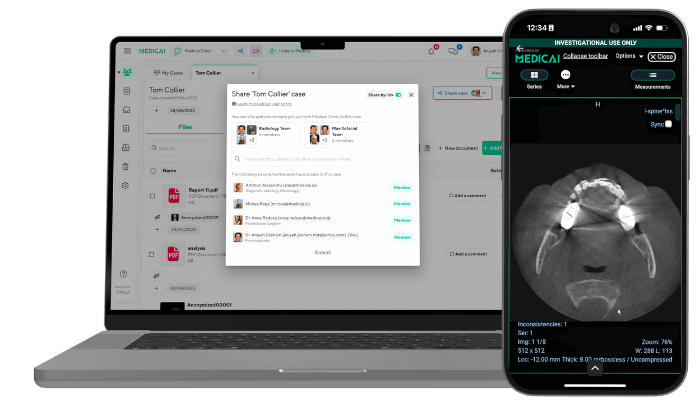
Most practices do not choose one mode exclusively; they combine both, matching the mode to the clinical situation. Synchronous visits handle real-time assessment and discussion, while asynchronous store-and-forward handles non-urgent review, follow-up, and the sharing of imaging studies and records for specialist review. For the asynchronous sharing of medical imaging specifically, where studies are uploaded and reviewed later by a specialist, secure image sharing is the underlying infrastructure; see how Medicai supports secure medical image sharing.

Related Articles



Lets get in touch!
Learn more about how Medicai can help you strengthen your practice and improve your patients’ experience. Ready to start your Journey?
Book A Free Demo