From the X-Ray to the Courtroom: How PACS & DICOM Viewer Transform Personal Injury Cases

What if the most crucial evidence in your personal injury case isn’t a witness or a document—but an image?
From spinal injuries to fractures, medical imaging often holds the key to proving what happened. But without the right tools, even the most precise scan can lose its impact in the courtroom.
That’s where PACS and DICOM viewers become crucial. These technologies do more than just store images. They convert complex medical information into clear legal evidence.
Let’s explore how PACS and DICOM viewers transform personal injury litigation from fast image access to confident courtroom presentation.

Why Medical Imaging Matters in Personal Injury Cases
When you file a personal injury claim—whether from a car accident, workplace incident, or slip-and-fall—the outcome often hinges on proof of injury. Nothing brings that proof to life more clearly than medical imaging.
X-rays, MRIs, and CT scans: These images are more than just diagnostic tools. They’re visual, objective evidence that can clearly show fractures, soft tissue damage, spinal injuries, and internal trauma.
Attorneys use these medical images in personal injury cases to support claims, enhance compensation, and sway decisions in favor of the plaintiff.
High-quality medical imaging:
- Validates the injury claim with visual, undeniable proof.
- Helps jurors connect emotionally with the plaintiff’s experience.
- Accelerates settlement discussions when evidence is strong and indisputable.
Why High-Quality Imaging Builds Stronger Legal Evidence
In personal injury cases, the clarity of medical imaging can be the difference between winning or losing a claim.
X-rays, MRIs, and CT scans must effectively convey information. High-quality images ensure that injuries are visible and understood by judges, jurors, and experts, creating compelling visual evidence.
When medical images are captured, processed, and presented at the highest quality, they:
- Support expert witnesses in confidently explaining injury severity and medical relevance.
- Give attorneys compelling visual tools to reinforce their argument.
- Help juries visualize the injury, making the experience more relatable and real.
- Add credibility to the plaintiff’s claims by aligning visual evidence with medical documentation and testimony.
Imagine a case where a plaintiff sustained a spinal injury from a workplace fall. If the MRI scan is low-resolution or poorly formatted, critical details like a herniated disc may be misinterpreted.
However, a high-resolution DICOM viewer that offers adjustable contrast and multi-angle viewing clearly shows the disc herniation and nerve compression. It establishes a direct link between the accident and the injury.
That’s the power of high-quality imaging. It removes doubt, strengthens expert testimony, and helps the facts speak for themselves.
This is especially critical in cases involving:
- Soft tissue injuries, where damage is harder to visualize.
- Chronic pain claims, where objective proof can counter skepticism.
- Pre-existing conditions, where clear images help distinguish new injuries from old ones.

How Lawyers Benefit from Using a DICOM Viewer
Visuals often carry more weight than words, so lawyers equipped with a DICOM viewer don’t just follow the evidence—they lead with it.
Independent Review of Medical Evidence
Lawyers can view and explore high-resolution medical images with a DICOM viewer without waiting on a third party. That means they can:
- Zoom in to assess injury detail
- Compare multiple scans over time
- Visualize 3D reconstructions of fractures or herniated discs
- Validate or question findings from medical reports
This level of independence helps lawyers verify the medical narrative, catch inconsistencies, and develop a more confident case strategy.
Stronger Case Preparation & Legal Strategy
Having direct image access lets attorneys:
- Enhance deposition and cross-examination preparation with informed questions based on scans.
- Align legal arguments with medical visuals for clarity and credibility.
- Identify timeline opportunities to showcase injury progression or chronic damage evidence.
When lawyers understand the visuals and the verbal reports, their legal arguments become sharper and more persuasive.
Smoother Collaboration with Medical Experts
Medical experts are vital in personal injury litigation, and collaboration is key. When attorneys and experts are both using the same image viewer, discussions are clearer and more productive:
- Annotations and measurements can be shared in real time
- Experts can highlight exactly where and how an injury occurred
- Miscommunications are reduced, especially when working remotely
Ultimately, this direct access streamlines case development, saving time and ensuring everyone is on the same page.
How PACS & DICOM Transform Evidence Management
Legal teams are used to paperwork. But today’s medical evidence isn’t just about reports but high-quality images stored, reviewed, and presented digitally. That’s where PACS and DICOM viewers change the game.
Fast, Secure Access Anytime
PACS stores medical images digitally as they’re captured, allowing authorized users to access them within seconds. Each image includes patient data, case details, and scan type for easy retrieval and organization.
With encryption and HIPAA compliance, PACS ensures that sensitive medical information is fully protected.
Detailed, Court-Ready Visuals
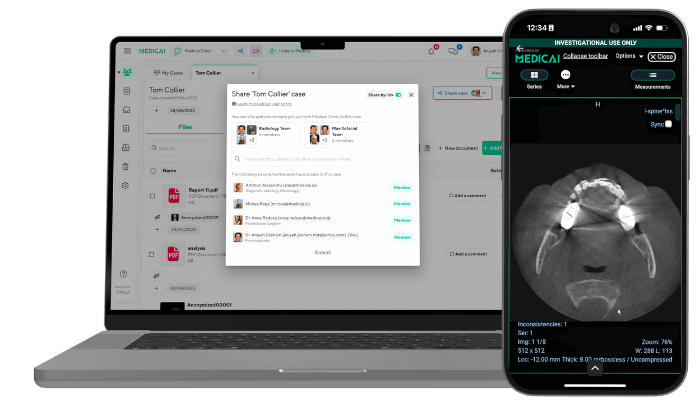
DICOM viewers enable legal and medical professionals to analyze images effectively. Users can zoom in, rotate views, and adjust brightness and contrast to highlight important details.
Features like side-by-side comparisons, annotations, and measurement tools help present fractures, disc issues, or soft tissue damage to judges and juries.
Seamless Collaboration
PACS and DICOM viewers also allow teams to work together in real time—even from different locations. Whether a lawyer is in the office and a radiologist is across the country, both can access the same image, view notes, and make updates simultaneously.
This real-time collaboration reduces delays, prevents miscommunication, and keeps cases moving forward with clarity and confidence.
Security and Privacy – Protecting Sensitive Information
In personal injury litigation, medical images serve as evidence and protected health information (PHI), making security and privacy essential.
HIPAA Compliance Is Non-Negotiable
Handling medical images means handling PHI, which makes HIPAA compliance critical. Without it, legal teams risk fines, data breaches, and the loss of trust, and evidence may even be ruled inadmissible.
Secure PACS Platforms
Modern PACS platforms like Medicai are built for security. They use encryption, multi-factor authentication, and role-based access controls to ensure only authorized users can view or share images. Every action is logged, creating a reliable chain of custody for courtroom use.
Safe, Trackable Data Handling
Trusted PACS vendors also provide cloud backups, audit trails, and regular system checks to maintain security. These tools protect data and the integrity of your case from start to finish.
How to Choose the Right PACS & DICOM Solutions for Legal Teams
Not all imaging platforms are created equal, especially when they’re used in legal contexts. Choosing the right PACS and DICOM solution is crucial.
- Security Comes First: Choose a system that meets HIPAA standards and includes strong encryption, access control, and full activity logs.
- Simple and Lawyer-Friendly: A DICOM viewer should be easy to use, with tools to zoom, annotate, and export images. No medical background is required—just clean, intuitive functionality.
- Workflow Integration: Look for platforms that integrate with your existing tools, such as case management software or secure email. Seamless integration saves time and reduces errors.
- Reliable Support and Reputation: Select vendors with a proven track record, responsive support, and clear pricing. Bonus if they offer training or onboarding for legal teams.
Conclusion
Medical imaging is more than evidence in personal injury litigation—it’s a strategic advantage. With PACS and DICOM viewers, legal teams can access clear, secure, and court-ready visuals that strengthen every aspect of their case.
Platforms like Medicai make this process even more efficient by combining powerful imaging tools with HIPAA-compliant cloud access and real-time collaboration. In a case where every detail counts, we help you stay sharp, fast, and ahead.


Related Articles
Lets get in touch!
Learn more about how Medicai can help you strengthen your practice and improve your patients’ experience. Ready to start your Journey?
Book A Free Demo