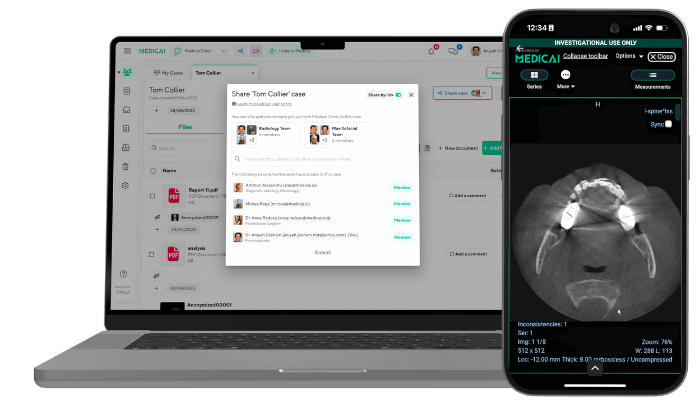
Why Enterprise Radiology Is the Future of Healthcare

Every minute matters when a stroke patient arrives in the ER. As doctors race against time, they can’t afford to wait for critical brain scans stuck in transit between hospitals.
While medical imaging has revolutionized disease diagnosis and treatment, outdated radiology systems often prevent the rapid, coordinated care patients deserve. This is where enterprise radiology stands out.
Enterprise radiology centralizes medical imaging, integrating cloud-based PACS, AI-driven automation, and seamless interoperability to ensure instant access to imaging data across locations and specialties. Specialists across multiple departments—oncology, neurology, cardiology, and orthopedics—can now collaborate effortlessly, improving patient outcomes.
Let’s break down how enterprise radiology works, its most significant advantages, and the challenges that accompany it.

What is Enterprise Radiology?
Enterprise radiology is a centralized imaging system that enables hospitals and diagnostic facilities to easily access, store, and share radiological data. With AI and cloud computing, it enhances radiology efficiency and connectivity.
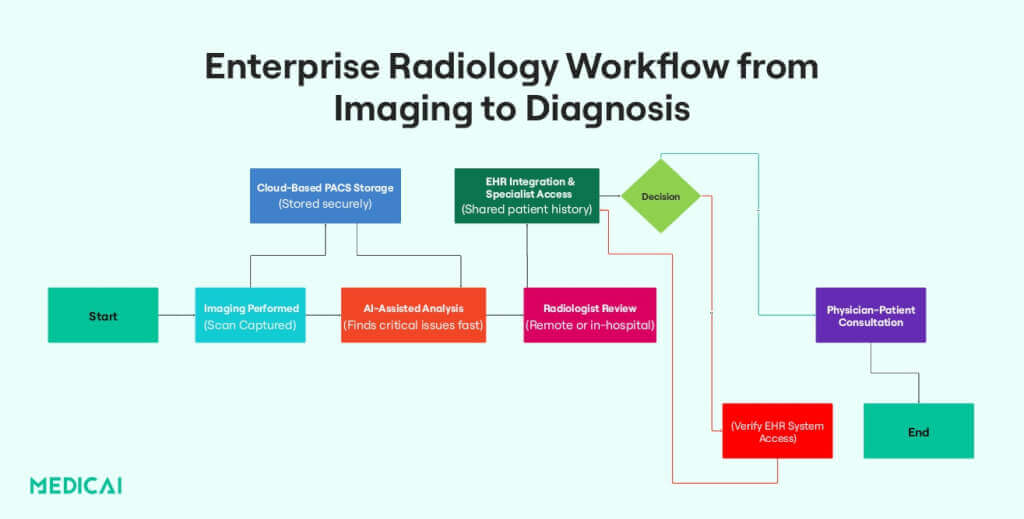
Unlike traditional systems that operate in isolation, enterprise radiology integrates and standardizes imaging workflows across a healthcare network. This ecosystem enables:
- Centralized Image Storage & Access: All imaging data (X-rays, MRIs, CT scans, ultrasounds) is securely stored in a cloud-based PACS/VNA, allowing radiologists remote access without physical transfers.
- Real-Time Data Sharing: Physicians, specialists, and radiologists can collaborate in real time regardless of location, improving diagnostic accuracy.
- AI-Enhanced Imaging Workflows: AI algorithms assist in automated anomaly detection, prioritizing urgent cases, streamlining reporting, and reducing patient care delays.
- Seamless Integration with EHR & RIS: Enterprise radiology integrates with Electronic Health Records (EHR) and Radiology Information Systems (RIS), ensuring complete patient history access alongside imaging studies.
- Teleradiology for Remote Diagnostics: Radiologists can read and report imaging studies from anywhere, enabling 24/7 coverage and reducing the burden on in-house radiology teams.
Key Components of Enterprise Radiology
Enterprise radiology is built upon several core technologies that work together to ensure seamless image management, interoperability, and enhanced efficiency across healthcare systems.

Enterprise Imaging Platforms (EIP)
Enterprise Imaging Platforms (EIP) is the central hub for consolidating all imaging modalities, including X-ray, MRI, CT, ultrasound, and nuclear medicine scans. These platforms:
- Eliminate Data Silos: Centralized imaging makes radiology data accessible across departments, enabling seamless collaboration among radiologists, specialists, and primary care physicians.
- Enable Multi-Modality Support: EIPs integrate all imaging types into a single system, simplifying storage, retrieval, and sharing.
- Enhance Decision-Making: Radiologists have instant access to patient imaging histories, improving diagnostic accuracy.
Picture Archiving and Communication Systems (PACS)
Modern cloud-enabled PACS play a vital role in enterprise radiology by storing, retrieving, and managing digital medical images. A well-implemented PACS system provides:

- Instant Image Access Across Locations: Radiologists can view and analyze images remotely, reducing reporting turnaround times.
- Advanced AI Support: PACS with built-in AI tools assist in automated anomaly detection, helping radiologists prioritize urgent cases.
- Faster Workflows: Eliminates the need for manual film storage, ensuring instant digital retrieval of imaging data.
Besides, Vendor-Neutral PACS improves interoperability. Unlike traditional PACS that are tied to a single vendor, vendor-neutral PACS (VNA) allows:
- Seamless data exchange between different imaging systems.
- Long-term data storage and retrieval without compatibility issues.
- Interoperability with EHR, RIS, and cloud-based storage systems.

Radiology Information Systems (RIS) & EHR Integration
A Radiology Information System (RIS) is the administrative backbone of a radiology department. It manages:
- Patient scheduling & tracking
- Workflow management
- Diagnostic reporting
Integrating RIS with Electronic Health Records (EHR) provides several benefits. These include-
- Complete Patient History Access: Radiologists can view imaging studies alongside lab results, clinical notes, and prior diagnoses.
- Automated Workflow Integration: Synchronized RIS and EHR updates ensure real-time imaging procedure documentation.
- Reduced Administrative Burden: AI-driven automation minimizes manual data entry, improving workflow efficiency.
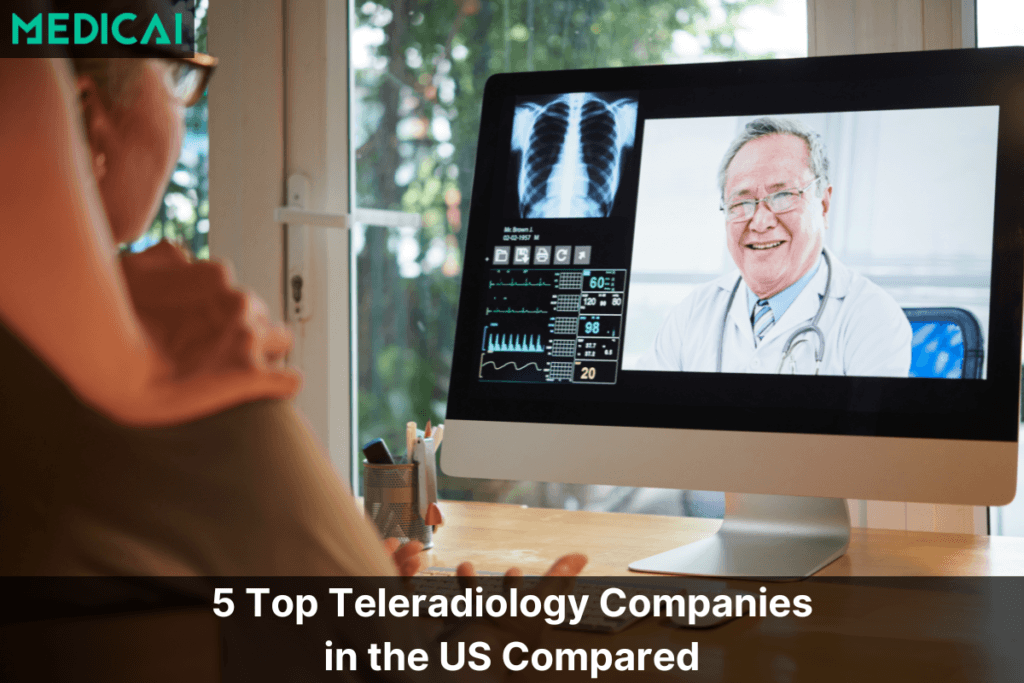
Teleradiology & Remote Access
Enterprise Radiology enhances teleradiology immensely. It helps in-
- Real-Time Image Sharing: Cloud-based PACS allows instant access to imaging studies.
- Remote Reporting Capabilities: Radiologists can generate reports from any location.
- AI-Driven Prioritization: AI automatically flags urgent cases, ensuring radiologists focus on critical findings first.

Artificial Intelligence (AI) & Automation
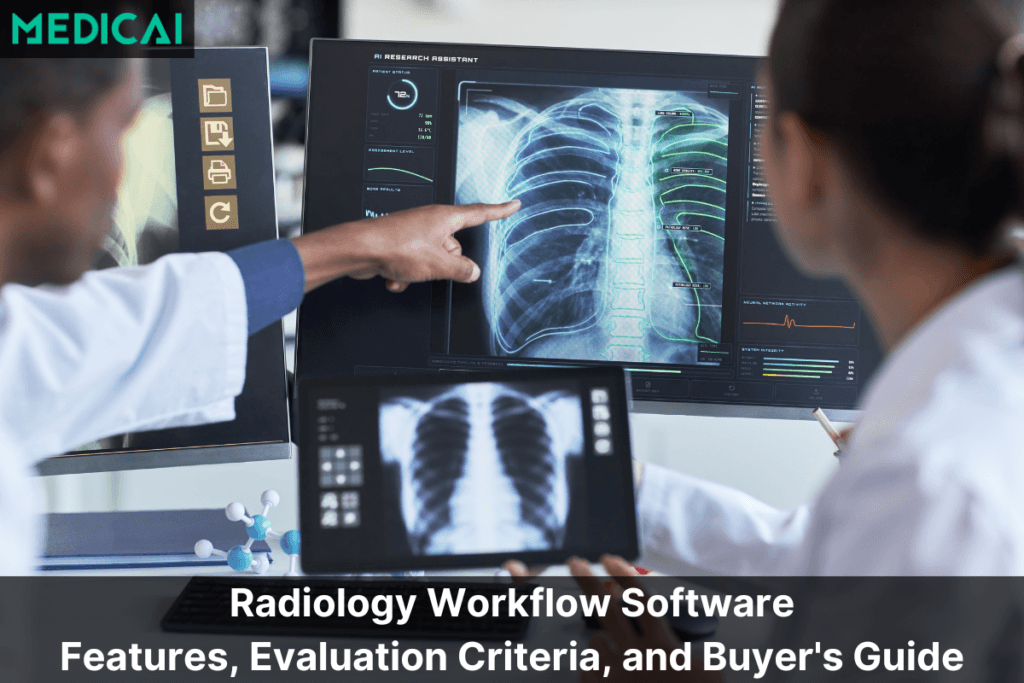
AI is revolutionizing enterprise radiology by automating routine workflows, enhancing diagnostic accuracy, and reducing radiologist workload. It helps in-
- Automated Anomaly Detection: AI accurately flags suspicious lesions, fractures, or tumors.
- Prioritizing Critical Cases: AI-powered triage sends urgent scans to the top of the review queue.
- Speech Recognition & Auto-Reporting: AI generates structured reports, saving radiologists time.
By integrating machine learning models, enterprise radiology systems continuously improve diagnostic accuracy, reduce human error, and optimize imaging workflows.
Cloud-Based Imaging & Storage
Hospitals rapidly shift toward cloud-based enterprise imaging due to its scalability, cost-effectiveness, and security benefits. The reasons are simple: it-
- Eliminates costly on-premise servers with scalable cloud storage.
- Ensures real-time access to images, improving decision-making speed.
- Provides disaster recovery and redundancy, preventing data loss.
With cloud-based imaging, hospitals reduce IT infrastructure costs while ensuring fast, reliable, and secure access to patient scans.
The security in cloud-based imaging is also commendable. It includes-
- HIPAA & GDPR Compliance: Cloud providers ensure encrypted, secure patient data storage.
- Role-Based Access Controls: Restricts access to authorized personnel only.
- Automated Backups: Prevents data corruption or accidental loss.
Interoperability & Data Sharing
Interoperability ensures that radiology data is shared seamlessly between systems, hospitals, and healthcare providers. The ecosystem includes-
- DICOM (Digital Imaging and Communications in Medicine): The universal format for storing and transmitting medical images.
- HL7 (Health Level 7): Enables EHR and RIS integration for structured data exchange.
- FHIR (Fast Healthcare Interoperability Resources): Supports real-time data access and mobile health applications.
Enterprise Radiology in Different Healthcare Sectors
Enterprise radiology is reshaping multiple medical specialties by enhancing collaboration, improving diagnostic accuracy, and streamlining workflows.
Radiology
Radiology forms the backbone of enterprise imaging solutions, as imaging studies from various specialties rely on a centralized PACS for storage and access. A modern PACS consolidates X-rays, MRIs, CT scans, and ultrasounds, allowing radiologists to access real-time imaging studies from various locations.
AI-powered automation enhances radiology workflows by prioritizing critical cases, reducing reporting turnaround times, and ensuring image consistency across hospital networks.
Cardiology
Enterprise radiology is crucial in cardiology, where imaging is essential for diagnosing and monitoring heart diseases. With an enterprise imaging PACS, cardiologists can access echocardiograms, coronary CT angiograms, and MRI scans from a single, cloud-based imaging solution.
AI-driven radiology tools automate cardiac imaging analysis, allowing for more accurate assessments of heart structure and blood flow and early detection of cardiovascular disease.
Oncology
A cloud-based enterprise imaging PACS allows oncologists to consistently compare historical imaging studies from multiple sites to track tumor growth. AI-powered solutions enhance workflows by detecting subtle changes in lesion size and density, aiding in evaluating chemotherapy or radiation therapy effectiveness.
Neurology
In acute stroke cases, AI-assisted radiology tools can quickly analyze CT and MRI scans, helping neurologists decide on immediate treatments such as thrombectomy or clot-dissolving therapies. These tools also provide access to previous brain scans, supporting long-term management of conditions like Alzheimer’s, multiple sclerosis, and epilepsy.
Emergency Medicine
In emergency medicine, every second counts, and enterprise radiology ensures immediate access to critical imaging data. Trauma, stroke, and cardiac emergencies require instant retrieval of CT, MRI, and ultrasound scans, which is where an enterprise imaging PACS plays a vital role.
AI-powered imaging solutions can quickly triage critical cases, identifying conditions like internal bleeding and severe strokes. Integrating cloud-based PACS in emergency departments allows radiologists and ER physicians to collaborate in real-time, enhancing patient management.
Pathology
Pathologists are increasingly using imaging to connect radiological findings with biopsy results. Enterprise imaging solutions unify oncologists, radiologists, and pathologists on a single platform.
AI-powered analysis also helps detect cellular abnormalities that correspond with radiological findings. It helps improve the accuracy of cancer diagnoses and research in precision medicine.
Healthcare IT
Healthcare IT teams play a crucial role in maintaining data security, interoperability, and compliance with regulations like HIPAA and GDPR. AI-driven enterprise radiology platforms optimize storage management, cybersecurity protocols, and workflow automation, reducing the operational burden on IT teams.
Benefits of Enterprise Radiology
By adopting enterprise imaging solutions and PACS, healthcare organizations can achieve several benefits.
- Faster Diagnosis & Treatment: Enterprise imaging PACS provides instant access to imaging data across locations, reducing delays. In emergencies like strokes or trauma, real-time access speeds up life-saving decisions.
- Improved Workflow Efficiency: Automation of routine tasks like image sorting, reporting, and anomaly detection reduces radiologist workload. AI-powered enterprise imaging solutions prioritize critical cases, making workflows faster and more effective.
- Cost Reduction & Scalability: Cloud-based PACS eliminates expensive on-premise storage, allowing healthcare facilities to scale effortlessly. Hospitals save on IT infrastructure while maintaining secure, unlimited data access.
- Enhanced Multi-Specialty Collaboration: Oncologists, cardiologists, neurologists, and pulmonologists access shared imaging data for integrated treatment planning. Multi-specialty collaboration improves diagnostic accuracy and continuity of care.
- Data Security & Compliance: Enterprise radiology ensures HIPAA, GDPR, and patient privacy compliance with end-to-end encryption, access controls, and automated audit trails to protect sensitive imaging data.
- Reduced duplication: Standardizing medical imaging protocols reduces duplication, improves collaboration, and enhances diagnostic accuracy. It leads to better decision-making.
Challenges in Implementing Enterprise Radiology
Despite its advantages, enterprise radiology adoption comes with technical, financial, and operational challenges that require strategic solutions.
- Integration Complexity: Migrating from legacy PACS to enterprise imaging solutions is challenging due to interoperability issues. Platforms like Medicai standardize formats like DICOM, HL7, and FHIR to ensure seamless integration with existing EHR and hospital IT systems.
- Data Security & Privacy Risks: Cloud-based storage raises concerns about cyber threats and data breaches. Strong encryption, multi-factor authentication, and role-based access ensure secure imaging data management.
- High Initial Investment: Enterprise-wide PACS and AI integration require significant upfront software, hardware, and training costs. However, long-term ROI through efficiency gains and cost savings justifies the investment.
- User Training & Adoption: Radiologists and hospital staff must adapt to AI-powered workflows and cloud-based imaging solutions. Ongoing training, user-friendly interfaces, and gradual implementation improve adoption rates.
Conclusion
Enterprise radiology is revolutionizing medical imaging by enhancing speed, intelligence, and collaboration. AI-driven automation and cloud-based PACS help healthcare providers reduce inefficiencies, improve patient care, and lower costs.
While integration and security challenges exist, solutions like Medicai make enterprise imaging secure and easy to implement. Embracing these solutions helps hospitals and imaging centers streamline workflows and improve patient outcomes.


Related Articles
Lets get in touch!
Learn more about how Medicai can help you strengthen your practice and improve your patients’ experience. Ready to start your Journey?
Book A Free Demo