Best Cloud PACS Vendors in 2026: A Buyer's Comparison

Cloud PACS vendors sell picture archiving and communication systems that store, route, and display medical images on hosted or public cloud infrastructure rather than on-site servers. For a 2026 shortlist, most buyers compare eight vendors: Sectra, Agfa HealthCare, GE HealthCare (which now owns Intelerad), Fujifilm, Visage Imaging, Philips, RamSoft, and Medicai. The right pick depends on three factors: your setting (hospital, imaging center, or teleradiology group), your study volume, and how much of your stack you want the vendor to host.
This guide compares those eight vendors and ten more on deployment model, standards support, viewer, AI integration, pricing model, and 2026 Best in KLAS results. It is written for radiology leaders, imaging center operators, and IT teams building a shortlist. If you need the basics first, start with what a PACS does.
Disclosure: Medicai publishes this guide and is one of the vendors compared. Every vendor, Medicai included, is described using the same template and sources: vendor documentation, KLAS, and FDA records. See how we evaluated these vendors.

Best cloud PACS vendors at a glance (2026)
Nineteen cloud PACS vendors, compared on what they state publicly. Sectra and Agfa HealthCare hold the two 2026 Best in KLAS PACS awards in the US. GE HealthCare now owns Intelerad, after closing the acquisition in March 2026. Only Medicai and PostDICOM publish list prices.
| Vendor and cloud product | Deployment model (vendor’s wording) | Best-fit setting | Standards stated | Web viewer | AI integration | Pricing | 2026 Best in KLAS (US) |
|---|---|---|---|---|---|---|---|
| Agfa HealthCare: Enterprise Imaging Cloud | SaaS on AWS; hybrid and on-premises options | Health systems, imaging centers, teleradiology | DICOM, HL7, FHIR, DICOMweb | XERO Universal Viewer, zero-footprint | RUBEE AI (native) and RUBEE Orchestrator | Subscription, quote | PACS (Small), 93.2; VNA, 89.8; Universal Viewer |
| DeepHealth (RadNet): Diagnostic Suite | On-premises, cloud, or hybrid | Health systems, imaging centers, radiology groups | Not stated | Browser-based; eRAD PACS FDA 510(k) K241223 | 140+ algorithms from 75 vendors | Quote | None |
| Fujifilm: Synapse Cloud Services | Private, public, or hybrid cloud; Synapse One on AWS | Hospitals; outpatient imaging (Synapse One) | DICOM, DICOMweb, HL7 FHIR, XDS | “Zero-download” web viewer | Synapse AI Orchestrator, 50+ validated algorithms | Quote | None |
| GE HealthCare: Genesis and True PACS | “Cloud-enabled SaaS” on AWS; hybrid and on-premises | Hospitals, high-volume departments | DICOMweb, HL7, FHIR | View diagnostic viewer, zero-footprint, FDA 510(k) cleared Mar 2026 | Open AI Orchestrator plus third-party apps | Quote; AWS Marketplace | None |
| Intelerad (GE HealthCare): Cloud Suite | Vendor-hosted, “cloud-first”; hybrid | Health systems, outpatient, teleradiology | HL7 v2 | InteleShare zero-footprint viewer | InteleGence (native) plus third-party | Quote | None |
| INFINITT: Smart-NET | Multi-regional cloud data network | Hospitals, cardiology | Not stated | Not stated | Not stated | Quote | Cardiology |
| Medicai: Medicai Cloud PACS | Cloud-native on Microsoft Azure | Multi-site practices, teleradiology | DICOM, DICOMweb, HL7, FHIR | Zero-footprint web and mobile; third-party FDA-cleared viewer on Enterprise plan | Radiology AI Co-Pilot | Public, from $249/mo | None |
| Merative: Merge PACS | “Cloud-native foundation” on Microsoft Azure; hybrid and on-premises | Enterprise radiology, teleradiology, cardiology | DICOM | Merge Universal Viewer, zero-footprint, 510(k) cleared for desktop diagnostic use | Third-party AI | Quote | Cardiology Hemodynamics |
| OnePACS: OnePACS | Cloud-based | Teleradiology, imaging centers | Not stated | Zero-footprint; FDA 510(k) K181460 | AI triage and fracture detection | Quote | None |
| PaxeraHealth: Paxera PACS | Not stated | Health systems, teleradiology, specialty modules | DICOM, IHE | Zero-footprint | 25+ native algorithms | Quote | None |
| Philips: HealthSuite Imaging | SaaS on AWS, full cloud or hybrid | Multi-site health systems | Not stated | Zero-footprint web diagnostic viewer (Nov 2025) | AI-enabled workflows | SaaS subscription, quote | None |
| PostDICOM: PostDICOM Cloud PACS | Cloud, Microsoft Azure in 12 regions | Clinics, small imaging centers | DICOMweb; HL7 and FHIR on Enterprise plan | HTML5 zero-footprint; CE Class IIb; no FDA 510(k) found | Not stated | Public, from EUR 79/mo (annual) | None |
| RamSoft: OmegaAI | Cloud-native on Microsoft Azure | Imaging centers, hospitals, teleradiology | DICOMweb, HL7, FHIR R4 | Zero-footprint; OmegaAI Image Viewer FDA 510(k) K222476 | 10+ AI partner integrations | Quote | None |
| Sectra: Sectra One Cloud | “Fully managed SaaS” on Microsoft Azure | Health systems, multi-specialty enterprise imaging | DICOMweb, HL7 v2 | UniView zero-footprint viewer | Amplifier Marketplace, 45+ partners | Subscription, quote | PACS (Large), 90.4 |
| Sirona Medical: RadOS | Cloud-native, zero-footprint | Radiology practices, teleradiology | DICOMweb | Zero-footprint; FDA 510(k) K251030 | Embedded AI | Quote | None |
| Stratus Imaging (Optum, formerly Change Healthcare): Stratus Imaging | Cloud-native, fully managed SaaS | Health systems, hospitals, imaging centers | Not stated | In-browser viewer | AI-powered reporting | Quote | None |
| Studycast (includes UltraLinQ): Studycast | Cloud SaaS | Cardiology, vascular, OB/GYN | EHR integration stated | Browser viewer | Studycast Advisor; iCardio.ai (UltraLinQ) | Quote | None |
| Visage Imaging: Visage 7 CloudPACS | “Cloud-native, fully managed SaaS” | Academic, community, outpatient, teleradiology | DICOM, HL7, FHIR | Visage 7 Web, HTML5 | Visage 7 AI (native) | Quote | None |
| PACScribe: PACScribe Cloud PACS | Cloud-based, “plug-and-play” | Radiology groups, multi-specialty practices | HL7, FHIR (Professional plan or add-on) | Zero-footprint; no FDA 510(k) found | AI-assisted report generation; built-in Epic, athenahealth, and eClinicalWorks integrations | Public, from $119.99/mo | None |
“Not stated” means the capability was not on the vendor pages we checked, not that the vendor lacks it. FDA 510(k) numbers are listed only where we found the record. All rows were checked Sep 29 to 30, 2026. KLAS scores are from the 2026 Best in KLAS rankings.
Vendor-neutral archives. Mach7 Technologies and Hyland Acuo sell cloud-deployable VNAs that often sit under another vendor’s PACS. They are not in the table because they are an archive layer, not a full PACS.
How to compare cloud PACS vendors: five criteria
Comparing cloud PACS vendors comes down to five checks, each tied to a document you can request before you sign. Each one maps to a common failure mode in PACS selection: a workflow that is too slow, data you cannot move, a vendor users dislike, integration costs that were never quoted, and a price that grows faster than your volume.
Architecture type versus your latency requirement
A cloud PACS vendor’s architecture decides how fast radiologists can open current studies and recent priors. Cloud-native systems scale horizontally and need no on-site hardware, which suits sites where cost and growth are the main constraints. Hybrid systems with a local edge server suit workflows where read latency on same-day studies is the clinical constraint, such as emergency and some teleradiology reads. Ask for the vendor’s PACS architecture diagram. Confirm whether the edge component is optional or required, and what happens to read access during an internet outage.
Data portability terms in the contract, not in the pitch
Data portability decides what leaving a cloud PACS vendor costs you. Some systems store images and metadata in formats tied to their internal database, so exiting the contract needs a negotiated extraction that can take months of engineering time. Others keep standard DICOM objects that can be retrieved with DICOM C-MOVE or DICOMweb WADO-RS. Treat migration as part of this check: ask who performs the export, in what format, at what cost, and within what timeframe. Get the contract’s data export clause in writing before signature.
KLAS satisfaction score versus install count
KLAS satisfaction scores show how a cloud PACS vendor performs for current customers, which install counts cannot. A large install base reflects market share, not necessarily current user experience. In the 2026 Best in KLAS rankings, Sectra PACS won PACS (Large, over 300,000 studies) with a score of 90.4. Agfa HealthCare Enterprise Imaging for Radiology won PACS (Small) with 93.2. Ask each finalist for its most recent KLAS report page, and check which segment your study volume falls into.
Integration standard: FHIR-native versus interface-engine dependent
The integration standard a cloud PACS vendor uses decides whether you need an interface engine between the PACS, EHR, RIS, and AI tools. Systems that connect through HL7 FHIR APIs can exchange orders and results without one. Systems built on HL7 v2 messaging usually require an interface engine: an additional software layer that must be licensed, maintained, and retested after every upgrade. Those costs add to the total cost of ownership but don’t appear in the subscription fee. Ask whether the vendor’s EHR, RIS, and PACS integration uses FHIR or HL7 v2, and whether the interface engine is included in the price.
Pricing model: per study, per user, or storage-based
A cloud PACS vendor’s pricing model decides how your bill grows with volume. Per-study pricing tracks exam volume. Storage-based plans track archive size and data transfer. Per-user or per-seat pricing tracks the number of readers. Most vendors in this guide quote pricing only after a sales call. Of the nineteen we compared, only Medicai and PostDICOM publish plan prices. Ask each finalist for a five-year cost at your current and projected study volume, including storage growth, egress fees, viewer licenses, and integration work. For a breakdown of cost components, see our cloud PACS cost guide.
Cloud PACS vendor profiles
The eight vendors below appear most often on 2026 cloud PACS shortlists for general radiology. Each profile uses the same template: what the product is, who it fits, strengths, and what to check.
Agfa HealthCare
Agfa HealthCare sells Enterprise Imaging Cloud, a PACS, VNA, and viewer platform delivered as SaaS on AWS, with hybrid and on-premises options. Agfa publishes DICOM, HL7, and FHIR conformance statements. Its XERO Universal Viewer is zero-footprint, and RUBEE AI adds embedded AI and orchestration.
- Best for: health systems, imaging centers, and multi-site networks. Cloud Teleradiology is offered only in North America.
- Strengths: Agfa won three 2026 Best in KLAS segments in the US: PACS (Small), VNA, and Universal Viewer. Buyers can start with one module, such as cloud storage or VNA, and add more later.
- What to check: pricing is by quote. Confirm which modules your quote covers and how the hybrid option is supported.
Fujifilm
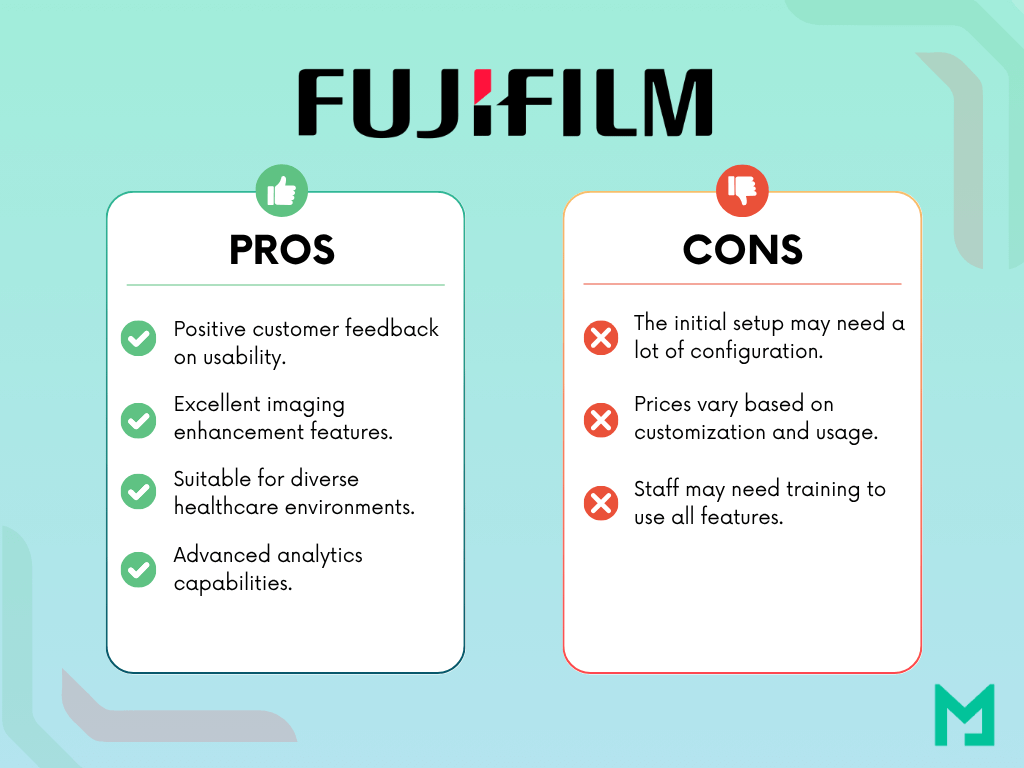
Fujifilm offers Synapse Cloud Services through a “private, public, or adaptable hybrid cloud-based delivery model”. Synapse Enterprise PACS supports DICOM, DICOMweb, HL7 FHIR, XDS, and a RESTful API. Synapse AI Orchestrator gives access to more than 50 validated algorithms. In November 2025, Fujifilm introduced Synapse One, an outpatient bundle on AWS for North America.
- Best for: hospitals and enterprise imaging (Synapse Enterprise PACS), and outpatient imaging centers (Synapse One).
- Strengths: broad standards support and a large AI catalog. Synapse PACS won the 2026 Best in KLAS PACS segment for Latin America.
- What to check: pricing is by quote. Confirm which Synapse components run in Fujifilm’s cloud and which remain on-site.
GE HealthCare and Intelerad
GE HealthCare closed its acquisition of Intelerad on March 18, 2026. Buyers now evaluate two cloud product lines from one owner.
- GE HealthCare sells the Genesis portfolio (Edge, Storage, VNA, Data Migration, and the Radiology Workspace) and True PACS SaaS. GE calls both “cloud-enabled SaaS” on AWS. Its View diagnostic viewer is zero-footprint and received FDA 510(k) clearance in March 2026.
- Intelerad sells a Cloud Suite that includes IntelePACS, InteleOne, InteleGence AI, and InteleShare. InteleShare is the image exchange formerly sold as Ambra Health.
- Best for: hospitals and health systems (GE), plus outpatient, teleradiology, and image exchange (Intelerad).
- Strengths: one owner covering enterprise PACS, VNA, image sharing, and AI orchestration. GE’s Genesis and True PACS SaaS are listed in AWS Marketplace.
- What to check: ask how the two product lines will be combined, supported, and priced over your contract term. Intelerad’s cloud pages state HL7 v2 but do not state DICOMweb or FHIR.
Medicai
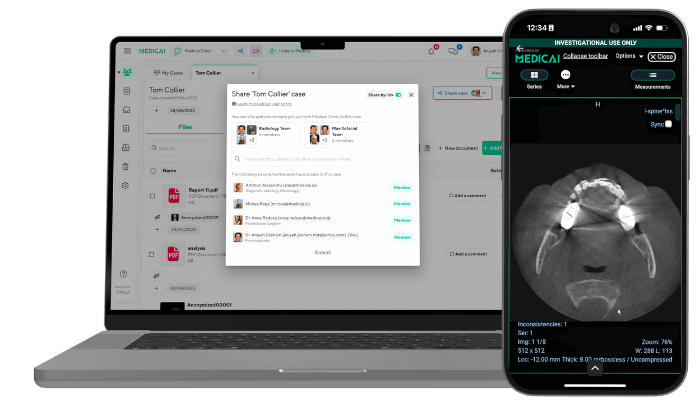
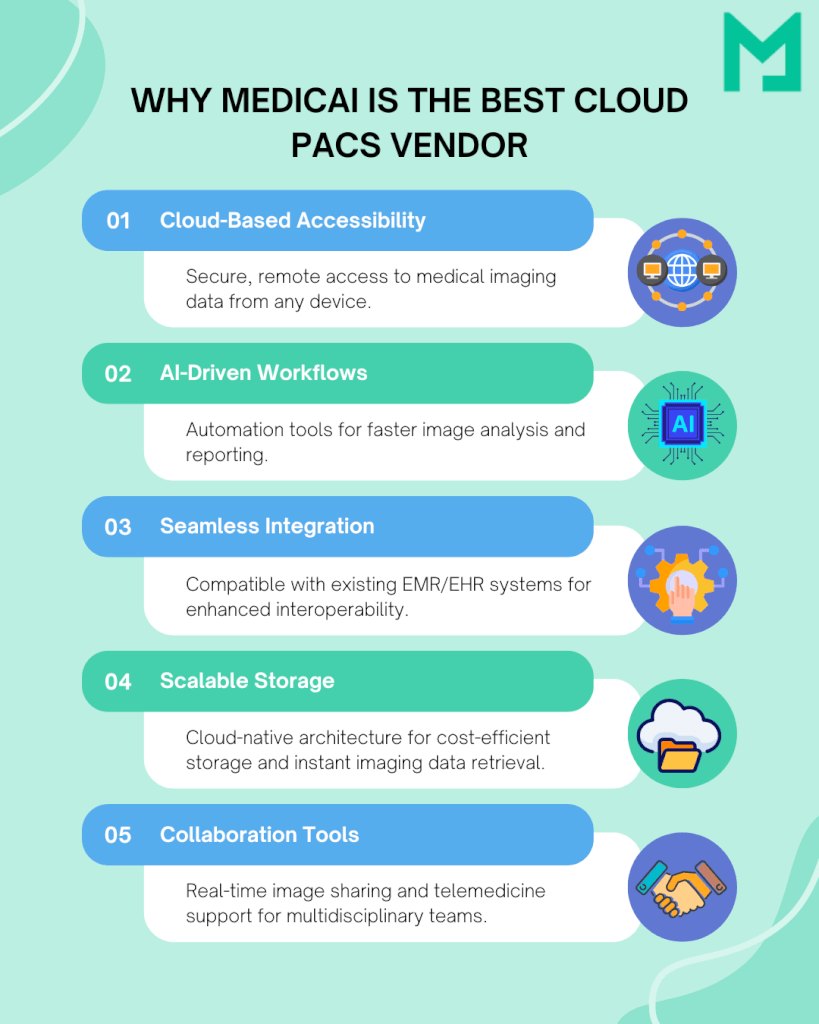
Medicai sells Medicai Cloud PACS, a cloud-native PACS on Microsoft Azure with no on-premises server. It sits alongside a vendor neutral archive, a patient imaging portal, teleradiology software, and a Radiology AI Co-Pilot for reporting. Medicai supports DICOM, DICOMweb, HL7, and FHIR, with zero-footprint viewing on web and mobile.
- Best for: multi-site outpatient practices, specialty clinics, and teleradiology teams that want a hosted platform without local servers.
- Strengths: public pricing: Starter from $249/month (500 GB) and Standard from $749/month (2 TB), both with unlimited users. Patient and referring-physician portals are built in.
- What to check: HL7 and FHIR integration, AI integrations, data residency, and a third-party FDA-cleared diagnostic viewer come with the custom-priced Enterprise plan. Medicai does not hold its own FDA 510(k) clearance and was not a 2026 Best in KLAS winner.
Philips
Philips sells HealthSuite Imaging, a SaaS offering on AWS, in a full-cloud or hybrid deployment, with a 99.99% uptime managed-service contract. Its Image Management 15 platform is the next generation of Vue PACS. In November 2025, Philips added a zero-footprint web diagnostic viewer. HealthSuite Imaging has been available in 13 European countries since February 2025.
- Best for: health systems imaging across multiple sites and care settings, especially current Vue PACS customers.
- Strengths: continuity for Vue PACS customers, a stated uptime commitment, and availability in the US and Europe.
- What to check: the pages we checked do not state DICOMweb, HL7, or FHIR support, so request conformance statements. Pricing is a SaaS subscription, quoted.
RamSoft
RamSoft sells OmegaAI, a cloud-native RIS, PACS, and VNA platform on Microsoft Azure, as well as PowerServer for cloud, hybrid, or on-premises deployments. OmegaAI states support for HL7, FHIR R4, and DICOMweb. Its OmegaAI Image Viewer holds FDA 510(k) clearance K222476. RamSoft lists SOC 2 Type II and ISO 13485.
- Best for: imaging centers, teleradiology groups, mammography and mobile imaging providers, and hospitals.
- Strengths: RIS and PACS on a single cloud platform, an FDA-cleared viewer, and more than 10 AI partner integrations.
- What to check: pricing is by quote. Confirm whether OmegaAI or PowerServer fits your deployment, since the two differ in architecture.
Sectra
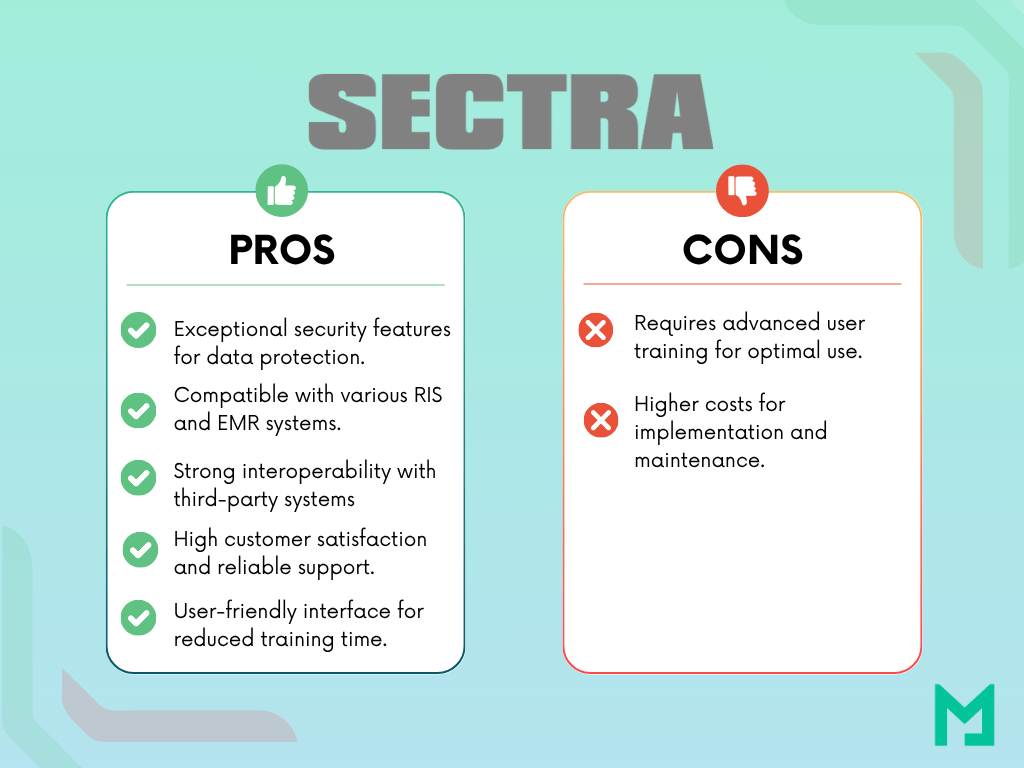
Sectra sells Sectra One Cloud, “a fully managed SaaS” on Microsoft Azure with a 99.99% uptime guarantee. Its DICOM conformance statement covers DICOMweb (WADO-RS, QIDO-RS, STOW-RS), and HL7 v2 is supported through IHE profiles. AI comes through the Amplifier Marketplace, with more than 45 partner integrations included in a single contract. In June 2026, Emory Healthcare completed Sectra’s first US cloud migration, covering 11 hospitals and about 1.3 million exams a year.
- Best for: health systems running enterprise imaging across radiology, cardiology, pathology, and other specialties.
- Strengths: Sectra PACS won 2026 Best in KLAS PACS (Large) with a score of 90.4. It also won PACS segments in Canada, several European regions, the Middle East, and Oceania.
- What to check: pricing is a subscription by quote. Sectra’s zero-footprint UniView viewer is positioned for review, so confirm which client radiologists use for primary reads.
Visage Imaging
Visage Imaging, part of Pro Medicus, sells Visage 7 CloudPACS, described as “cloud-native, fully managed Software-as-a-Service” hosted with major cloud providers. Visage states that CloudPACS is based on DICOM, HL7, and FHIR. Release 7.1.20 (March 2026) added Visage 7 Web, an HTML5 browser viewer, and Visage 7 AI for automated impressions and error checking.
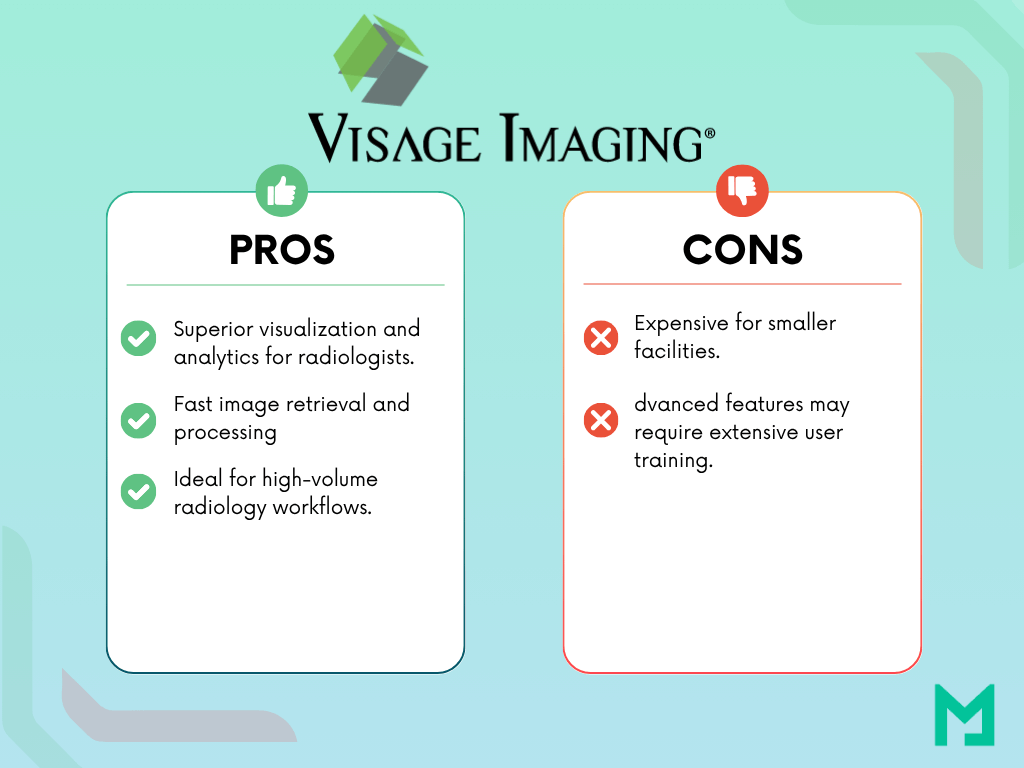
- Best for: academic, community, outpatient, government, and teleradiology settings.
- Strengths: a single cloud-native platform with a browser-based viewer and native AI tools, positioned for use across academic and teleradiology settings.
- What to check: pricing is by quote. DICOMweb is not listed in the Visage 7 DICOM conformance statement we checked, so please confirm whether your architecture depends on it.
Best cloud PACS by setting
The best cloud PACS depends on the setting more than on any single feature. The shortlists below are our editorial picks, based on each vendor’s stated positioning and 2026 KLAS results. Always test with your own studies.
Best cloud PACS for teleradiology
The best cloud PACS for teleradiology combines a multi-site worklist, a zero-footprint diagnostic viewer, and HL7 or FHIR order and result exchange with each client site. Vendors that offer teleradiology products include Visage Imaging, Intelerad, Agfa HealthCare (Cloud Teleradiology, North America only), RamSoft, Sirona Medical, OnePACS, and Medicai.
- Ask how studies from new client sites are onboarded and how long it takes.
- Test viewer speed on large CT and MR studies from your farthest reading location.
- Confirm that the vendor supports your teleradiology workflow for prelims, final reads, and critical result calls.
If you are looking for reading groups rather than software, see our list of teleradiology companies.
Best cloud PACS for imaging centers
The best cloud PACS for an imaging center pairs PACS with RIS scheduling, a patient portal, and pricing that tracks study volume. Shortlist candidates include RamSoft OmegaAI (cloud RIS and PACS), Fujifilm Synapse One (an outpatient bundle launched in November 2025), Agfa HealthCare (2026 Best in KLAS PACS (Small)), DeepHealth, and Medicai. PostDICOM fits smaller clinics that want published plan prices.
- Check whether RIS is native or a separate product with its own radiology information system contract.
- Ask for patient portal and referring-physician access to be included in the base price.
- Model cost at your projected volume for the next five years.
Best cloud PACS for hospitals and health systems
The best cloud PACS for a hospital or health system handles high study volumes, enterprise imaging across departments, and deep EHR integration. Shortlist candidates include Sectra (2026 Best in KLAS PACS (Large)), Agfa HealthCare, GE HealthCare, Philips, Fujifilm, Visage Imaging, and Merative Merge PACS.
- Ask for reference sites of similar size that run the vendor’s cloud product, not its on-premises version.
- Get the uptime commitment and the outage read-access plan in writing.
- Plan the migration with your current vendor’s export terms in hand.
Specialty PACS: cardiology, OB/GYN, vascular, and orthopedics
Specialty cloud PACS vendors are built around a single department’s modalities and reporting. For cardiology, INFINITT Cardiology Suite won 2026 Best in KLAS Cardiology, and Merge Hemo won Cardiology Hemodynamics. Studycast, which acquired UltraLinQ in August 2025, focuses on cardiology, vascular, and OB/GYN ultrasound. Medstrat focuses on orthopedics. For a deeper list, see our guide to cardiology PACS vendors.
Cloud-native vs. cloud-enabled PACS
Cloud-native and cloud-enabled PACS both run in the cloud, but they are built differently, and that difference shows up in upgrades, scaling, and cost. A cloud-native PACS is built as a set of cloud services from the start. A cloud-enabled PACS is on-premises software moved onto hosted or public cloud servers.
| Cloud-native PACS | Cloud-enabled PACS | |
|---|---|---|
| How it is built | Designed as cloud services (often microservices) | Existing on-premises software run on hosted or cloud virtual machines |
| Upgrades | Typically rolled out by the vendor with little or no scheduled downtime | Often scheduled upgrade windows, similar to on-premises |
| Scaling | Scales compute and storage with demand | Scales by adding or resizing servers |
| Cost behavior | Tends to track usage | Tends to track provisioned capacity |
| What to ask | How updates are released and tested | Upgrade frequency, downtime, and who manages the servers |
Vendor labels are not standardized. GE HealthCare describes its Genesis products as “cloud-enabled SaaS”, while Sectra, Visage, RamSoft, and Medicai describe theirs as cloud-native or fully managed SaaS. Ask each finalist the same questions rather than relying on the label. For the full comparison, read our guide to cloud-based vs. cloud-enabled PACS.
Common cloud PACS vendor comparisons
Alternatives to Ambra (now Intelerad InteleShare)
Ambra Health’s cloud image exchange is now sold as Intelerad InteleShare, and Intelerad has been part of GE HealthCare since March 2026. Buyers looking for alternatives usually want one of two things, and the shortlist differs for each.
- Image sharing and exchange only: Microsoft PowerShare won the 2026 Best in KLAS Image Exchange segment. Medicai’s medical image exchange and patient portal cover sharing between facilities, patients, and referring physicians.
- A full cloud PACS with built-in sharing: Sectra One Cloud, Agfa HealthCare Enterprise Imaging Cloud, Visage 7 CloudPACS, RamSoft OmegaAI, and Medicai Cloud PACS all include a zero-footprint viewer. Confirm the external sharing features in the demos and compare them against the criteria above.
If you already use InteleShare, ask Intelerad how the GE HealthCare integration affects your contract, support, and roadmap before you decide to switch.
Medicai vs. Sectra
Medicai and Sectra both run cloud PACS on Microsoft Azure, but they target different buyers. Sectra is built for large health systems and enterprise imaging. Medicai is built for multi-site practices and teleradiology teams that want published pricing and no on-premises server.
| Medicai | Sectra | |
|---|---|---|
| Cloud product | Medicai Cloud PACS | Sectra One Cloud |
| Deployment | Cloud-native on Azure, no on-premises server | Fully managed SaaS on Azure, 99.99% uptime guarantee |
| Typical buyer | Multi-site outpatient practices, specialty clinics, teleradiology | Health systems, enterprise imaging across departments |
| 2026 Best in KLAS | Not a winner | PACS (Large), 90.4 |
| Standards stated | DICOM, DICOMweb, HL7, FHIR | DICOMweb, HL7 v2 via IHE |
| AI | Radiology AI Co-Pilot for reporting | Amplifier Marketplace, 45+ partners |
| Diagnostic viewer | Third-party FDA-cleared viewer on the Enterprise plan | UniView zero-footprint viewer for review; confirm the primary diagnostic client |
| Pricing | Public, from $249 a month | Subscription, by quote |
Choose Sectra if you need enterprise-scale reading across a hospital network and KLAS-validated satisfaction at high volume. Choose Medicai if you need hosted PACS with built-in patient and physician portals, teleradiology tools, and a price you can see before a sales call.
How we evaluated these vendors
We compared cloud PACS vendors using only public, verifiable sources. Each vendor was reviewed with the same template, and every row in the comparison table was checked between September 29 and 30, 2026.
Sources
- Vendor product pages, DICOM and HL7 conformance statements, and press releases, linked on each vendor name
- KLAS Research 2026 Best in KLAS segment winners and scores
- The FDA 510(k) database, for viewer and PACS clearances where a record was found
Inclusion rules
- The vendor sells a PACS, or PACS plus VNA, that runs on vendor-hosted or public cloud infrastructure.
- The product has a live product page we could verify in September 2026.
- Standalone DICOM viewers (such as Horos, OsiriX Lite, RadiAnt, MedDream, and AdvaView, formerly FlexView) and teaching-file tools (such as Pacsbin) are excluded. For viewers, see our list of the best DICOM viewers.
- Archive-only VNAs (Mach7 Technologies, Hyland Acuo) are noted but not ranked.
- Radiation oncology and image analysis software is out of scope.
- Smaller vendors we could not verify in sufficient detail (such as EthosMed) are left out until they can be verified.
Disclosure
Medicai publishes this guide and sells a cloud PACS. Medicai was held to the same template and sources as every other vendor. Where Medicai lacks something a competitor has, such as its own FDA 510(k) clearance or a Best in KLAS award, the guide says so. Clinical and workflow statements were reviewed by Andra Catalina Zincenco, MD.
Spot an error or a change in a vendor’s offering? Email the Medicai editorial team, and we will review it.
Frequently Asked Questions
No single company is best for every teleradiology group. Vendors that position cloud PACS for teleradiology include Visage Imaging, Intelerad, Agfa HealthCare, RamSoft, Sirona Medical, OnePACS, and Medicai. Shortlist those with a multi-site worklist, a zero-footprint diagnostic viewer, and HL7 or FHIR integration. Then test viewer speed on your own large studies from your farthest reading location.
The best cloud PACS for an imaging center combines PACS with RIS scheduling, a patient portal, and pricing that tracks study volume. Common shortlist candidates are RamSoft OmegaAI, Fujifilm Synapse One, Agfa HealthCare (2026 Best in KLAS PACS (Small)), DeepHealth, and Medicai. PostDICOM suits smaller clinics that want published prices.
Most cloud PACS vendors quote prices only after a sales call. Two publish plans: Medicai starts at $249 a month for 500 GB, and PostDICOM starts at EUR 79 a month, billed annually, for 100 GB. Total cost depends on study volume, storage growth, data egress, viewer licenses, and integration work. See our cloud PACS cost guide for the full breakdown.
A cloud-native PACS is built as cloud services from the start, so it typically scales with demand and updates with little downtime. A cloud-enabled PACS is on-premises software moved onto hosted or cloud servers, so upgrades and scaling work much as they do on site. Vendor labels vary, so ask each vendor how updates and scaling actually work.
Yes, but how easily depends on your contract and on how the vendor stores data. Systems that keep standard DICOM objects retrievable through DICOM C-MOVE or DICOMweb make export simpler. Before you sign, get the data export clause in writing: who performs the export, in what format, at what cost, and within what timeframe.
In the 2026 Best in KLAS rankings for the US, Sectra PACS won PACS (Large, over 300,000 studies) with a score of 90.4. Agfa HealthCare Enterprise Imaging for Radiology won PACS (Small) with 93.2. Agfa HealthCare also won the VNA and Universal Viewer segments.
Medicai is a cloud-native PACS on Microsoft Azure with a vendor neutral archive, patient and physician portals, and teleradiology tools, and it publishes its pricing. To see how it compares on your own studies, explore Medicai Cloud PACS, book a demo, or start a free trial.

This guide covers cloud PACS vendors for radiology and related imaging specialties as of September 2026. Vendor offerings, ownership, and KLAS results change often, so confirm current details with each vendor before you sign.


Related Articles
Lets get in touch!
Learn more about how Medicai can help you strengthen your practice and improve your patients’ experience. Ready to start your Journey?
Book A Free Demo