How Personal Injury Lawyers Use AI-Powered PACS and DICOM Imaging to Build Stronger Cases

This guide is written for personal injury lawyers and legal teams evaluating how AI-integrated PACS and DICOM imaging tools can strengthen injury evidence, accelerate case preparation, and support damage calculations.
A single image can shape the outcome of a personal injury case, but only if it’s clear, accurate, and accessible in time.
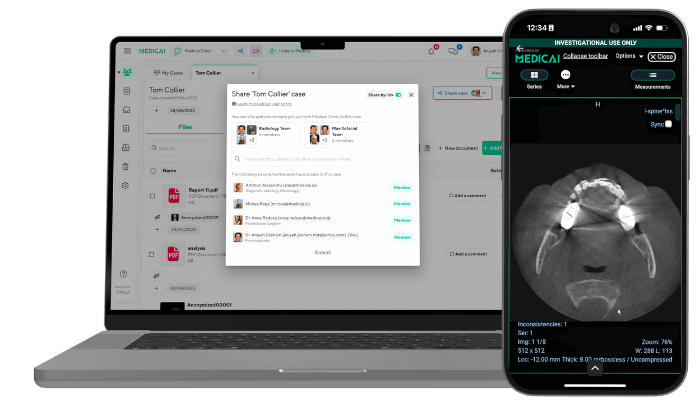
As AI rapidly transforms healthcare, its impact is now felt in the courtroom. By integrating with PACS and DICOM systems, artificial intelligence is helping personal injury lawyers access annotated scans, predict recovery outcomes, and present complex medical data with clarity and confidence.
Let’s break down how AI-driven imaging is redefining personal injury law, from workflow efficiency to ethical safeguards.

From Manual to Intelligent: The Evolution of Case Management
For years, personal injury attorneys relied on outdated methods like paper files and spreadsheets, leading to inefficient workflows and increased errors. Small oversights, like missed surgical dates or unclear notes, could significantly impact claim outcomes.
The shift to intelligent case management is more than just digital storage. It transforms how legal teams work. Powered by AI and automation, modern platforms offer:
- Instant extraction of key terms from lengthy medical records
- Integrated access to PACS and DICOM imaging with annotations
- Smart alerts for case deadlines, missing documents, or red flags
These tools reduce the need for manual review and create a collaborative workspace where attorneys, paralegals, and medical consultants can work in sync.
Intelligent platforms improve legal team operations with centralized dashboards for case visibility and real-time updates. They automate task assignments and deadline tracking and offer analytics on resolution times and workloads.
By minimizing administrative tasks, attorneys can concentrate on strategic planning and client care, enhancing efficiency and legal outcomes.
PACS and DICOM in Legal Practice
PACS and DICOM are vital tools in healthcare and also play a significant role in legal cases.
Picture Archiving and Communication System (PACS)
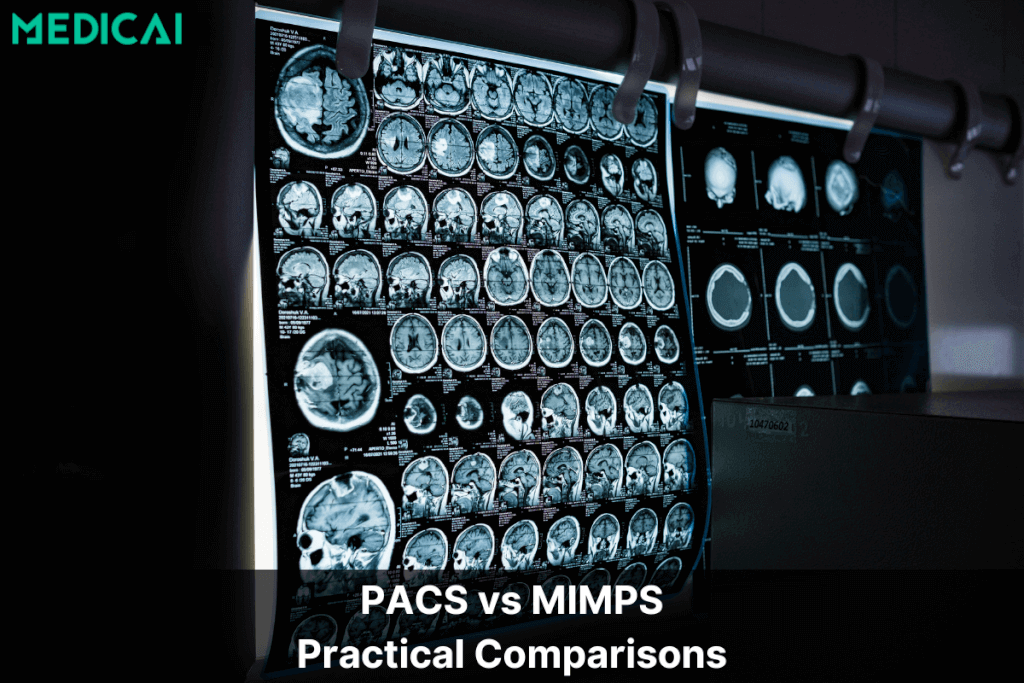
Picture Archiving and Communication System (PACS) is essential for medical image storage and access, allowing secure digital retrieval of X-rays, MRIs, and CT scans.
PACS offers personal injury attorneys quick access to injury evidence, allowing real-time collaboration with physicians and faster preparation of visual arguments. With a cloud-based viewer, lawyers can securely review annotated scans from anywhere without relying on complex medical IT systems.
DICOM Standards
DICOM (Digital Imaging and Communications in Medicine) is the global standard for formatting and transmitting medical images. It ensures that scans, metadata, and diagnostic details are structured consistently across systems.
DICOM matters in legal settings for several reasons, including-
- It guarantees image authenticity and traceability.
- It embeds metadata such as date, modality, and patient details
- It supports AI annotation layers used in injury detection or classification
Properly tagged DICOM files preserve verifiable information, making them vital for evidence in court. Legal professionals can leverage high-resolution scans and AI overlays to strengthen insurer negotiations.
This process simplifies medical data for juries and provides precise, timestamped evidence. Platforms like Medicai enhance access to PACS archives and DICOM data, helping attorneys build stronger and more defensible cases.

Future-Proofing Personal Injury Case: How AI Enhances Imaging and Case Insights
AI-powered radiology tools quickly analyze images, detect subtle injuries and patterns, and enhance clinical intelligence for litigation.
Smarter Radiology: Enhancing Detection and Speed
Modern AI tools trained on large datasets can analyze MRIs, X-rays, and CT scans in real time. These algorithms are often more sensitive to subtle injury signs than the human eye alone. For instance, AI can:
- Detect hairline fractures or ligament tears not flagged in initial reviews
- Highlight regions of inflammation or edema
- Differentiate between acute and chronic injuries through texture and pattern recognition
For personal injury lawyers, it means quicker access to detailed findings without waiting for multiple specialist opinions. AI ensures every case begins with a complete and accurate diagnostic picture.
Predictive Modeling and Injury Pattern Analysis
Beyond detection, AI also offers predictive insights based on historical medical data. By comparing an individual’s injury with thousands of similar cases, AI systems can forecast:
- Estimated recovery timelines
- Probability of complications or long-term disability
- Need for future surgery, therapy, or pain management
These forecasts aid lawyers in crafting realistic damage calculations and help physicians personalize treatment plans, minimizing trial-and-error approaches.
Workflow Automation for Imaging Management
AI also eliminates many of the bottlenecks legal teams face when handling medical files:
- Auto-sorting and tagging incoming imaging files based on injury type or modality
- Extracting keywords or findings directly from radiology reports
- Generating alerts when follow-up imaging is available or updated
AI integration with legal case management platforms or cloud-based PACS viewers allows attorneys to get timely updates and maintain an organized, accessible imaging archive.
AI-Powered Injury Detection Tools: What’s Emerging
Traditionally, injury detection in medical imaging depended on radiologists, but human review has limitations, especially under pressure. Today, AI-powered systems provide speed, consistency, and objectivity in injury interpretation.
Fracture Detection and Measurement
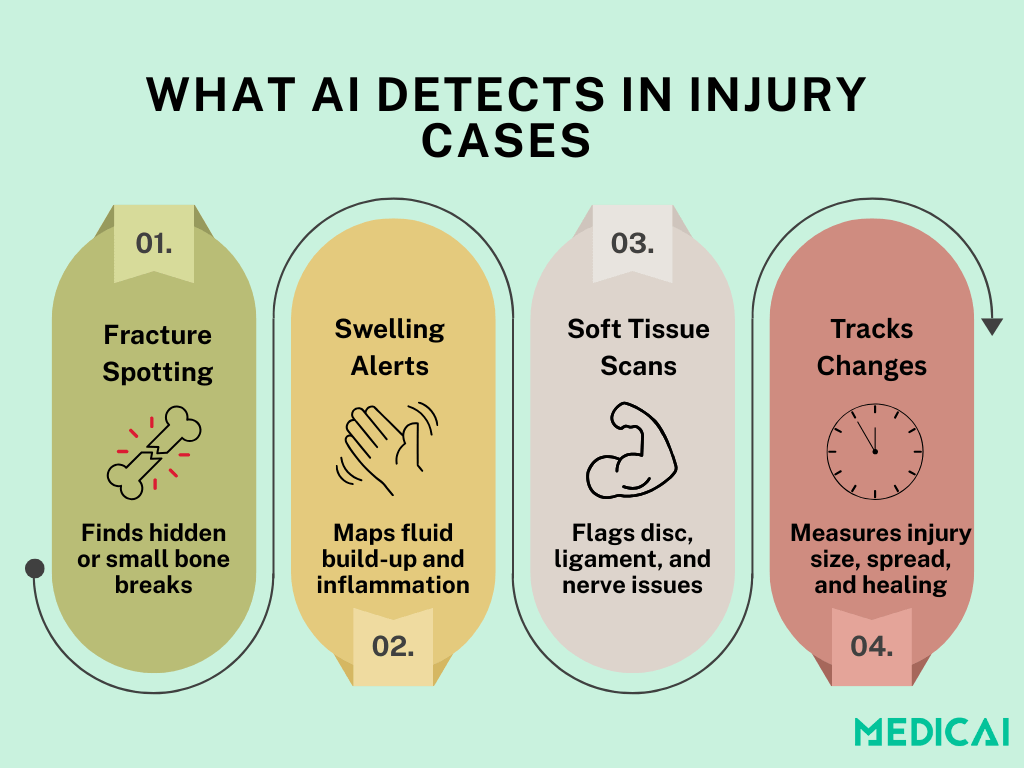
Advanced AI tools now integrate directly with imaging systems to identify fractures, even those too subtle for immediate human detection. These systems:
- Highlight fracture lines in real-time across multiple imaging slices
- Calculate fracture length, angulation, and displacement
- Differentiate acute fractures from older, healed injuries
This capability is crucial for cases like whiplash, falls, or workplace injuries, where small fractures might be missed. AI-validated measurements allow attorneys to confidently present the extent of skeletal damage during negotiations or testimony.
Swelling and Edema Localization
Swelling is often one of the earliest signs of tissue trauma, yet it can be hard to quantify objectively. AI algorithms can now:
- Detect and map soft tissue swelling by analyzing fluid patterns
- Measure the volume of the inflamed areas
- Track changes across serial imaging studies
This helps legal teams visualize and document injury progression over time, which is valuable for proving pain duration, functional impairment, or delayed recovery.
Soft Tissue Injury Identification
Muscle tears, ligament sprains, and disc injuries often form the backbone of soft tissue claims, but are notoriously hard to prove. AI tools trained on musculoskeletal imaging can now:
- Identify abnormal tissue textures or fiber disruptions
- Flag herniated discs, spinal compression, or tendon damage
- Compare findings against injury patterns from similar patient datasets
This enables attorneys to present high-quality, annotated images that make otherwise “invisible” injuries visible and compelling to adjusters, judges, or juries.
Seamless PACS Integration
What makes these tools even more powerful is their integration directly into PACS systems used by hospitals and legal imaging providers. That means attorneys can:
- Review AI-annotated scans without needing third-party software
- Download structured reports that pair images with AI findings
- Share secure, de-identified imaging with consultants or courts
No more waiting for external reads or searching for injury sites. With AI and PACS, the litigation timeline shortens, and the case foundation is stronger.
Speed and Accuracy: How AI Impacts Case Outcomes
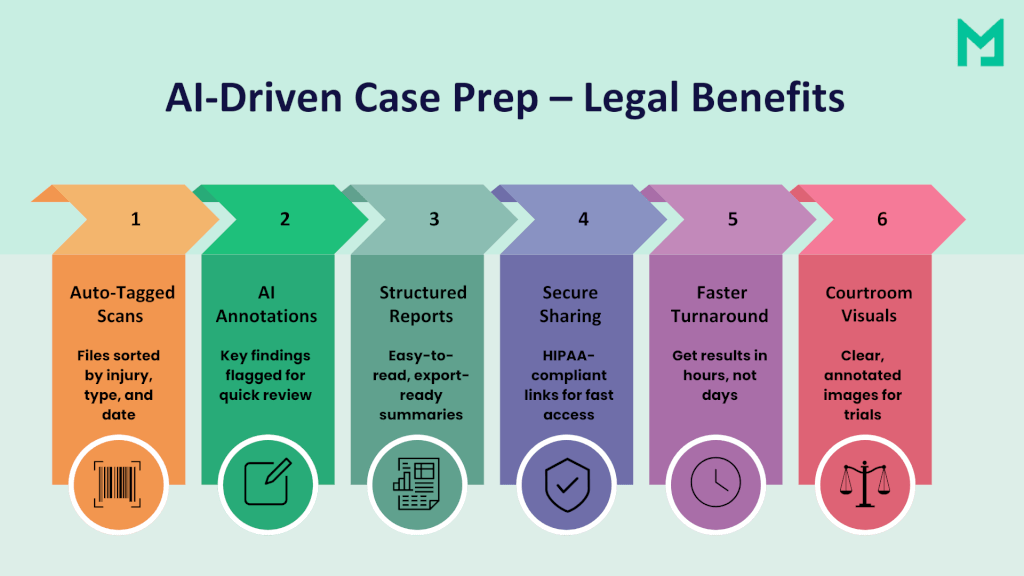
AI in personal injury case management significantly speeds up the process, reducing the time radiologists spend interpreting scans and generating reports from days or weeks to minutes.
AI tools quickly flag potential injuries, provide annotations, and deliver structured summaries within PACS, allowing firms to initiate claims sooner and respond swiftly to insurers while meeting court deadlines.
This speed is a strategic advantage in high-stakes cases that can influence compensation or liability.
Improved Accuracy and Consistency
AI operates faster and more consistently than humans, minimizing subjectivity, fatigue, and variation. This streamlines the process by reducing missed injuries, improving consistency in medical evidence, and reducing the need for multiple radiology opinions.
For personal injury lawyers, this consistency boosts credibility and reduces the likelihood of opposing counsel disputing the evidence, as it relies on dependable algorithms..
Strengthening Legal Arguments and Settlement Value
Stronger imaging leads to stronger cases.
AI-enhanced diagnostics enable attorneys to present clear, visually annotated evidence that non-medical audiences can easily understand. They effectively demonstrate causation and progression by linking this evidence to clinical timelines, enhancing credibility with measurable data.
These elements increase the chances of favorable settlements and strengthen courtroom arguments, helping attorneys justify higher compensation by illustrating severity, future care needs, or permanent impairment.
AI Image Segmentation & 3D Modeling for Courtroom Clarity
Medical imaging can be complicated, especially for those without a clinical background, like judges, jurors, or insurance adjusters. AI-driven segmentation and 3D modeling can help simplify these nuances in MRI and CT scans.
What Is AI-Powered Segmentation?
AI segmentation involves teaching algorithms to identify and label different parts of an image, such as bones, muscles, nerves, or damaged areas. Once labeled, each region can be:
- Highlighted in different colors
- Isolated for side-by-side comparison
- Measured for surface area, volume, or displacement
Modern imaging tools significantly improve clarity in personal injury cases. They accurately reveal the location and severity of spinal disc herniations, rotator cuff tears, and inflammation from blunt force trauma.
These techniques also detect multiple injuries in a single scan, providing a comprehensive injury map that text-based reports can’t match.
Building 3D Models to Support Testimony
Many AI imaging platforms now offer 3D reconstruction tools that turn 2D slices into interactive anatomical models. These are especially useful in:
- Depositions – where experts can rotate, zoom, and annotate injuries
- Mediations – to show insurers the visible impact of injuries
- Trials – as compelling visual aids to simplify complex testimony
In traumatic brain injury (TBI) or orthopedic cases, 3D visuals can humanize abstract injuries and help decision-makers understand long-term implications.
Challenges of AI in Legal Imaging Workflows
AI brings speed and accuracy to injury imaging, but also raises concerns that legal teams can’t ignore.
- Quality Control and Oversight: Unchecked AI can introduce diagnostic errors or misleading annotations. Emerging QC systems now help validate AI outputs against human interpretation. For law firms, this ensures injury visuals are reliable, documented, and legally defensible.
- Cybersecurity and Data Protection: AI-integrated PACS systems handle sensitive PHI and must be protected. Firms risk data breaches- and potentially inadmissible or compromised evidence- without proper encryption, access logs, and compliance protocols (HIPAA, GDPR).
- Ethical and Legal Considerations in AI Diagnostics: Who is accountable for AI-generated findings? Courts require explainable AI and transparency. Injury annotations could face legal challenges without clear reasoning or validation.
Future-Proofing: What’s Next in Legal Imaging AI
The legal imaging landscape is evolving fast. Here’s what forward-looking firms should prepare for:
- Predictive Analytics & Proactive Strategy: AI tools can flag risks early by analyzing trends from similar cases. This helps lawyers anticipate complications, improve negotiations, and allocate resources more effectively.
- Voice-Controlled Case Management: NLP tools allow attorneys to manage case files, record observations, or conduct interviews hands-free—perfect for fieldwork or mobile use.
- Blockchain-Based Audit Trails: Immutable blockchain audit trails ensure that all imaging data and AI annotations are timestamped, tamper-proof, and fully traceable—crucial for legal integrity.
- Smart Wearables for Post-Accident Recovery: Wearables now track patient recovery in real time, offering objective evidence of movement, therapy progress, and pain behaviors—powerful proof in long-term injury claims.

Conclusion
The future of personal injury law is intelligent, efficient, and data-driven. With AI-enhanced PACS and DICOM systems, firms can turn complex imaging into actionable, court-ready evidence.
Platforms like Medicai help streamline diagnostics, strengthen case strategy, and improve client outcomes while ensuring compliance and security. Legal teams can modernize workflows with us and deliver sharper, faster, and stronger results.
Remember, as imaging technology evolves, the firms that adapt early will lead confidently.


Related Articles

Lets get in touch!
Learn more about how Medicai can help you strengthen your practice and improve your patients’ experience. Ready to start your Journey?
Book A Free Demo