Page 2 of 24 – Recent Articles
485 posts
After-Hours Teleradiology Coverage: How the Nighthawk Model Works

After-Hours Teleradiology Coverage: How the Nighthawk Model Works After-hours teleradiology coverage is the operational model in which a healthcare facility contracts with a remote radiology group to read imaging studies acquired outside normal business hours — overnight, weekends, and holidays. The dominant pattern, often called the “nighthawk” model...

MRI Comparisons: Different Types of MRI, Machines, Procedures, and Imaging Alternatives
MRI Comparisons: Different Types of MRI, Machines, Procedures, and Imaging Alternatives Different types of MRI scans, machines, and procedures fit different clinical situations. Choosing the right MRI option, or deciding whether an MRI is the right scan at all, depends on what the doctor is looking for, the part of the...

MRI Segmentation With AI: Multi-Organ Applications and Methods
MRI Segmentation With AI: Multi-Organ Applications and Methods MRI segmentation with AI converts raw magnetic resonance imaging data into labeled maps of anatomy and pathology that clinicians and researchers can measure, monitor, and analyze quantitatively. The underlying technology is consistent across all clinical contexts: deep learning models, primarily...

5 Healthcare Trends Reshaping Patient Outcomes in 2026 and Beyond

5 Healthcare Trends Reshaping Patient Outcomes in 2026 and Beyond Healthcare doesn’t look the same as it did ten years ago. Back then, most patients didn’t go to the doctor until they felt sick. But today, a wearable device on a patient’s wrist can track their heart rate and warn...

Teleradiology Services: Cost, Workflow, and What to Look for in a Provider

Teleradiology Services: Cost, Workflow, and What to Look for in a Provider Teleradiology services are remote radiological interpretation offerings provided by radiology groups, hospital networks, and dedicated teleradiology companies to healthcare facilities that lack on-site radiologist coverage during specific hours, in specific subspecialties, or at specific volumes. The service includes the radiologist’s...

AI in Telemedicine: How It Is Used in Virtual Care, Remote Monitoring, and Teleradiology

AI in Telemedicine: How It Is Used in Virtual Care, Remote Monitoring, and Teleradiology Artificial intelligence in telemedicine is the application of machine learning, natural language processing, and computer vision to support the remote delivery of clinical care. The scope is wider than the chatbot symptom checker that most general healthcare articles focus on....

Radiologist Burnout: What Imaging Center Operators Can Actually Do About It

Radiologist Burnout: What Imaging Center Operators Can Actually Do About It When a radiologist leaves a practice, the replacement cost — recruitment, credentialing, onboarding, and productivity ramp-up — is estimated at $500,000 to $1,000,000 per physician according to the American College of Radiology. That is the number an imaging center operator...

How Much Does Cloud PACS Cost? A Total Cost of Ownership Framework for Radiology Practices

How Much Does Cloud PACS Cost? A Total Cost of Ownership Framework for Radiology Practices Most PACS pricing conversations start and end in the wrong place. A vendor quotes a monthly subscription fee. A competitor quotes a lower one. The practice administrator compares the two numbers and calls it a cost comparison. What that comparison...

Radiology Hanging Protocols: What They Are, How They Work, and How to Configure Them for Your Workflow
Radiology Hanging Protocols: What They Are, How They Work, and How to Configure Them for Your Workflow Every second a radiologist spends on a task that is not interpretation is a second that reduces the practice’s diagnostic output without improving its diagnostic quality. In a high-volume reading environment — 80 to 120 studies per shift in a...

Patient Guide to MRI, MRA, and EEG: When Each Test Is Used
Patient Guide to MRI, MRA, and EEG: When Each Test Is Used Your doctor has ordered an imaging test — or perhaps you are trying to understand the difference between tests you have heard about — and you want to know in plain language what each one does, when it is used,...

Radiology Reporting Software: Structured Reporting, Templates, and AI-Assisted Workflows
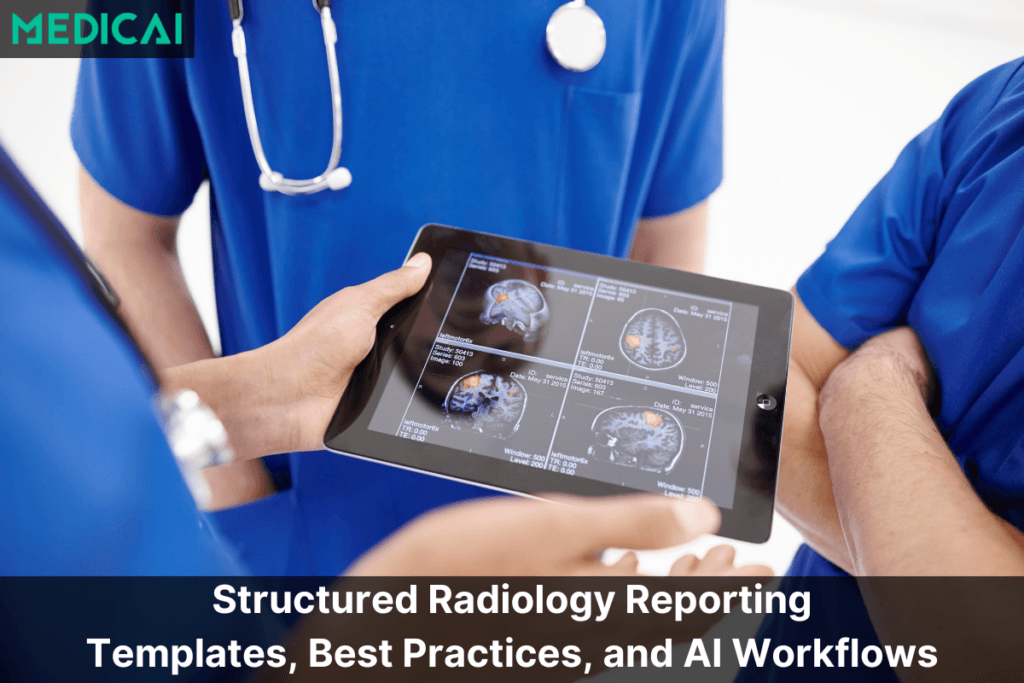
Radiology Reporting Software: Structured Reporting, Templates, and AI-Assisted Workflows Radiology reporting software is the category of tools that radiologists use to produce diagnostic reports, and the most significant shift in this category is the move from free-text narrative dictation to structured reporting. Structured radiology reporting is a methodology for...

EHR vs EMR? Understanding the Key Differences and Impact

EHR vs EMR? Understanding the Key Differences and Impact EHR (Electronic Health Records) and EMR (Electronic Medical Records) may sound interchangeable—but they serve distinct purposes. While both store patient information electronically, EMRs are limited to a single practice, whereas EHRs allow data sharing across multiple providers. This key difference...

Cloud PACS for Specialty Clinics: What Orthopedic, Neurology, and Oncology Practices Need on a Budget
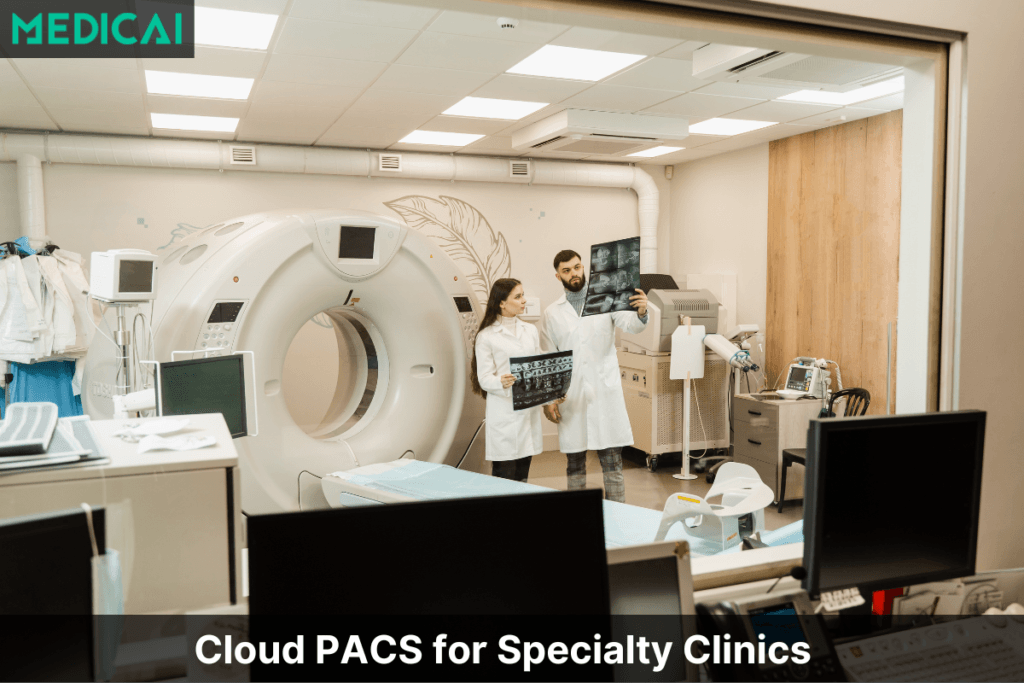
Cloud PACS for Specialty Clinics: What Orthopedic, Neurology, and Oncology Practices Need on a Budget A small specialty clinic and a hospital radiology department have one thing in common: both produce medical images that must be stored, retrieved, and shared. Everything else about their requirements is different, except for the cloud PACS for specialty clinics...

Vendor Neutral Archive Benefits: What VNA Delivers vs What Vendors Claim
Vendor Neutral Archive Benefits: What VNA Delivers vs What Vendors Claim The case for a vendor neutral archive is made the same way by every vendor that sells one. Eliminate vendor lock-in. Reduce storage costs. Enable cross-department access. Integrate images into the EHR. Prepare your archive for AI. All of these...

Enterprise Imaging Architecture: How PACS, VNA, RIS, and EHR Fit Together

Enterprise Imaging Architecture: How PACS, VNA, RIS, and EHR Fit Together Enterprise imaging architecture is the technical framework that defines how all imaging systems in a healthcare organization — PACS, VNA, RIS, EHR, modalities, and AI tools — connect, exchange data, and maintain a single patient imaging record across departments, facilities,...

Radiology Revenue Cycle Management: From Imaging Workflow to Reimbursement

Radiology Revenue Cycle Management: From Imaging Workflow to Reimbursement Radiology revenue cycle management (RCM) is the end-to-end process by which a radiology practice or imaging center converts a completed imaging study into collected revenue. It begins the moment a physician places an imaging order and ends only when the...

Migrating to Cloud PACS: A Practical Playbook for Imaging Centers and Radiology Practices

Migrating to Cloud PACS: A Practical Playbook for Imaging Centers and Radiology Practices Migrating to cloud PACS is the process of moving an on-premise picture archiving and communication system — including image archive, viewer infrastructure, and integration points — into a cloud-hosted environment. Migration planning has three parts: baseline measurement of current imaging...

PACS vs MIMPS: What changed, and what should you call the system
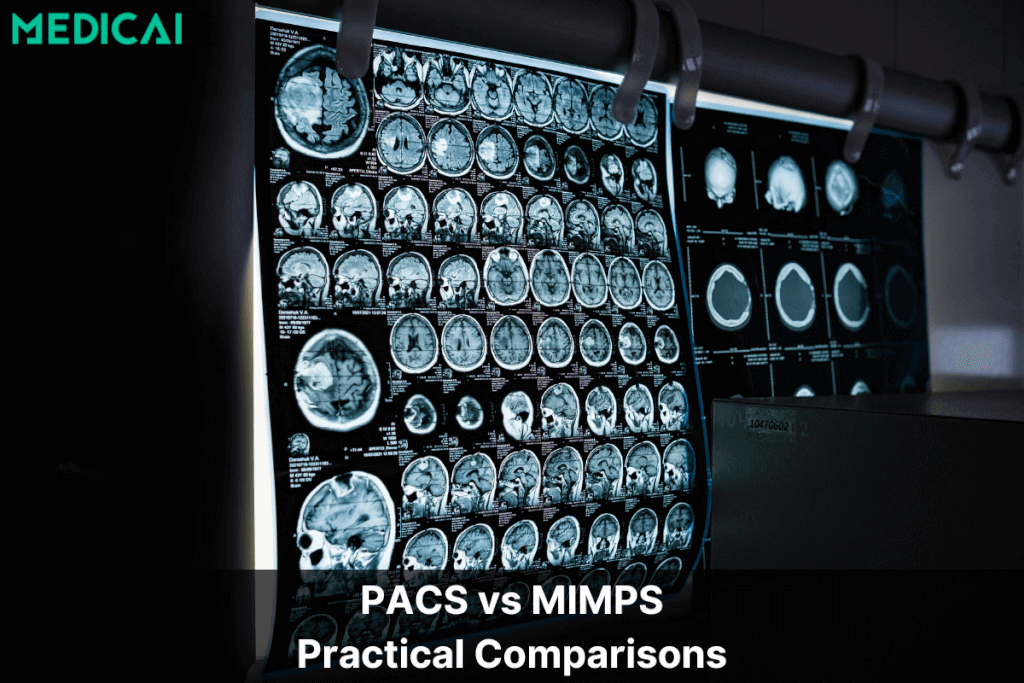
PACS vs MIMPS: What changed, and what should you call the system PACS vs MIMPS is mostly a naming and scope update; the FDA now uses MIMPS as the regulatory name for software systems that manage and process medical images for clinical interpretation. PACS is the legacy term most hospitals still use....

What is DICOMweb? QIDO-RS, WADO-RS, and STOW-RS explained
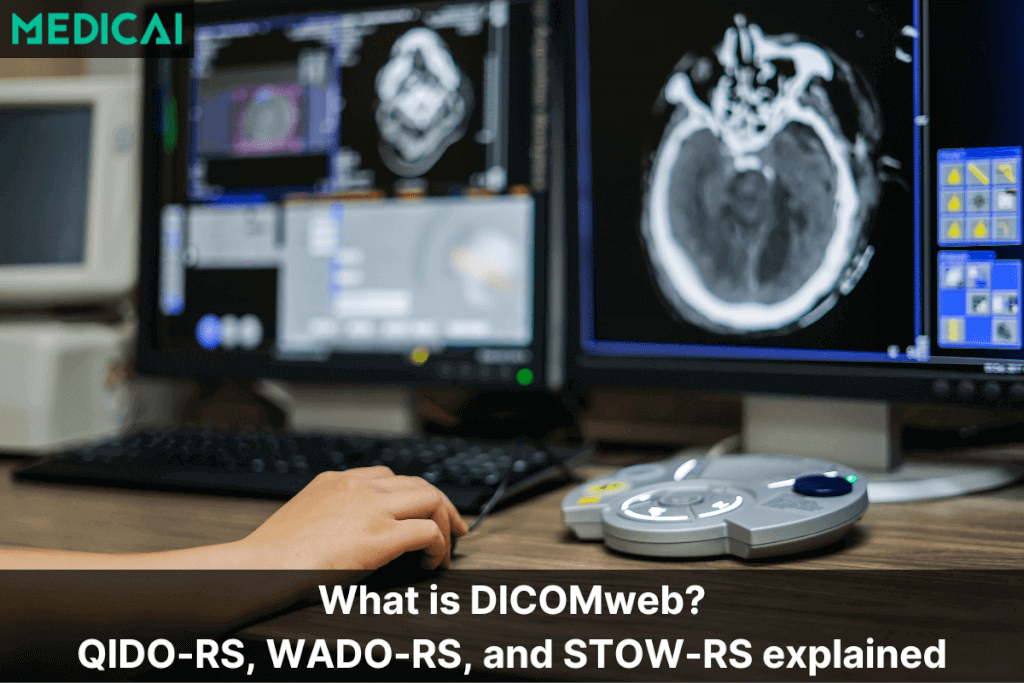
What is DICOMweb? QIDO-RS, WADO-RS, and STOW-RS explained DICOMweb is DICOM’s web-native set of services: a family of RESTful web services defined in DICOM PS3.18 that makes medical imaging data accessible over standard HTTP. DICOMweb does not change the DICOM image format or the metadata model. It offers...

What Is HL7? Standards, Versions, Use Cases, and Healthcare Interoperability (2026 Guide)
What Is HL7? Standards, Versions, Use Cases, and Healthcare Interoperability (2026 Guide) HL7 (Health Level Seven) is a family of healthcare data standards that defines how clinical systems exchange patient information, orders, results, and clinical documents. The Health Level Seven International standards organization, ANSI-accredited and founded in 1987, maintains four distinct standard...

Vendor Neutral Archive (VNA): Full Guide
Vendor Neutral Archive (VNA): Full Guide A Vendor Neutral Archive (VNA) is a medical imaging technology that stores clinical images and documents in a standard format (typically DICOM) and exposes them through standard interfaces, so any authorized system can access them regardless of which vendor or...
