How to Select the Perfect Teleradiology Partner: 10 Factors To Focus

Time is a pivotal factor in healthcare, and any delay in diagnosis can result in serious patient outcomes.
Teleradiology offers a holistic solution, connecting you with a network of expert radiologists to accelerate the diagnostic process.
But with numerous options available, how do you choose a teleradiology solution that perfectly aligns with your practice’s unique needs?
Let me help you smooth the decision-making process, ensuring you select a partner that enhances patient care, improves efficiency, and drives success for your practice.
How To Choose Efficient Teleradiology Solution In 2025
Teleradiology has become an integrated part of the healthcare system. It offers unparalleled access to specialist expertise, boosts operational efficiency, and enhances patient outcomes while cutting costs.
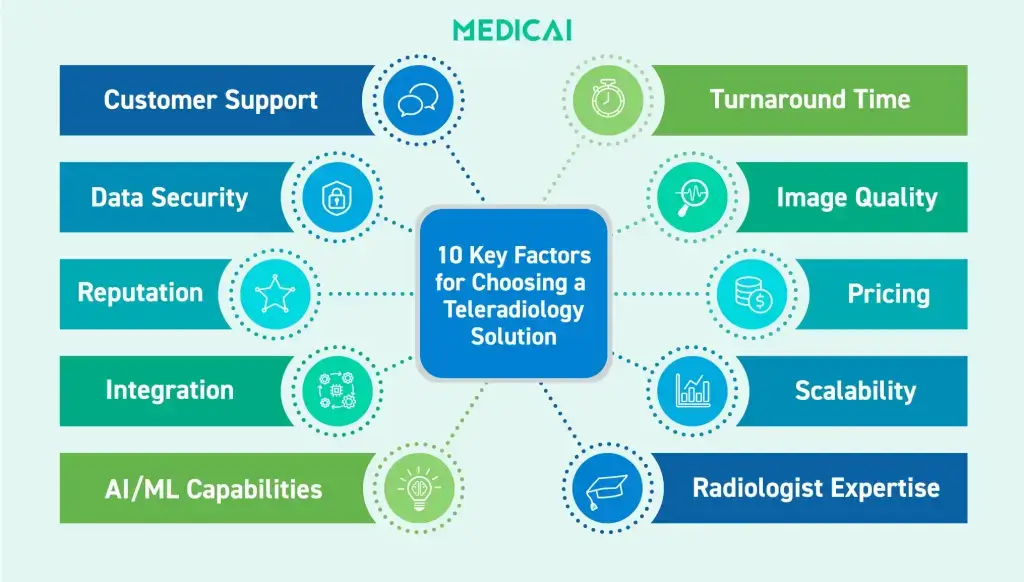
But with so many providers entering the market, how do you choose the right teleradiology services for your practice? Let’s break down the 10 key factors that can guide your decision and ensure exceptional patient care.

1. Image Quality and Resolution: The Foundation of Accurate Diagnoses
Imagine trying to solve a puzzle with missing or blurry pieces. That’s what low-quality medical imaging feels like for radiologists.
High-resolution images are the backbone of accurate diagnoses. So, choosing a teleradiology service that guarantees impeccable image quality is non-negotiable.
Quality image and resolutions matter for several reasons, including-
- Pinpoint Accuracy: Subtle abnormalities can easily be missed in poor-quality images, leading to misdiagnoses or delays.
- Better Outcomes: Clear images mean quicker, more confident diagnoses, paving the way for effective treatment.
- Enhanced Productivity: Radiologists spend less time second-guessing unclear images, focusing instead on delivering precise results.
While choosing the teleradiology solution, look for
- Image Transmission Technology: Ensure your provider uses lossless compression to maintain image integrity during transfers.
- Compatibility: Verify seamless integration with your existing PACS to avoid workflow interruptions.
- Sample Review: Request sample images to experience the clarity and detail firsthand.
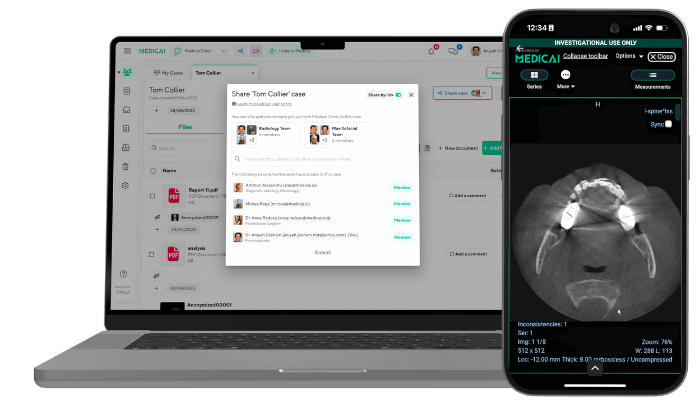
Medicai uses advanced technology to maintain image resolution and quality, empowering radiologists to make accurate decisions. Our platform focuses on clarity and detail for improved patient outcomes.
2. Turnaround Time: Speed That Saves Lives
In healthcare, time isn’t just money—it’s life. Turnaround time (TAT) ensures patients receive timely diagnoses and care.
TAT facilitates shorter waiting times, decreases patient stress, and speeds up clinical decisions. Quick access to imaging reports also enables physicians to respond effectively in emergencies.
Consider the following while roaming into the teleradiology market.
- Routine vs. Urgent Cases: Assess if the provider can prioritize critical cases without affecting routine studies.
- Realistic Commitments: Go beyond advertised TAT and ask how they handle peak workloads or complex studies.
- Subspecialty Availability: Check if they have experts readily available for niche requirements.
At Medicai, we understand that speed is just as important as accuracy. Our system streamlines teleradiology workflows, prioritizes urgent cases, and promptly delivers critical results.
3. Radiologist Expertise: Experience You Can Trust
AI and advanced tools are incredible, but the expertise of skilled radiologists remains irreplaceable.
When choosing a teleradiology system, ensure their team includes board-certified professionals with subspecialty expertise in oncology, neurology, or musculoskeletal imaging.
You may ask why does it matter. Well, the reasons are several, including-
- Accurate Diagnoses: Experienced radiologists can interpret subtle changes and patterns that even advanced tools might miss.
- Specialized Care: Subspecialty expertise ensures precise readings for complex cases, improving patient outcomes.
- Professional Insight: Seasoned radiologists bring years of training and clinical experience, adding invaluable trust to their findings.
While evaluating the expertise of radiologists, ask for
- Certifications: Verify the provider’s radiologists are board-certified and trained in relevant subspecialties.
- Continuous Learning: Ask about their ongoing education programs to stay updated with the latest advancements.
- Case Studies: Review sample reports to evaluate their thoroughness and expertise.
Medicai collaborates with a global network of highly qualified radiologists – each carefully vetted for their expertise and track record. With subspecialty professionals across multiple fields, we ensure the right expert reviews every image for the job.
4. Data Security and Compliance: Safeguarding Patient Information
In healthcare, patient trust is everything, and protecting sensitive medical data is a cornerstone of that trust. A data breach doesn’t just compromise patient privacy—it can lead to costly penalties and erode confidence in your practice.
Consider these measures to ensure security while choosing the teleradiology solution.
- Encryption Standards: Advanced encryption like TLS and FTPS can secure data in transit and at rest.
- Disaster Recovery Plans: Consider protocols for safeguarding data during unforeseen events like cyberattacks.
- Compliance Documentation: Request proof of compliance with regulatory standards.
Medicai takes data security as seriously as you do. Our platform uses end-to-end encryption and complies with global standards, including HIPAA and GDPR. With rigorous audits and robust recovery systems. We guarantee your data is safe, no matter what.

5. Integration with Existing Systems: Streamlining Workflows
A seamless connection between your teleradiology solution and existing systems—like EMRs, PACS, and RIS—is crucial for smooth and efficient workflows.
It matters for several reasons, including-
- Efficiency Gains: Integrated systems reduce manual data entry, reducing errors and saving time.
- Comprehensive Patient Data: Unified systems provide a complete view of patient information, enhancing clinical decisions.
- Ease of Use: Disconnected systems can frustrate staff and disrupt workflows.
You can evaluate integration by considering the following.
- APIs and Compatibility: Look for solutions with strong APIs for effortless data exchange.
- Technical Support: Ensure the provider offers hands-on support to guide integration.
- Trial Runs: Request a demo or test integration with your current systems before committing.
Medicai offers seamless medical imaging APIs for easy integration with your existing systems. Our dedicated support team ensures a smooth, disruption-free process.
6. Scalability and Flexibility: Growing with Your Practice
Your practice isn’t static, and neither should your teleradiology solution be. Scalability and flexibility are vital for growing patient volumes and adopting new imaging technologies.
As your practice grows, your teleradiology solution must adapt to handle increasing imaging volumes effectively. Medicai is built for growth. Whether you expand your practice or adopt new technologies, our platform scales effortlessly.
Integrating new technologies, such as AI-assisted interpretations, into your workflow is essential to enhance efficiency and accuracy.
You can assess scalability by
- Capacity Planning: Ask how the provider handles increased data volumes and additional users.
- Technology Upgrades: Inquire about their roadmap for integrating innovations like AI.
- Specialty Services: Ensure the provider can cater to evolving needs, such as subspecialty interpretations.
7. Customer Support: Ensuring a Smooth Experience
Even the best technology isn’t helpful if you’re stuck with questions or challenges.
Reliable and responsive customer support can make all the difference in your teleradiology experience. Knowing that help is just a call or click away gives your team peace of mind.
Moreover, proactive support enhances the user experience, allowing you to fully maximize the platform’s potential.
Consider these factors while assessing the support quality of the provider.
- Availability: Look for 24/7 support to address urgent issues at any time.
- Response Time: Ask how quickly issues are typically resolved.
- Support Testing: Test the provider’s responsiveness and problem-solving skills during your trial or demo.
8. Pricing and Contract Terms: Balancing Value and Budget
Your teleradiology solution should deliver exceptional value while comfortably fitting within your budget. Transparency and pricing flexibility are critical to avoiding surprises later.
While choosing the teleradiology solution, focus on-
- Pricing Models: Understand the pros and cons of per-study fees, subscriptions, or hybrid options.
- Contract Length: Look for terms that allow adjustments as your needs change.
- Hidden Costs: Clarify any additional training, integration, or support fees.
9. AI and Machine Learning Capabilities: Enhancing Efficiency and Accuracy
Have you ever wondered how AI is transforming the way radiologists work?
With the advancements in Artificial Intelligence (AI) and Machine Learning (ML), teleradiology solutions are no longer just about transmitting images—they are redefining diagnostics and care.
Automating routine tasks like segmentation and triaging urgent cases reduces costs by decreasing manual labor. AI systems also help doctors identify problems by spotting minor issues in images that humans might miss.
Besides, faster identification of critical findings enables quicker interventions, enhancing patient safety and overall outcomes.
When assessing teleradiology providers, dive deeper into their AI and ML capabilities:
- AI-Assisted Interpretations: Do they offer AI-driven tools to enhance reading accuracy for specific modalities, such as CT scans or mammograms?
- Workflow Integration: Can their AI-powered tools fit seamlessly into your existing systems without disrupting established workflows?
- Data Privacy: Are their algorithms compliant with regulations like HIPAA, ensuring patient confidentiality is never compromised?
At Medicai, we don’t just integrate AI—we lead with it. Our platform leverages advanced AI and ML to enhance workflows and diagnostic accuracy while ensuring strict privacy standards.
With Medicai, you’re not just adopting AI but future-proofing your practice.
10. Reputation and Experience: Choosing a Trusted Partner
In the sea of teleradiology providers, reputation and experience are your guiding stars. Would you entrust your patients’ care to just anyone? Of course not.
Here’s why choosing a trusted provider matters:
- Proven Track Record: A reputable provider demonstrates consistent, high-quality service and reliability.
- Client Satisfaction: Happy clients mean a history of successful collaborations and partnerships.
- Industry Leadership: Providers recognized for innovation and excellence are often at the forefront of teleradiology advancements.
You can evaluate providers by doing a few simple tasks.
- Read reviews and testimonials.
- Ask about their client base to see if they’ve worked with organizations like yours.
- Connect with colleagues or attend healthcare events to hear their experiences with potential providers.
Emerging Trends in Teleradiology Solutions
In 2025, teleradiology is seeing significant improvements that make it faster, more accurate, and easier to access.
AI and Machine Learning Integration
Artificial Intelligence (AI) and Machine Learning (ML) have become integral to teleradiology, bringing automation and precision to the forefront of diagnostics. They provide-
- Automated Reporting: AI algorithms can now generate preliminary reports for radiologists by analyzing imaging data.
- Anomaly Detection: AI is highly effective at spotting subtle abnormalities that even experienced radiologists may miss.
- Predictive Analysis: These models analyze historical imaging data to predict disease progression, aiding in proactive patient management and treatment planning.
Cloud-Based Accessibility
The cloud is reshaping teleradiology’s infrastructure, providing unmatched scalability, flexibility, and accessibility for medical imaging. It has paved the way for

- Data Storage and Sharing: Cloud platforms like PACS allow radiologists to access imaging data securely, enhancing collaboration.
- Real-Time Access: Radiologists and doctors access imaging studies instantly for better patient outcomes.
- Cost Efficiency: Cloud solutions save costs for small healthcare practices by reducing on-premises needs.
Specialty-Specific Services
Healthcare is moving towards hyper-specialization, and teleradiology is no exception. Subspecialized teleradiology services are becoming increasingly crucial for addressing complex medical cases.
- Pediatric Radiology: interpreting imaging in children, focusing on unique anatomical and developmental considerations.
- Cardiology Imaging: Advanced cardiac imaging solutions, such as echocardiograms and coronary CT angiograms, are gaining traction.
- Oncology Imaging: Oncology specialists use teleradiology to check tumor growth and treatment effectiveness. They also use AI to improve accuracy.
- Emergency Radiology: Specialized services ensure that urgent imaging studies, such as trauma scans, are interpreted within minutes, saving lives in critical cases.
Mobile-First Solutions
The rise of mobile technology has made teleradiology more accessible than ever. It provides-
- Remote Diagnostics: Radiologists can use mobile apps to review images remotely and respond quickly in emergencies.
- Collaboration Tools: Mobile-first solutions allow real-time collaboration between radiologists and physicians.
- User-Friendly Interfaces: Intuitive mobile apps improve user experience, minimize training needs, and boost efficiency.
Choosing the Right Teleradiology Solution: A Step-by-Step Guide
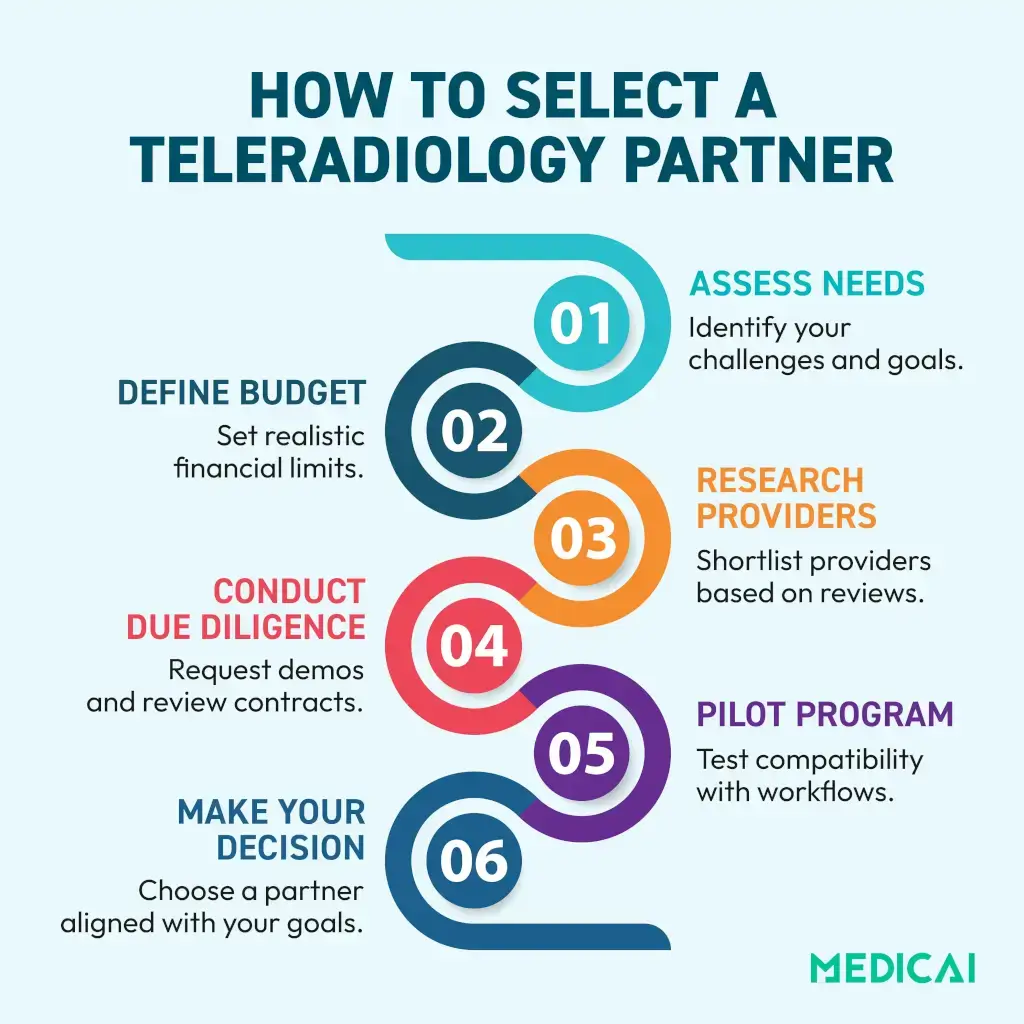
Selecting a teleradiology provider can be overwhelming, but breaking it into clear steps ensures you make an informed choice.
1. Assess Your Needs and Challenges
Identify your pain points: Are you dealing with reporting delays, a lack of subspecialists, or high in-house costs? Define your goals, whether improving efficiency, reducing costs, or enhancing patient care.
Knowing your needs narrows down the search.
2. Define Your Budget
Set a realistic budget and explore pricing models like per-study fees or subscriptions. When managing teleradiology workflows, consider your resources, such as available staff. It will help ensure the solution fits your financial and operational needs.
3. Research and Shortlist Providers
Search online, read reviews, and seek recommendations from peers. Shortlist providers that fit your criteria for image quality, turnaround time, expertise, and integration capabilities.
4. Conduct Due Diligence
Request demos to evaluate platforms. Review contracts for pricing and compliance and speak to current clients for insights on service quality and reliability.
5. Pilot Program (Optional)
Test the provider’s services with a pilot program to assess performance and gather feedback. It minimizes risks and ensures compatibility with your workflow.
6. Make Your Decision
Weigh all factors, negotiate terms, and build a strong partnership with your chosen provider. Focus on a solution that enhances efficiency, ensures patient satisfaction, and aligns with your long-term goals.
Conclusion
The right teleradiology partner can transform your practice. You can ensure a seamless and successful integration by prioritizing factors like image quality, turnaround time, and radiologist expertise.
Providers like Medicai combine cutting-edge technology with exceptional service, empowering you to deliver accurate diagnoses and efficient care. Take the time to make an informed decision—it’s an investment in your patients, your team, and the future of healthcare.


Related Articles



Lets get in touch!
Learn more about how Medicai can help you strengthen your practice and improve your patients’ experience. Ready to start your Journey?
Book A Free Demo