How To Choose A Cloud PACS Solution In 2025?

Cloud-based Picture Archiving and Communication Systems (PACS) offer a powerful solution for managing medical images, enhancing collaboration, and improving efficiency. They are no longer a luxury but necessary to run a patient-centric healthcare system.
However, how do you choose the best PACS system in 2025 within the ocean of options available in the market?
Choosing the right cloud PACS solution requires a comprehensive evaluation of image quality, performance, data security, integration capabilities, vendor reputation, and pricing. A thorough approach ensures the solution meets your needs, improves patient care, and supports growth over time.
Let’s explore how to make an informed decision that sets your healthcare organization up for success!
How To Choose A Cloud PACS Solution In 2025?
The right cloud PACS solution means ensuring your practice runs smoothly, your team works efficiently, and your patients receive the best care possible. So, choose a cloud PACS partner who supports your practice and adapts to its needs, not just where your images are stored.

However, how do you choose the perfect cloud PACS solution for your practice?
Let’s explore the key factors you should prioritize when choosing Cloud PACS.

1. Image Quality: Clarity That Inspires Confidence
Imagine interpreting a mammogram with faint details or a CT scan with unclear boundaries. It’s indeed frustrating and potentially dangerous.
High-quality medical images are the cornerstone of accurate diagnoses and effective treatment. The right cloud PACS ensures every detail, every nuance, is preserved.
Different imaging modalities, like CT, MRI, or mammography, require specific attention to detail. A cloud PACS should easily handle these, providing high-resolution clarity that supports precise interpretations.
Here’s how you can excavate image quality.
- Ask About Compression: Vendors should use lossless compression techniques to keep image quality intact without bloating file sizes.
- Test the Tools: Look for features like zoom, pan, and measurement tools that allow radiologists to work with precision.
- Demand a Demo: See how images look and feel when manipulated on the platform. Are they crisp? Are tools intuitive? This hands-on experience is invaluable.
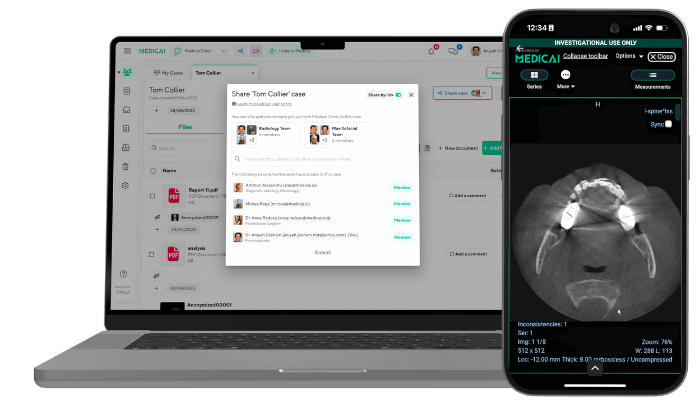
At Medicai, we understand the critical importance of high-quality images for accurate diagnoses. Our cloud-based PACS platform prioritizes image quality, ensuring every subtle detail is visible and easily interpretable.
2. Performance and Scalability: Ready to Grow with Your Practice
Slow systems don’t just waste time; they compromise care. A quality cloud PACS ensures speed, reliability, and room to grow with your practice.
Fast image loading keeps workflows smooth and clinicians focused. And, as your practice expands, so should your PACS. Scalability is crucial for handling more patients, integrating new imaging technologies, or storing larger data volumes. Platforms hosted on managed cloud hosting like Cloudways ensure fast image loading, seamless collaboration, and scalability as your practice grows.
Some factors should be considered when evaluating the performance and scalability of cloud PACS.
- Internet Connection Compatibility: Does your current connection support the demands of a cloud system? If not, upgrade plans may be needed.
- Vendor Infrastructure: Look for strong server setups and efficient data centers that handle high traffic without delays.
- Load Balancing: A strong system distributes traffic evenly, ensuring consistent performance during peak usage.
3. Data Security and Compliance: Safeguarding Patient Trust
Securing patient data means ensuring patient trust. A breach can lead to legal consequences and damage the relationship between you and your patients.
So, choose a cloud PACS with strong security measures that comprise-
- Encryption: Data should be encrypted both in transit and at rest, using strong encryption like AES-256.
- Controlled Access: Role-based permissions where only authorized staff can view sensitive information.
- Recovery Plan: Disaster recovery plans should include quick data recovery and system uptime assurances in emergencies.
- Regular Audits: Regular audits are conducted for security checks and penetration tests.
Medicai goes beyond HIPAA compliance with a comprehensive security framework to safeguard patient information.
4. Integration and Interoperability: Streamlining Your Workflow
Picture this: effortlessly viewing patient images alongside their electronic health records (EHRs), lab results, and other clinical data—all within the same platform. This is the transformative power of EHR integration with medical data.
Integration eliminates redundant manual processes like re-entering patient information or transferring images between systems. It connects the dots, allowing data to flow seamlessly between platforms and reducing the risk of costly errors.
With proper integration, your practice achieves-
- Efficiency Boost: Integrated systems streamline data exchange, cutting administrative burdens and freeing up clinicians’ time to focus on patient care.
- Informed Diagnoses: Radiologists can quickly access a patient’s history, lab results, and relevant data
- Team Collaboration: Clinicians can easily share images with colleagues, facilitating better communication and improved decision-making.
- Improved Patient Care: When all relevant information is readily accessible, clinicians can provide a more comprehensive and personalized care experience, leading to better outcomes.
However, you should consider some factors while chacking integration.
- Ask about application programming interfaces (APIs) that allow seamless data exchange with your existing systems, like EHRs or RIS platforms.
- Confirm the PACS solution integrates with your current infrastructure to avoid costly disruptions.
- Request a live system integration demonstration to understand how the PACS interacts with your existing tools.
5. User Experience and Interface: Putting Clinicians First
Nobody enjoys working with a clunky, confusing system. A user-friendly interface improves clinician satisfaction and ensures an efficient workflow.
The platform should feel natural, with a clean, logical design that minimizes frustration. Features like drag-and-drop functionality, quick search tools, and customizable dashboards can make navigating the system a breeze.
Also, advanced viewing capabilities are critical for accurate diagnoses. Look for:
- Detailed Analysis: Tools like zoom, pan, 3D reconstruction, and advanced measurements that allow for precise image interpretation.
- Streamlined Reporting: Intuitive image manipulation, annotation, and reporting options that radiologists can access without hassle.
Remember, your team knows best. Engage radiologists, technologists, and clinicians during the evaluation process.
Involve your team in hands-on testing to gather feedback on usability and identify any challenges. Their insights ensure the system aligns with their daily workflows, leading to greater adoption and smoother operations.
Medicai always prioritizes user experience. Our platform, which features an intuitive and user-friendly interface, is designed with clinicians in mind.
6. Vendor Reputation and Support: Choosing a Trusted Partner
A vendor’s reputation speaks volumes about their reliability and expertise. Let’s see how to assess it:
- Proven Experience: Research their history of providing cloud PACS solutions. Have they consistently delivered high-quality systems that stand the test of time?
- Industry Recognition: Look for accolades, certifications, or awards that highlight their leadership in the field.
- Real-World Insights: Read customer testimonials and case studies to learn how other healthcare providers have benefited from their solutions.
- Long-Term Viability: Choose a vendor with strong financial stability and a commitment to innovation. You need a partner who will continue to evolve and support your practice for years.
Technology is only as good as the support behind it. Reliable customer support can make or break your experience with a cloud PACS solution. Here’s what to look for:
- Round-the-Clock Availability: Can you count on their support team 24/7, especially during critical moments?
- Technical Expertise: Ensure they have skilled professionals who can quickly diagnose and resolve issues, minimizing disruptions to patient care.
- Comprehensive Training: Look for training programs that empower your team to use the system effectively. User manuals, online tutorials, and one-on-one training sessions can make a big difference.
- Proactive Services: Ask about regular system checks and preventative maintenance to keep your platform running smoothly and avoid unexpected problems.
Medicai has a proven track record of delivering high-quality cloud PACS solutions to healthcare providers nationwide. Our dedicated support team is available 24/7 to assist with any questions or technical issues.
7. Pricing and Contracts: Finding the Right Fit
Cost is a key factor when selecting a cloud PACS solution.
Explore different pricing models. Understanding the various pricing structures can help you find the best fit. These may include-
- Subscription-Based Models: Predictable monthly or annual fees make budgeting straightforward, and tiered pricing is often based on usage or storage needs.
- Pay-Per-Use Models: These offer flexibility, charging based on actual usage, but costs can spike with fluctuating demand.
- Bundled Packages: Some vendors offer discounted bundles of services, such as storage, support, and advanced features, which provide excellent value.

Always request precise, transparent pricing details to avoid surprises like hidden fees or unexpected costs.
Besides, carefully review contract terms. A good contract goes beyond pricing—it safeguards your practice’s interests:
- Service Level Agreements (SLAs): They outline the vendor’s commitments to system uptime, performance, and data availability.
- Data Ownership: Clarify who owns the data and ensure strong data security provisions.
- Contract Length: Assess terms for early termination or renewal to ensure flexibility.
- Scalability: Confirm the contract supports scaling your solution as your practice grows or your needs evolve.
8. Disaster Recovery and Business Continuity: Ensuring Uninterrupted Care
Natural disasters, cyberattacks, or power outages can jeopardize operations and patient care. A powerful disaster recovery and business continuity plan is non-negotiable.
- Data Redundancy: Look for off-site backups, data mirroring, and geographically dispersed data centers to ensure availability even during local disruptions.
- System Redundancy: Redundant servers, networks, and power sources minimize downtime and keep systems running smoothly.
- Business Continuity Plan: A strong business continuity plan outlines how the vendor will restore functionality during disruptions. It should cover recovery timelines, patient data access, and system integrity.
By prioritizing disaster recovery, you safeguard your practice against unexpected interruptions and ensure you can consistently deliver high-quality care.
9. Future-Proofing: Investing in Tomorrow’s Radiology
Radiology is advancing rapidly, and your PACS solution must keep pace. A future-proof platform ensures your practice stays ahead of the curve, adapting seamlessly to new technologies and evolving needs.
Look for platforms compatible with emerging technologies. These may include-
- AI-Powered Image Analysis: Choose platforms integrating AI and machine learning for anomaly detection, image interpretation, and automated reporting tasks.
- 5G Connectivity: With faster image transfers and real-time remote access, 5G compatibility is becoming essential.
- Advanced Visualization Tools: Features like 3D reconstruction and virtual reality improve diagnostic accuracy and enhance surgical planning.
Most importantly, partner with an innovative vendor. Innovative vendors invest in research and development to stay ahead in the industry.
Inquire about their development roadmap. Understand how they plan to integrate emerging technologies and adapt to future demands.
The Medicai platform is compatible with emerging technologies, such as AI image analysis, 5G connectivity, and advanced visualization tools. We continuously invest in research and development to enhance our platform and offer innovative solutions to our clients.
Choosing a Cloud PACS Solution: A Step-by-Step Guide
This guide will help you understand the process step-by-step. It will ensure you choose a system that improves workflow, supports your team, and enhances patient care.

Assess Your Current Needs and Challenges
Before diving into the options, take a moment to reflect on your practice’s unique situation.
What’s not working?
Delays in image retrieval might slow down diagnoses, and system outages could cause frustration. If your current PACS can’t keep up with growing patient volumes, it may be time to reassess.
Consider what you truly envision for your practice.
Are you looking for faster access to images, improved clinician collaboration, or enhanced diagnostic accuracy while staying within budget? Also, what budget do you have in mind for these changes?
Clarifying your challenges and goals upfront ensures you start the process with a clear direction.
Be realistic about what you can invest. Consider subscription fees, storage costs, and maintenance.
Research and Shortlist Potential Providers
Once you’ve outlined your needs, it’s time to explore the market.
Leverage trusted sources. Browse online directories, vendor websites, and industry publications for insights into top providers. Stay updated on cloud PACS trends through healthcare conferences and webinars.
You can also ask colleagues or peers for recommendations. Word-of-mouth insights can reveal what brochures don’t.
Look for vendors with industry awards or standout customer reviews highlighting their innovation and reliability. Then, narrow your options to 3 to 5 providers who align with your practice’s needs.
Conduct Thorough Due Diligence
This is where you separate the contenders from the pretenders.
Request demos to see each platform in action. Test its usability, image quality, and integration with your current systems. Opt for a free trial to experience the solution in your day-to-day operations.
Also, review contracts and service level agreements (SLAs) to clarify pricing, uptime guarantees, and support services. Talk to existing vendor clients to understand their experiences with image quality, reliability, and support.
Pilot Program
If you’re still unsure, consider running a pilot program.
Test the waters: Implement the solution on a small scale to evaluate its real-world performance. Collect input from your team to understand what works well and needs adjustment.
A pilot program can bridge uncertainty and complete confidence in your choice.
Make an Informed Decision
Now, it’s time to choose the right partner for your practice.
Consider all factors, from image quality and performance to pricing and support. Next, negotiate smartly: advocate for fair pricing and flexible terms that accommodate your growth.:
Finally, collaborate with your chosen vendor on a detailed implementation roadmap that includes timelines, training, and support.
Conclusion
How should you choose a cloud PACS solution in 2025? This critical decision can significantly impact your practice’s efficiency and success.
By carefully evaluating factors such as image quality, performance, data security, and vendor reputation, you can select a solution that enhances patient care, improves workflow, and drives better outcomes.
Medicai is committed to providing cutting-edge cloud PACS solutions that empower healthcare providers to deliver exceptional patient care. Make the leap today—because your patients deserve the best.



Related Articles



Lets get in touch!
Learn more about how Medicai can help you strengthen your practice and improve your patients’ experience. Ready to start your Journey?
Book A Free Demo